Cabin Design
The Fieldstone | 1 Bedroom Cabin Plans with Farmhouse Style
A 403 sqft 1 bedroom cabin plan with vaulted oak ceilings, a navy farmhouse kitchen, and full-width French doors — designed for couples, guests, and short-stay rentals.
About The Fieldstone Cabin
1
1
403 sqft
The Fieldstone is a 1 bedroom cabin design built around a single idea: that a small footprint doesn't have to mean a compromised interior. Through a tall gable form, vaulted oak ceilings, dual skylights, and full-width French doors, this design creates a home that genuinely feels larger than its dimensions suggest — delivering a farmhouse finish that's rarely seen in 1 bedroom cabin plans at this scale. It works well as a primary dwelling for one or two people, a guest accommodation, a secondary dwelling on an existing property, or a short-stay rental. All renders and visualizations were created using Tiny Easy's 3D Designer and the AI Render Tool.
Cabin Design Specifications
Dimensions
Imperial: 31' x 13'
Metric: 9.5m x 4m
Layout
1 Bed
1 Bath
Design Type
Cabin
Sleeps
Up to 2
2 Adults
Plans/Blueprints Available
Plans Exported With:
Export with instant generate plans tool & Take off tool in 3D Designer
Take an Interactive 3D Tour of The Fieldstone Cabin
Step inside this cabin design and explore every corner at your own pace with our interactive 3D Viewer.
Design Walkthrough
The Exterior: A Barn Form That Means Business
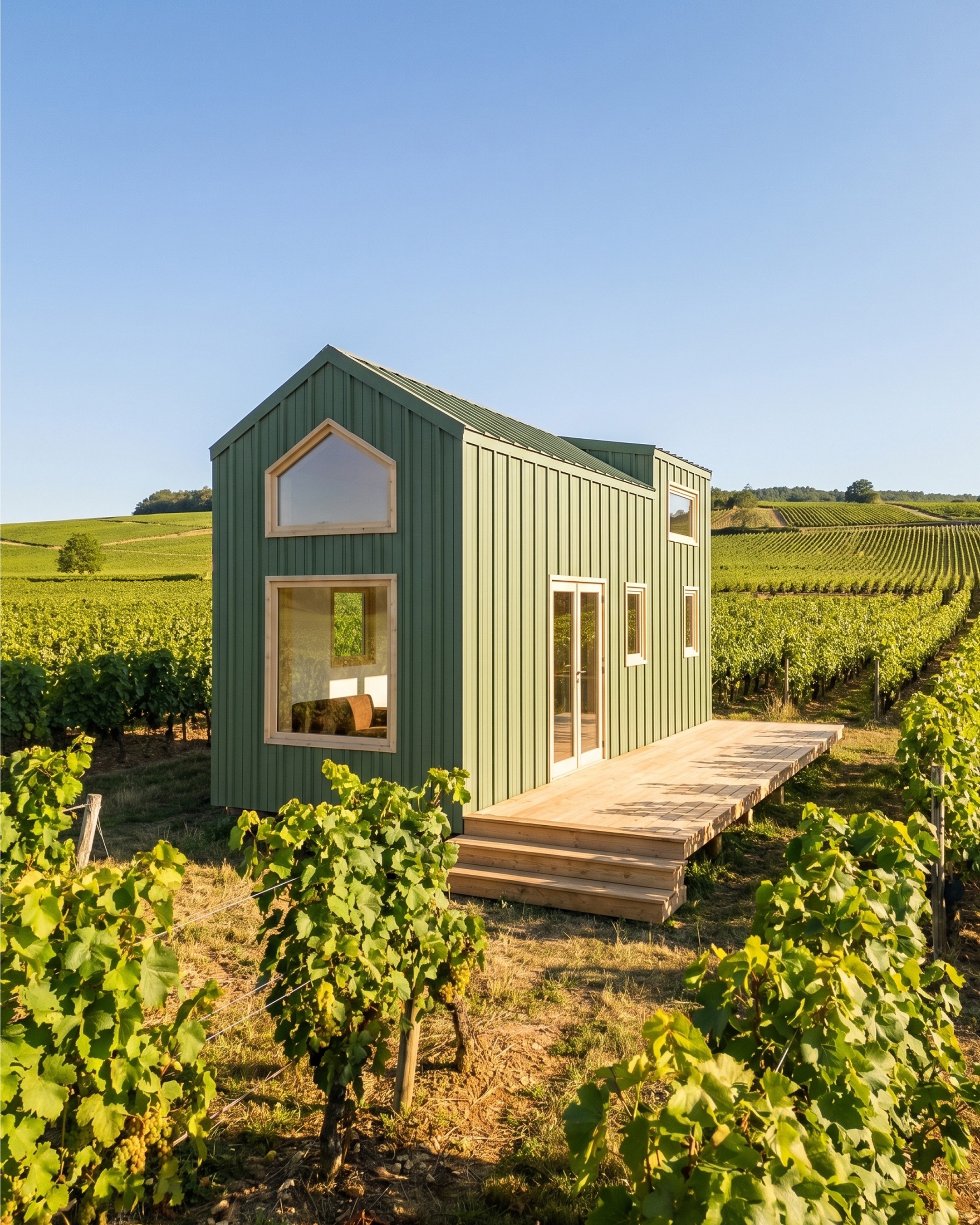
The Fieldstone's silhouette is immediately recognisable. A steep gable roofline in dark corrugated iron rises over white vertical timber cladding, creating a barn-like profile that reads as deliberate and confident rather than purely rustic. It's the kind of exterior that makes 1 bedroom cabin plans feel intentional rather than improvised.
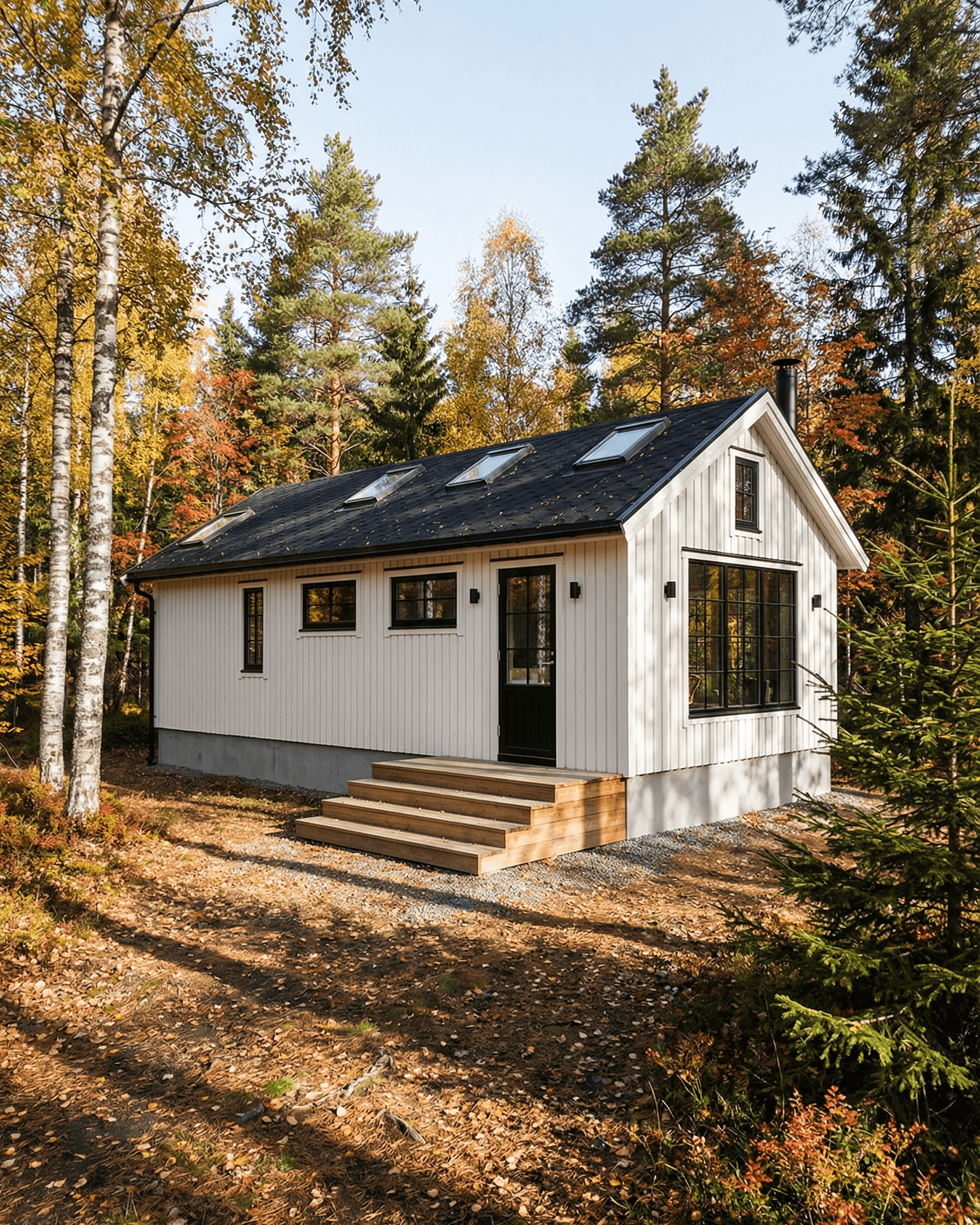
The front elevation is clean and restrained. A large picture window with a muntin grid sits center, a dark-framed French entry door to the right, with wall-mounted exterior lights flanking the entry and timber steps leading up from the ground. The dark window frames repeat across the whole exterior, tying the facade together without complicating it.
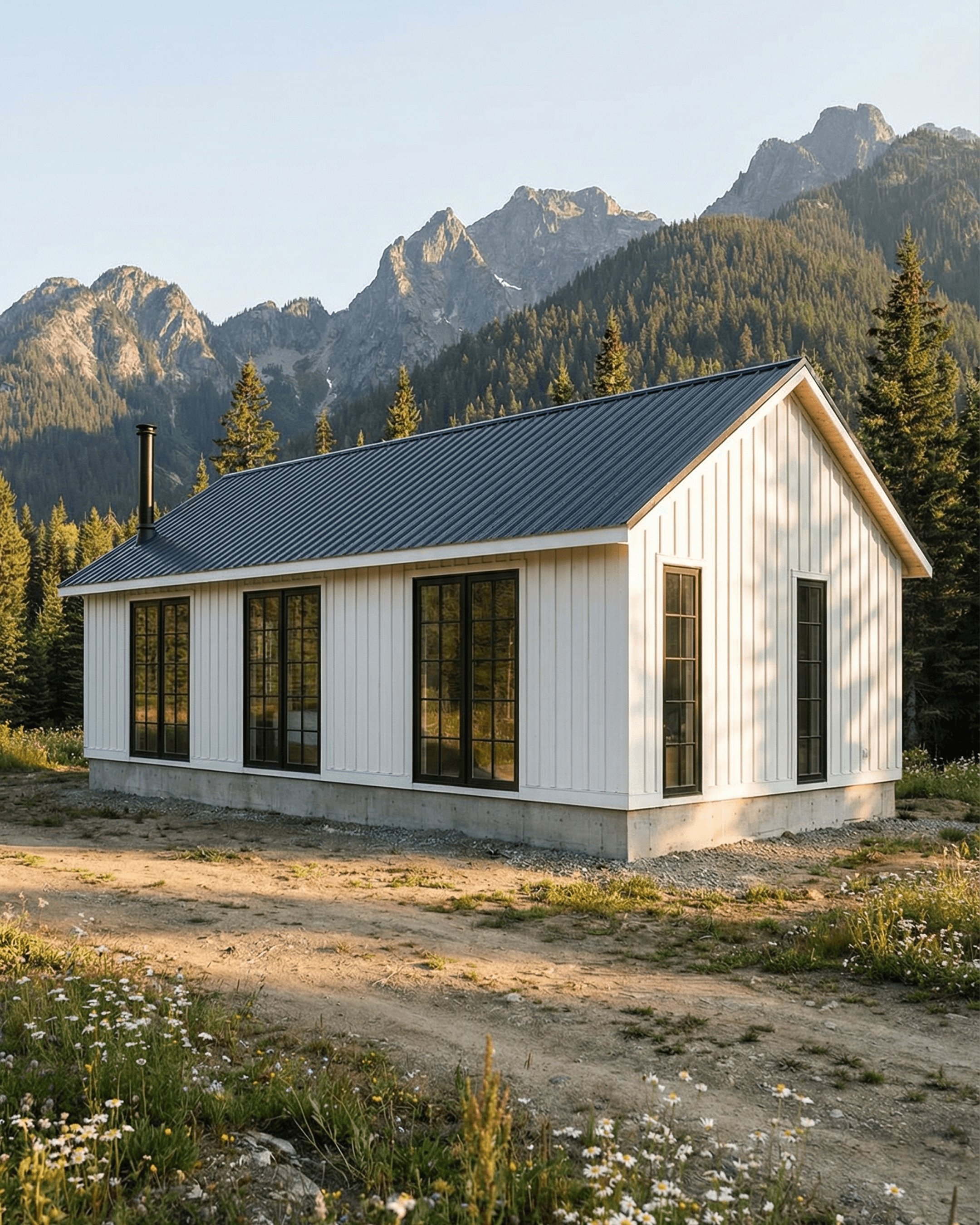
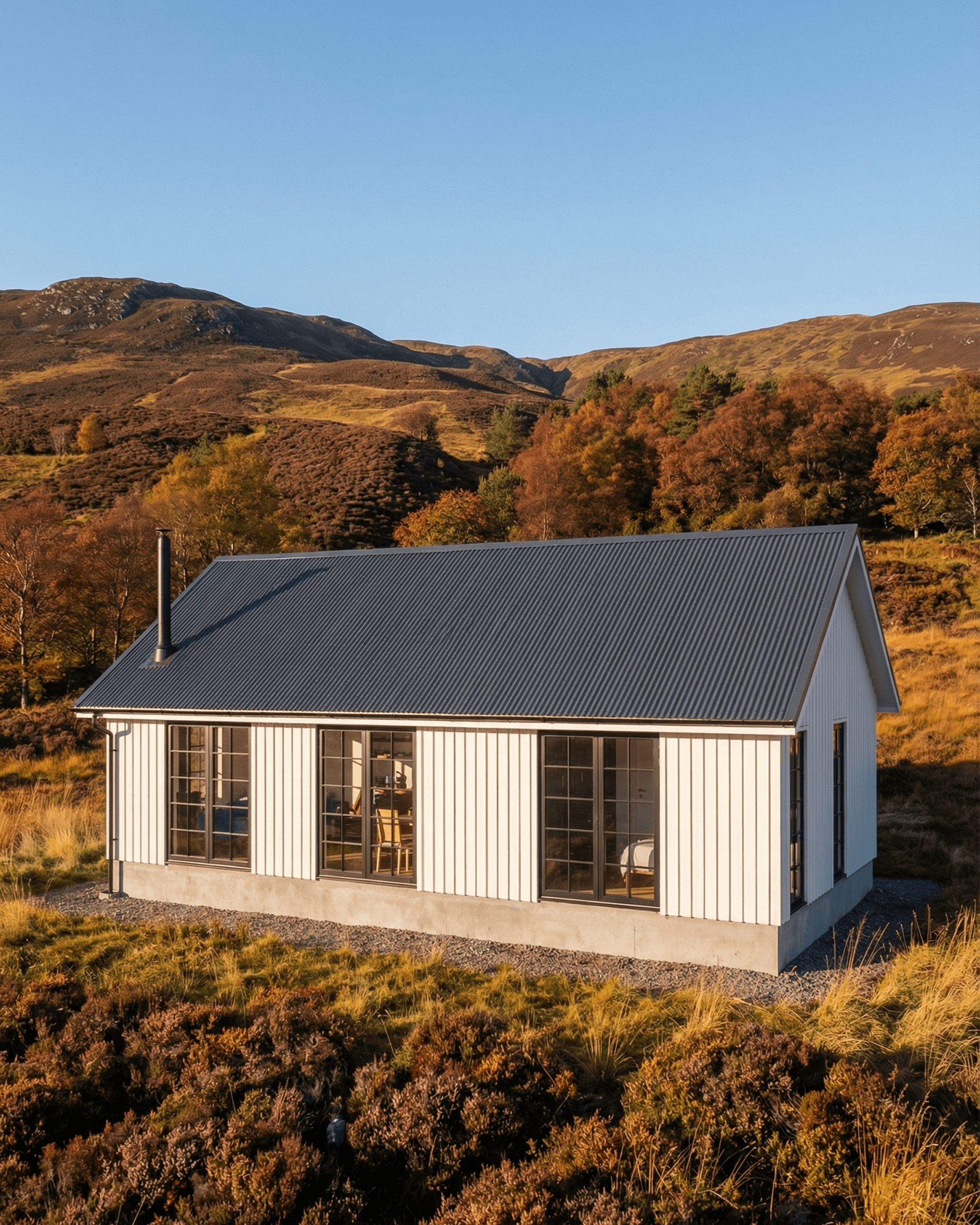
The rear tells a different story. Almost the entire back wall is glazed, with full-width dark-framed French doors spanning the rear elevation and opening the living space directly to the landscape. Where the front is composed and private, the rear is open and expansive. It's a useful tension in a small home: the entry face holds its form, while the living face connects to the outdoors.
Skylights are visible on the roof slope from the front, giving a clear read of how much natural light the interior will receive. A black chimney flue sits at the ridge, signalling the wood burner inside. The concrete plinth keeps the home grounded and provides a clean break between cladding and ground level.
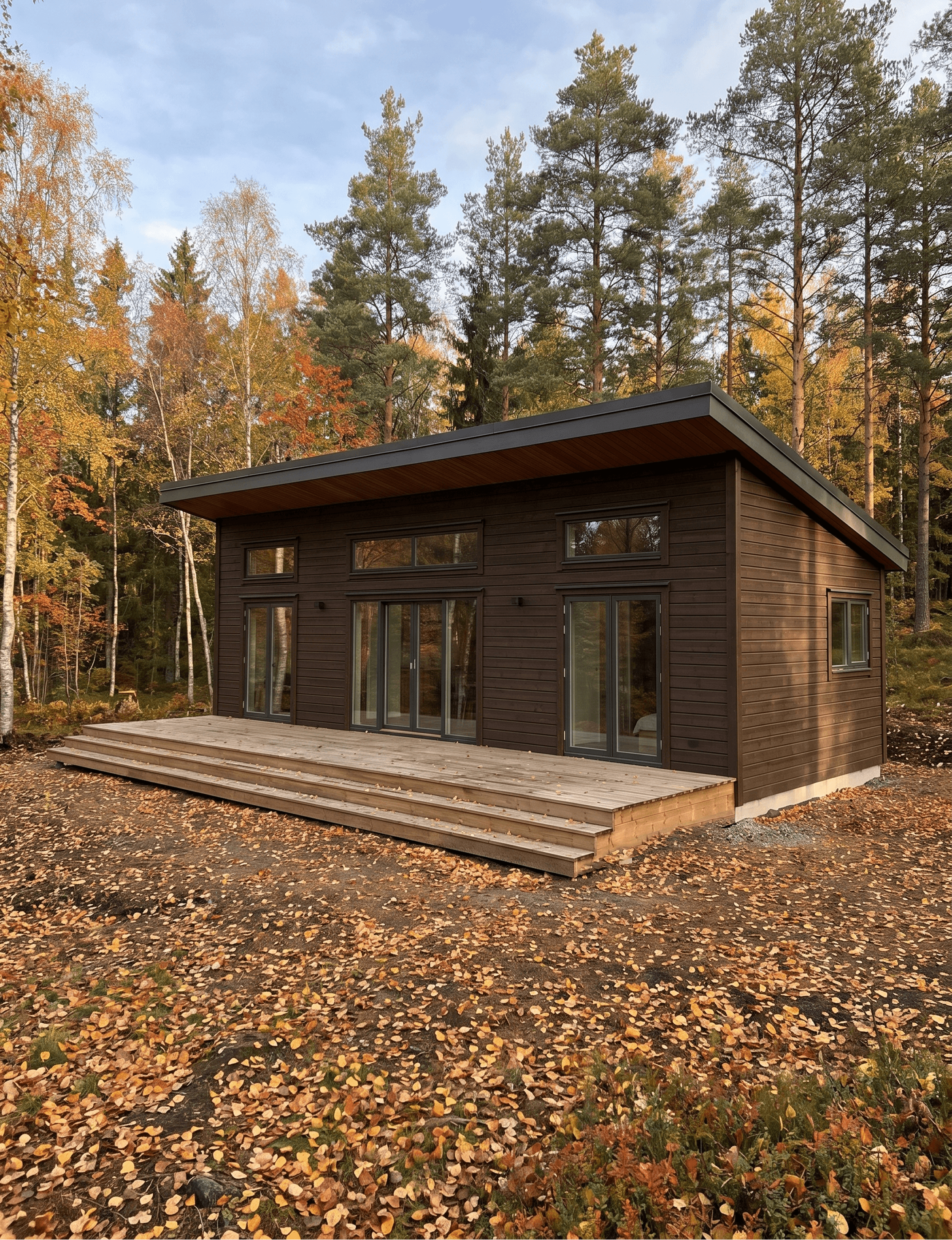
The Fieldstone reads well in multiple landscape settings. The renders show it set in an autumn birch forest, a highland moorland, and an alpine mountain meadow. The white cladding and dark corrugated roof hold their character in all three contexts, which reflects well on the strength of the exterior palette.
The Interior: How the 1 Bedroom Cabin Floor Plan Works
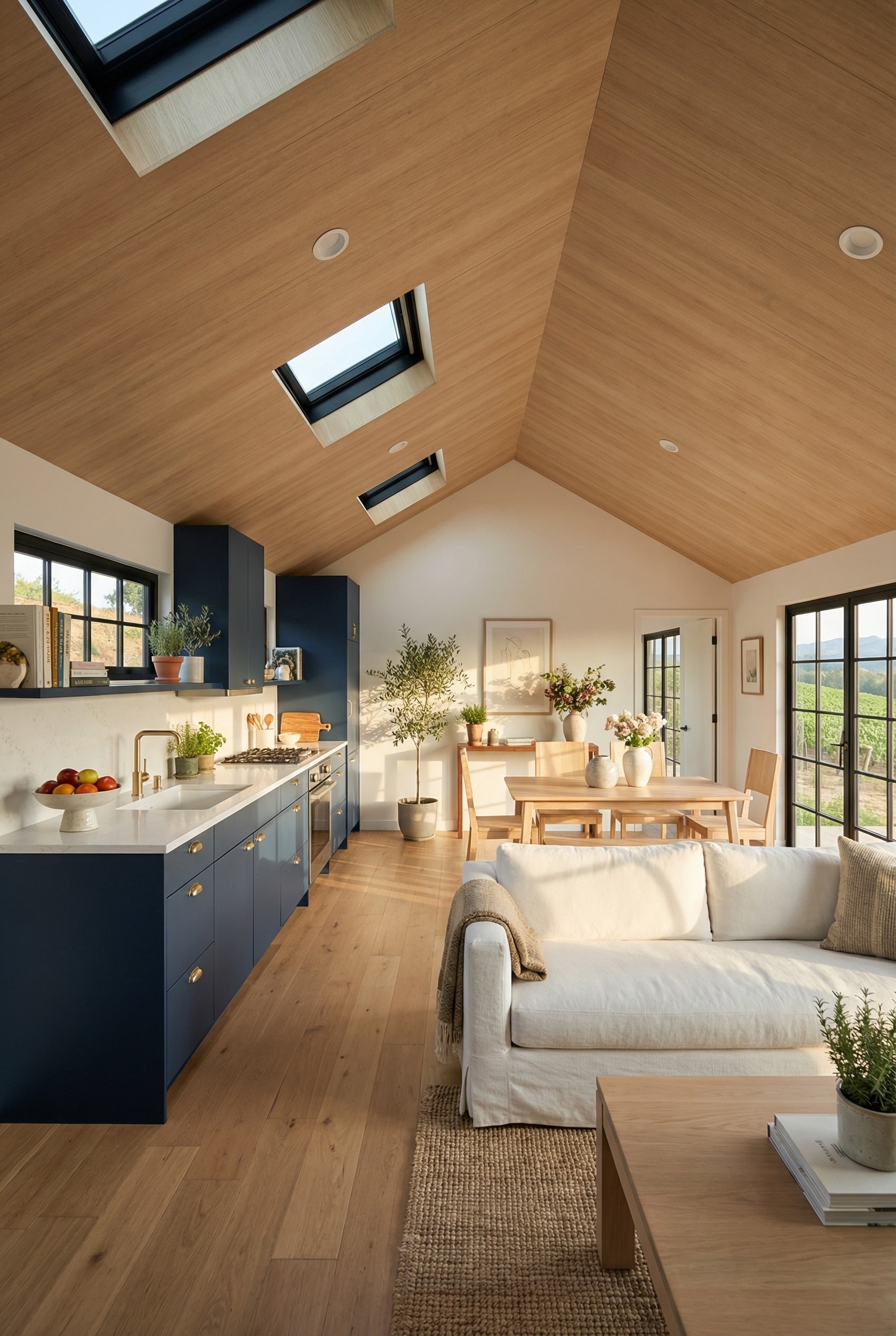
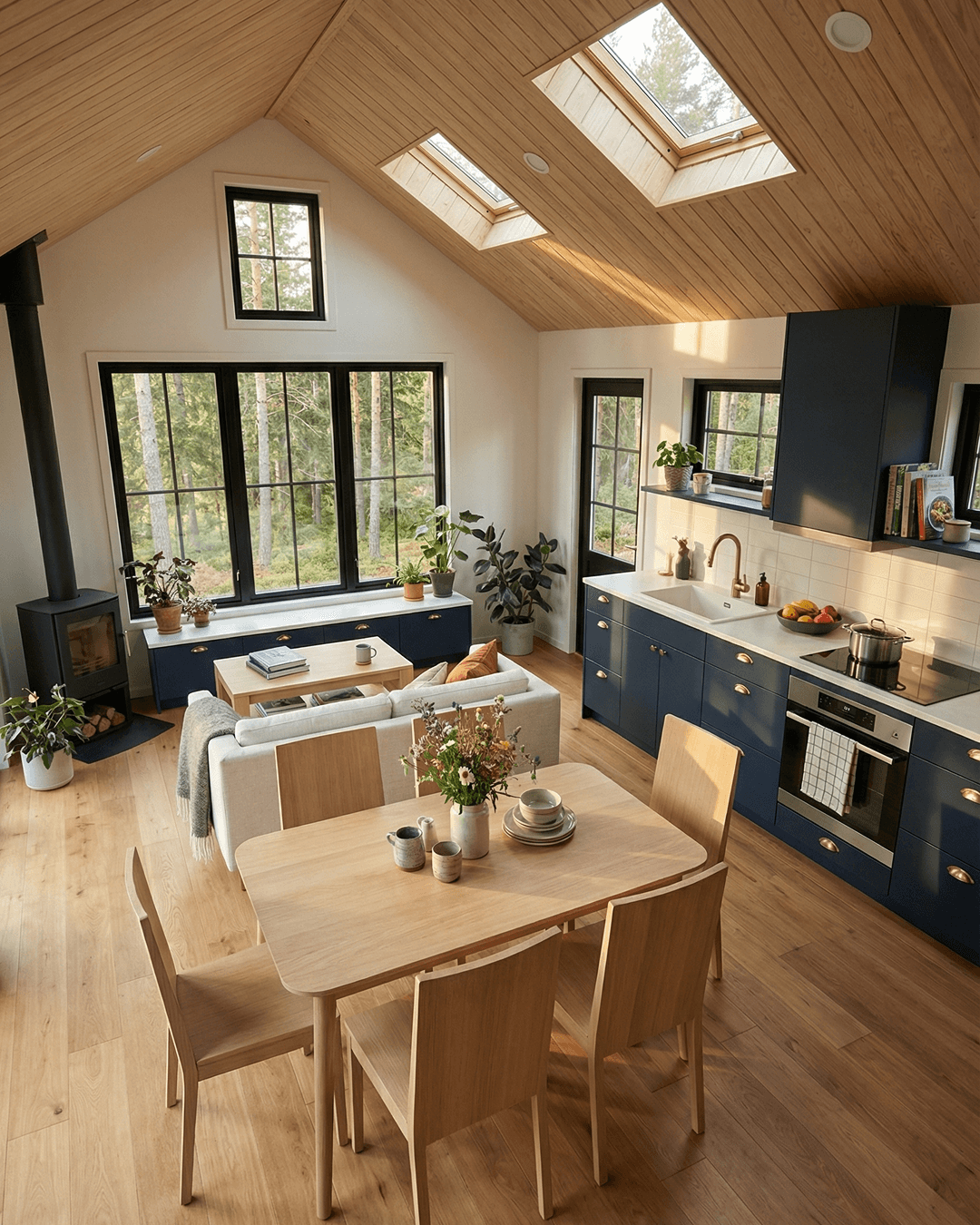
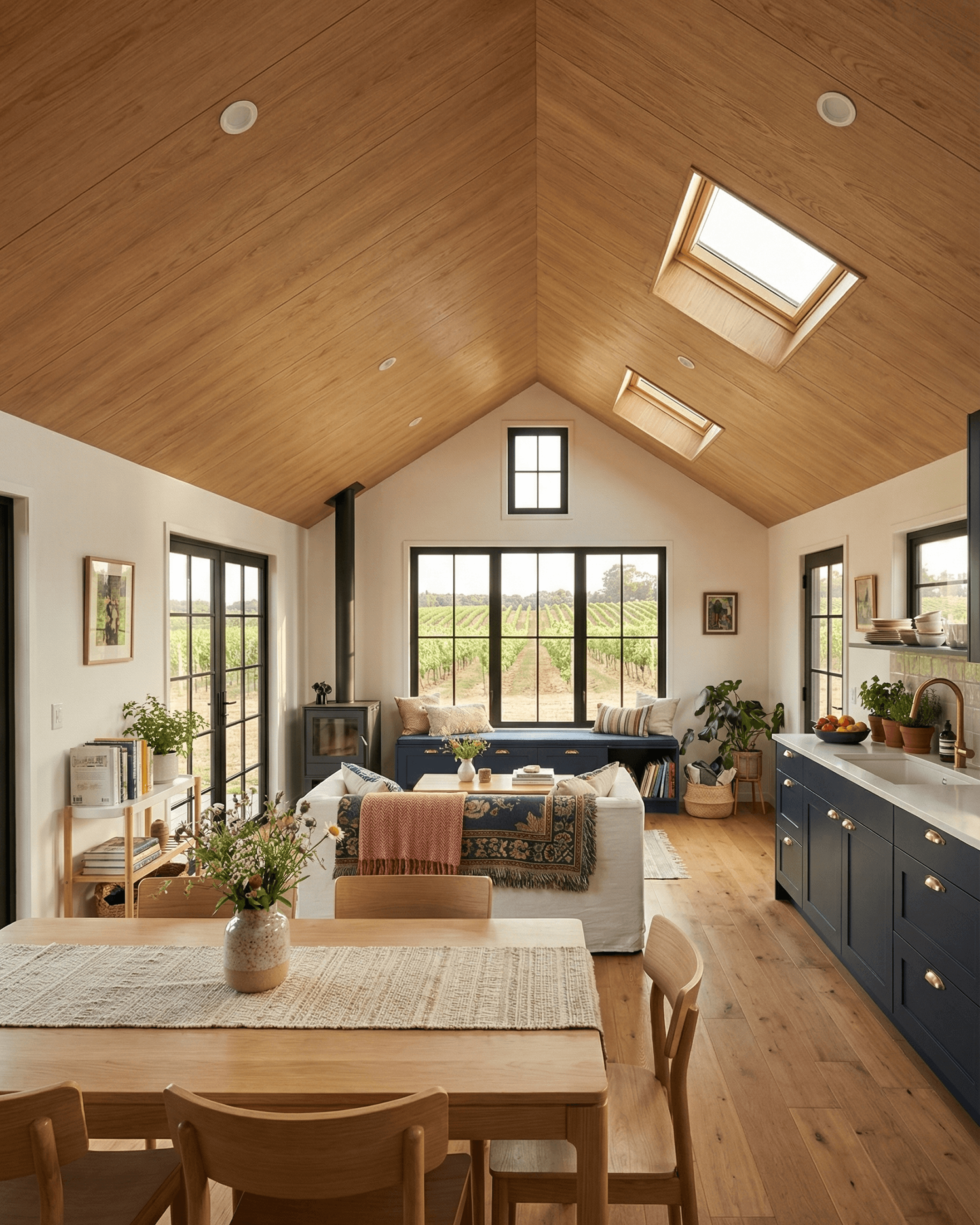
Inside, the home is a single rectangular volume with three connected zones: kitchen, dining, and living, all flowing into each other beneath the full height of the gable vault.
The vaulted oak ceiling is the defining interior element. It runs the full length of the home, starting tall at the ridge and sloping down toward the kitchen and bedroom ends. Warm oak panelling lines the entire ceiling, which gives the space a quality that punches well above its physical scale. Paired with the three skylights set into the roof above, the effect is a home that feels full of light and air even in a compact footprint. For a broader look at how compact homes can achieve a strong interior character, the Tiny Easy Modern Tiny House Design Inspiration collection covers a range of styles and approaches.
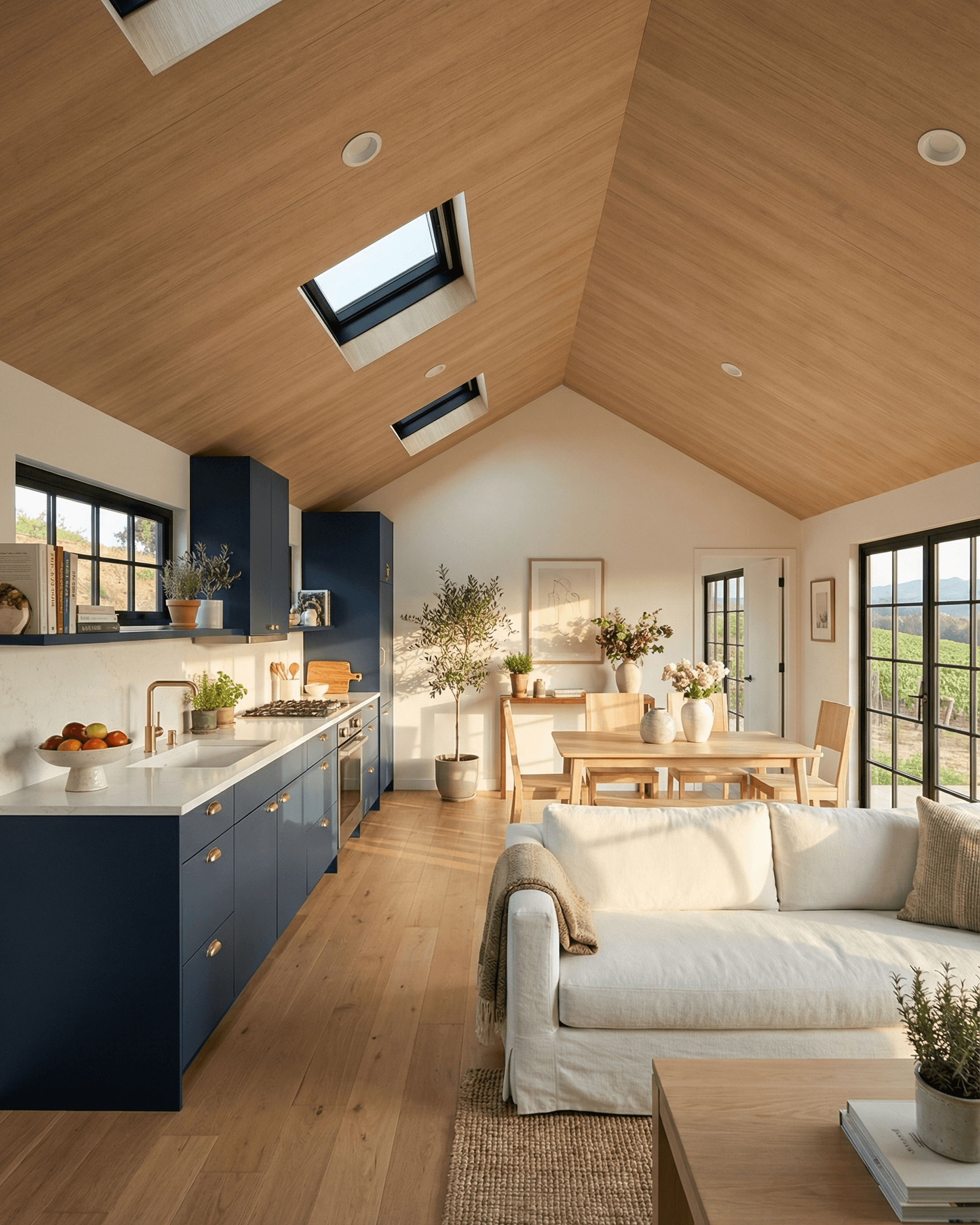
French oak flooring carries through from the entry to the bedroom, keeping the interior palette continuous and grounded. The overall colour story is warm but restrained: white walls, warm timber ceiling and floor, navy cabinetry, and brass hardware and fittings running as a consistent accent from the kitchen through to the bathroom.
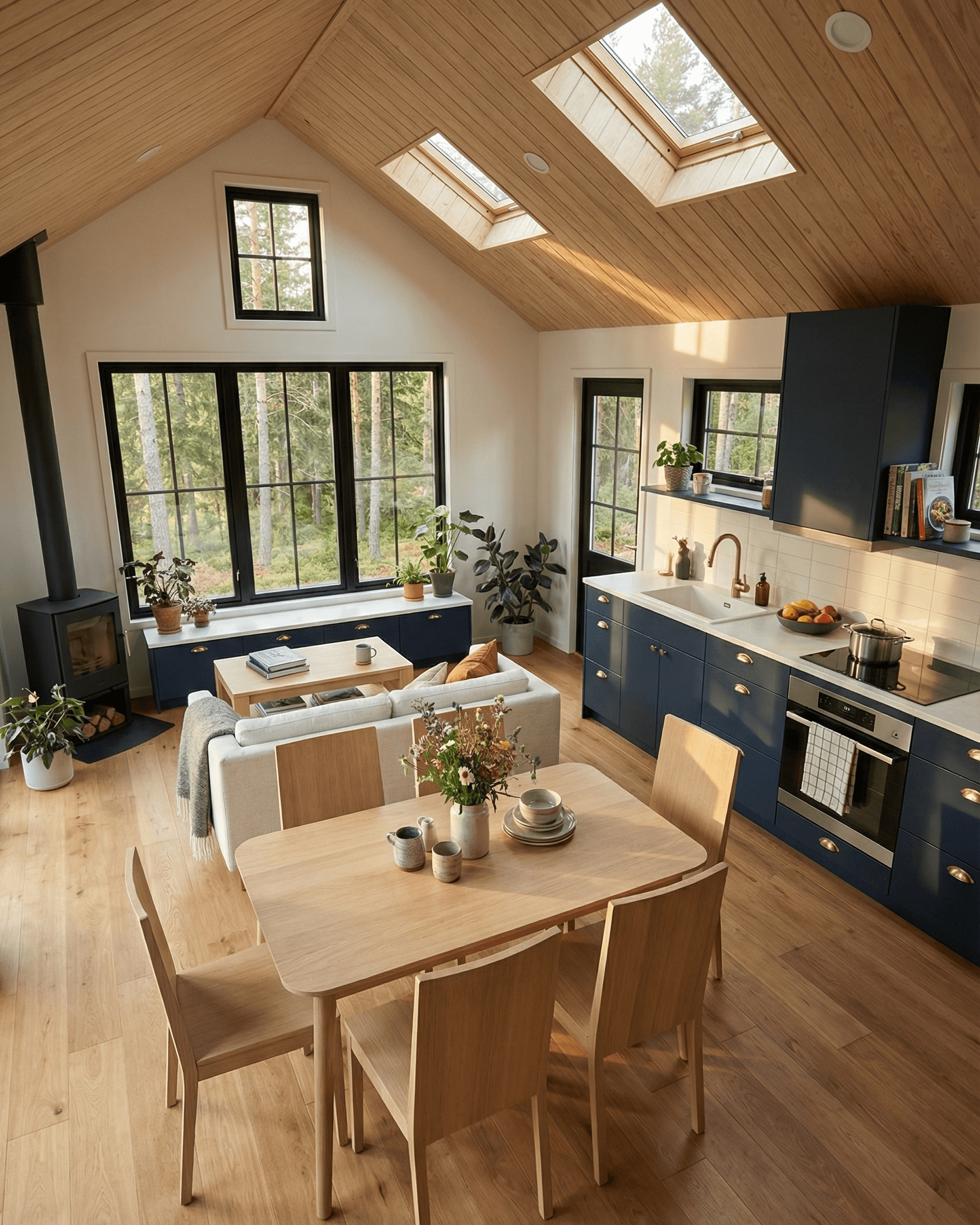
The layout logic is straightforward. The open plan occupies the main body of the home, with the kitchen running along one wall, the dining zone at the centre, and the living area at the front. The bedroom and bathroom are at the rear, with the bedroom tucked behind the living space for privacy. For a home designed for one or two people, this separation works well.
The Kitchen: Navy, Brass, and a Single Clear Wall
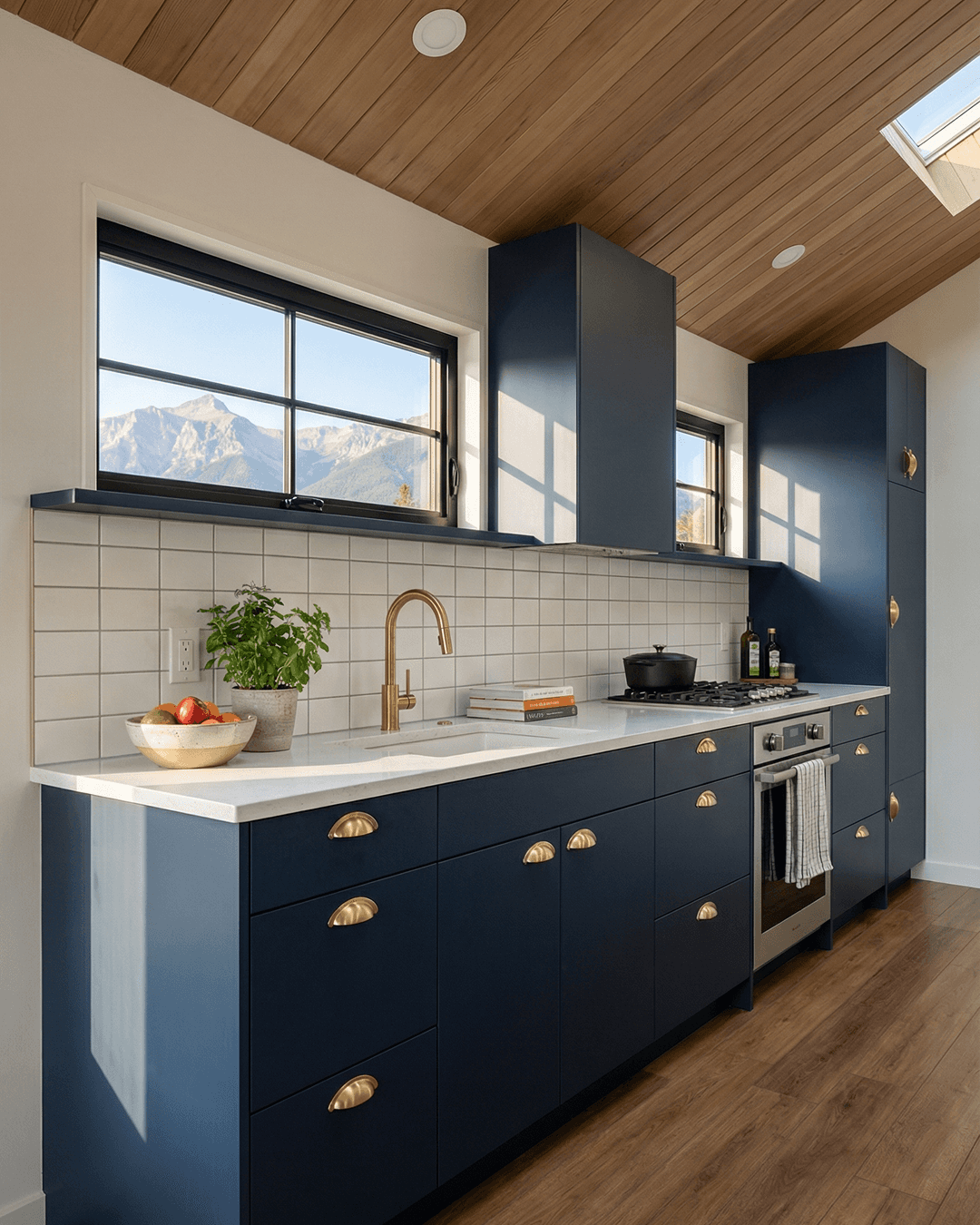
The kitchen is a single-wall run of navy shaker cabinetry with brass bin-pull hardware and a white stone countertop. It's the most visually striking element of the interior and sets the design language for the rest of the home.
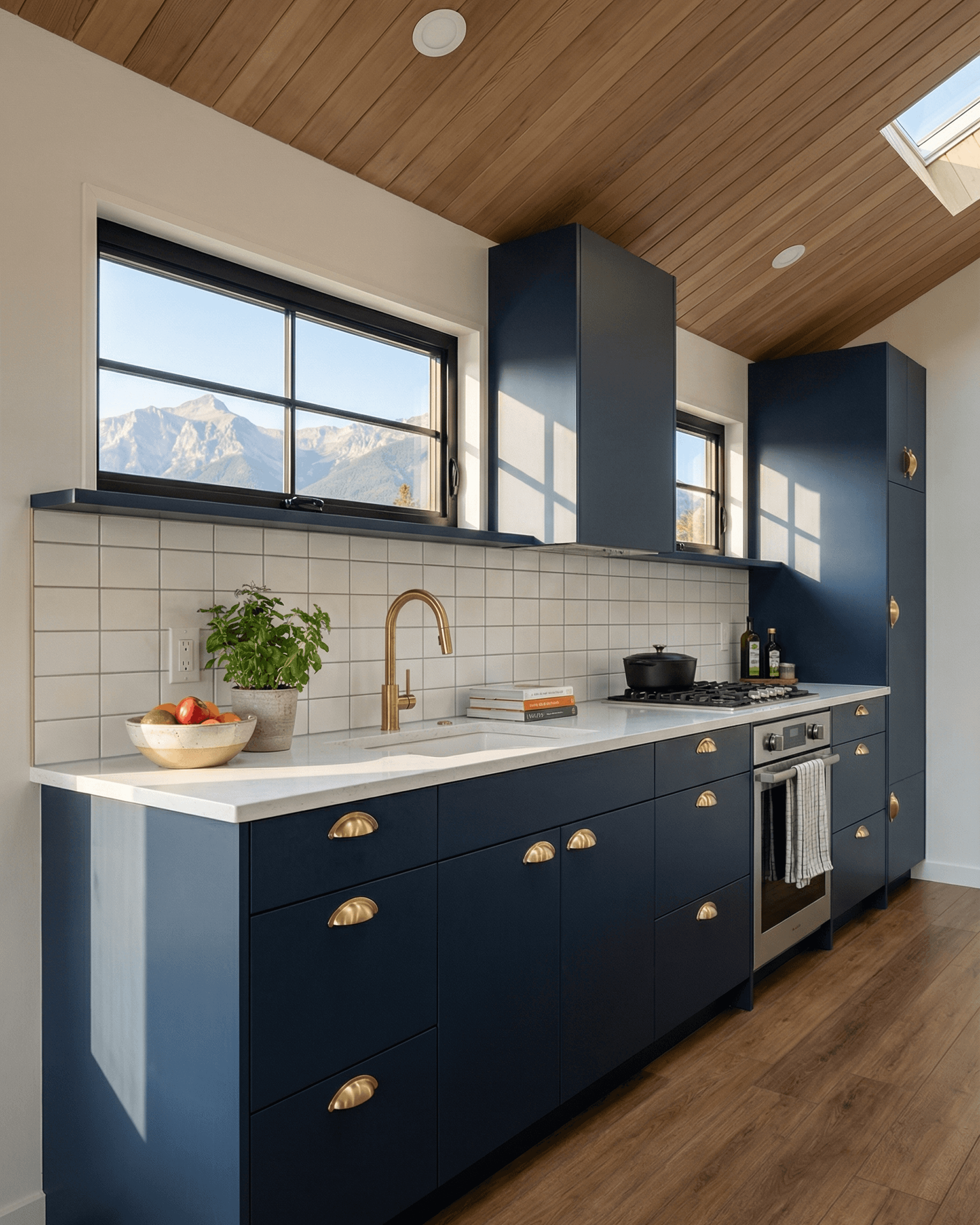
The cabinet color is a confident choice. Navy against white walls and warm timber ceiling gives the kitchen a high-contrast, considered quality that feels more like a curated interior than a standard cabin fit-out. The brass hardware reinforces that character. Every handle is a cup-pull style in brushed brass, which is consistent across the full run of upper and lower cabinets.
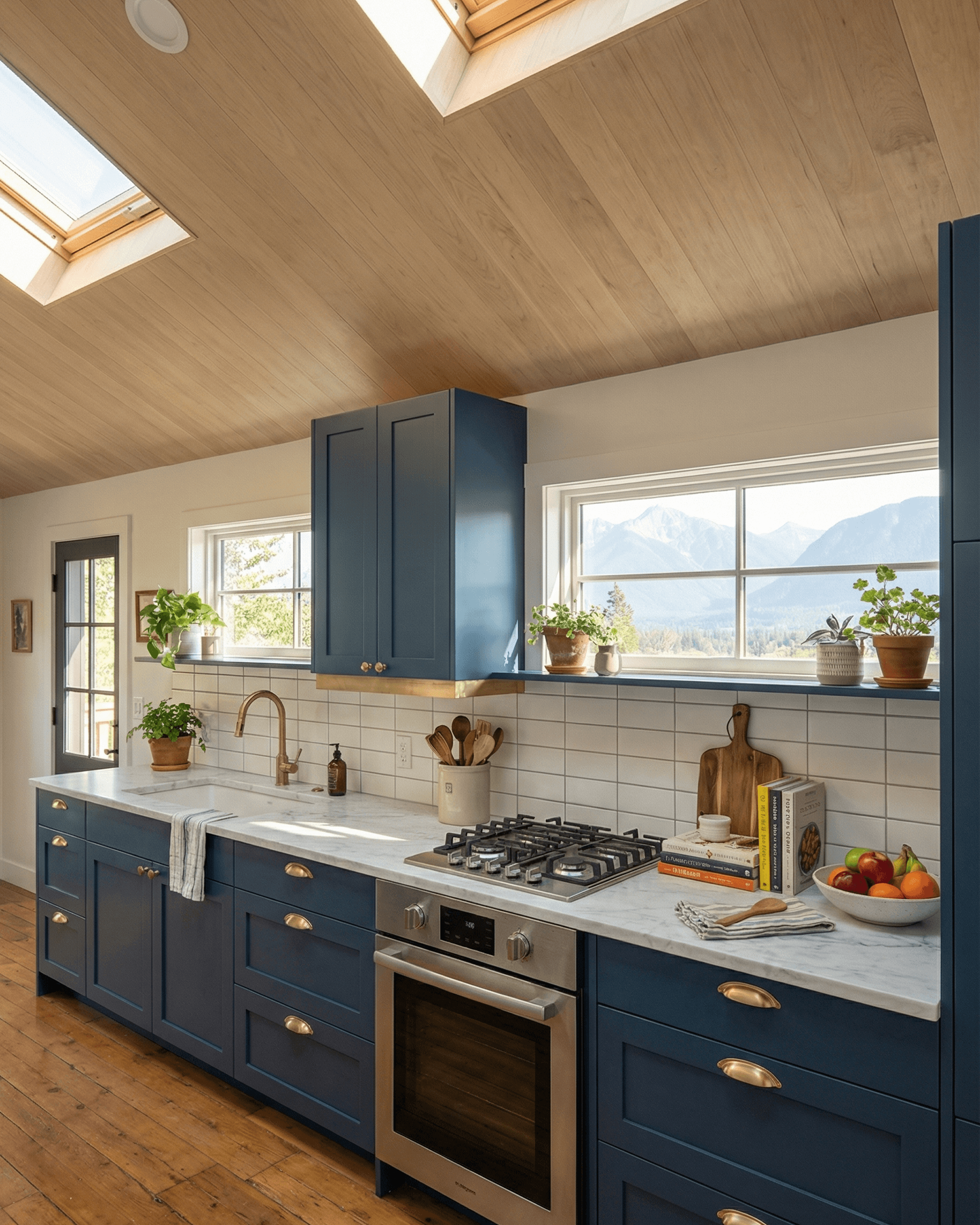
The kitchen includes a cooktop and oven, a single undermount sink with a brass faucet, and an integrated fridge. White rectangular tiles on the backsplash keep the wall between the countertop and the upper cabinets clean and easy to maintain. A black-framed window above the countertop brings in natural light and gives a view out, which makes a practical single-wall layout feel more connected to the space around it.
For a 1-bedroom cabin plan, a single-wall kitchen is often the right call. It keeps the layout efficient, maximizes open-plan circulation, and avoids closing the space off with a large island or a U-shaped run that would feel oversized in a narrow rectangular home.
The Living Space: Light, Volume, and a Wood Burner
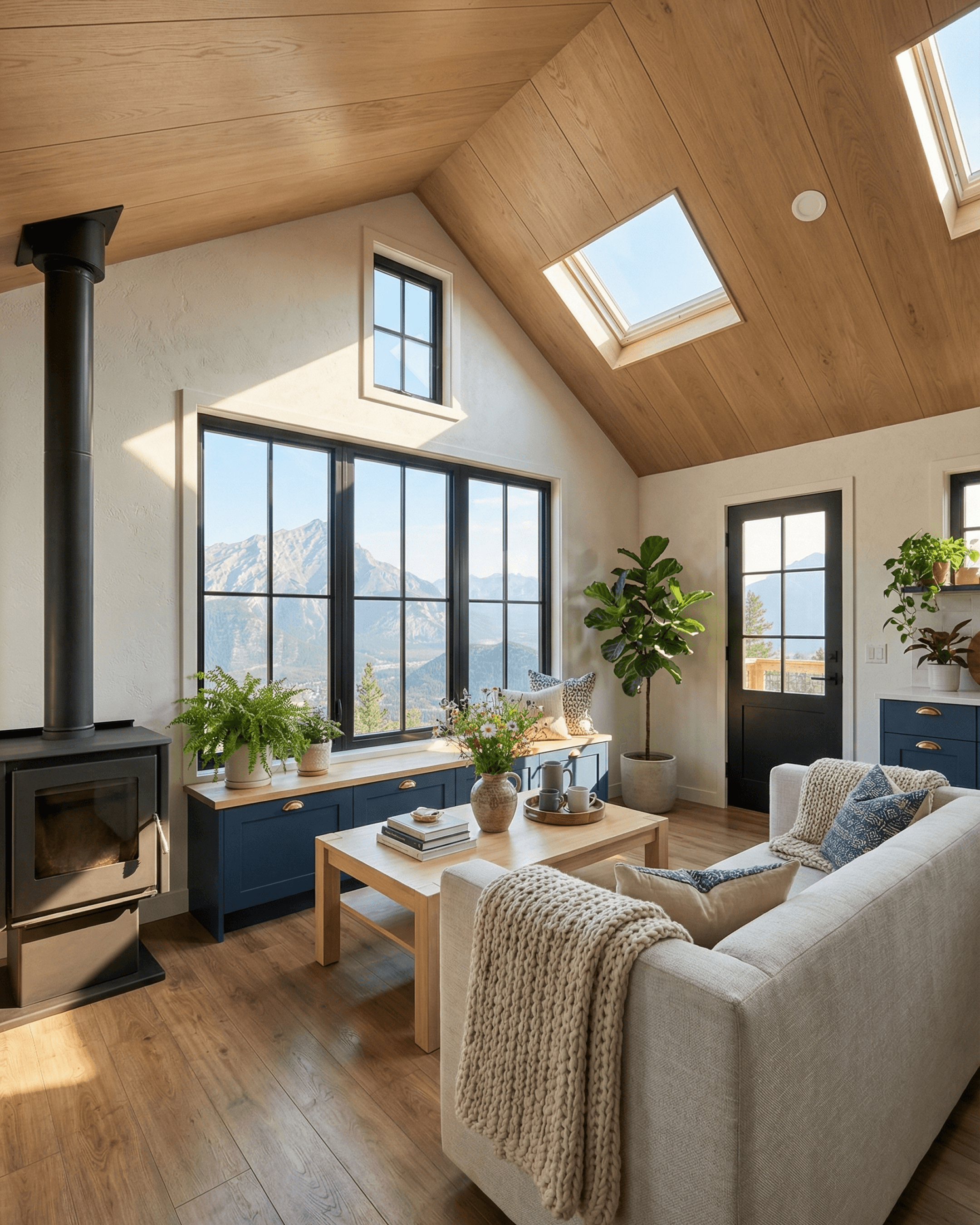
The living area is at the front of the home, anchored by the large picture window and the wood burner.
The picture window is a feature in its own right. It spans most of the front wall facing the entry, with a muntin grid that divides the glass into smaller panes and reinforces the farmhouse cottage character. Natural light pours through it throughout the day, and combined with the two skylights overhead, the living area is one of the better-lit spaces you will find in a home of this size.
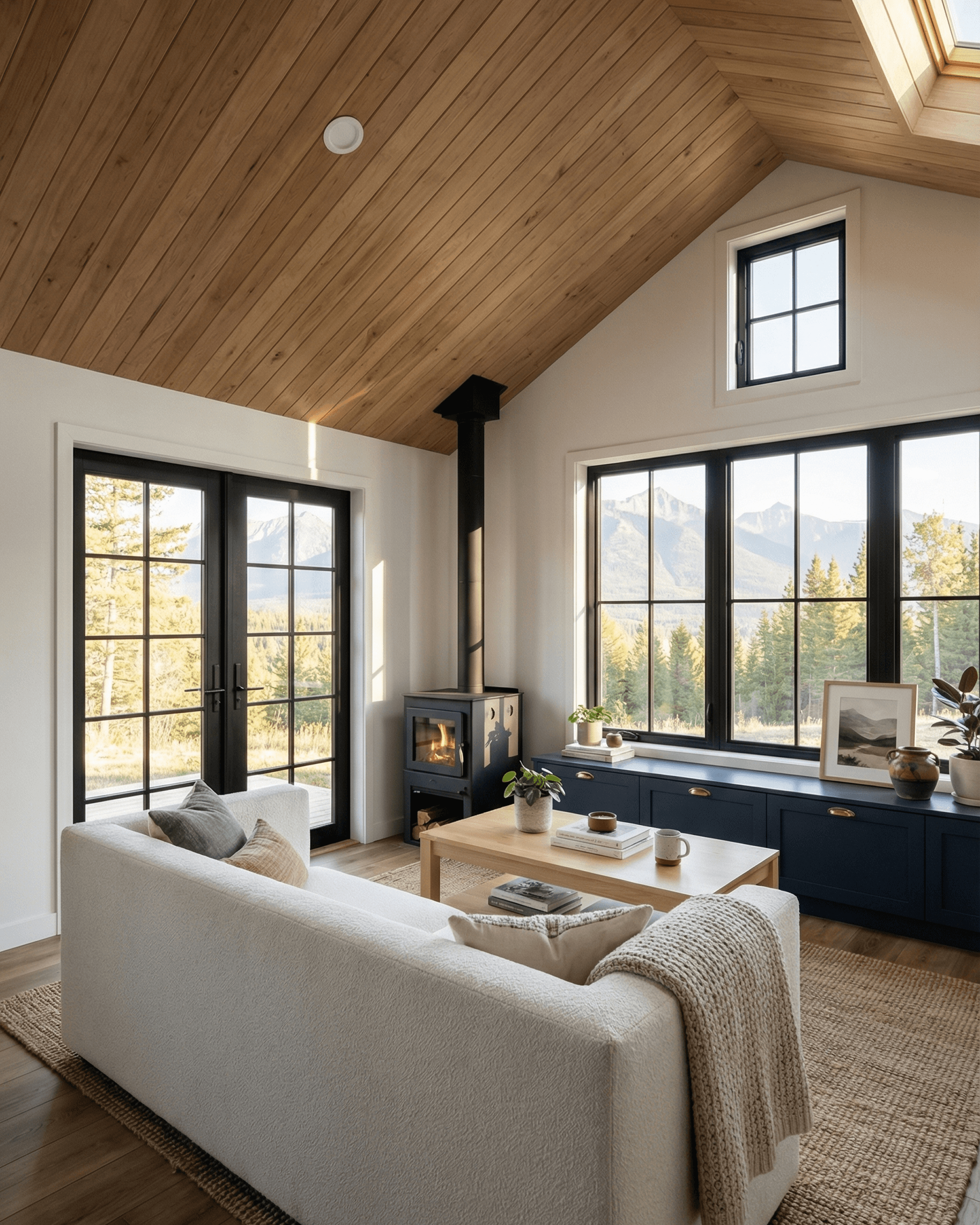
The wood burner sits on the left side of the living space, a black cast-iron freestanding unit that adds genuine warmth and visual weight to the room. In a cabin intended for year-round use or colder months, a wood burner is a practical inclusion that also contributes to the home's atmosphere in a way that a standard heating system simply doesn't.
A cream sofa, timber coffee table, and jute rug sit comfortably in the living zone without crowding it. The high vaulted ceiling means there is overhead volume to absorb the furniture without the space feeling compressed. A low navy storage unit runs beneath the picture window, tying the kitchen palette into the living area and providing additional storage in a home where every meter of shelf space matters.
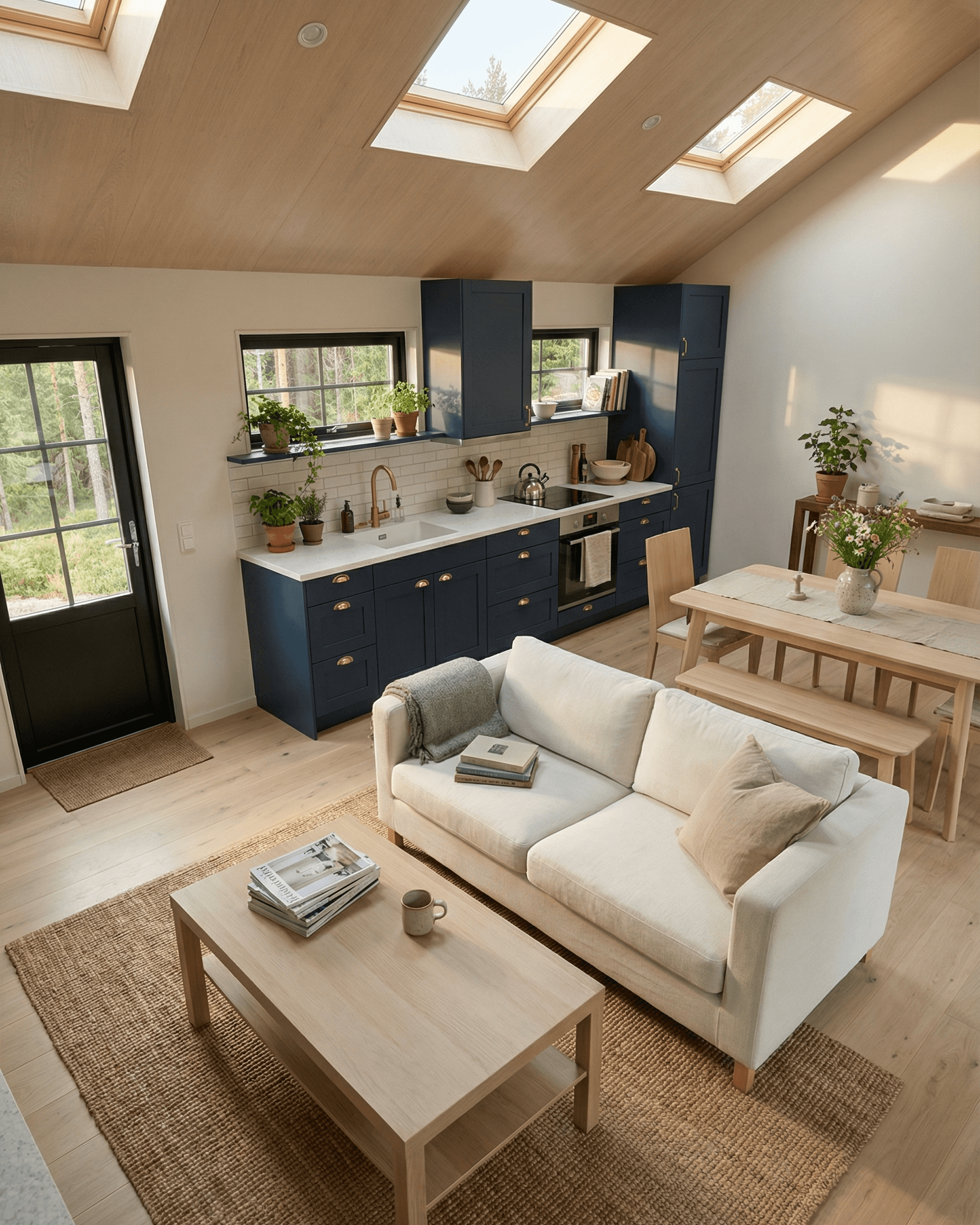
The living, dining, and kitchen spaces flow easily into each other. From the kitchen, you have a clear sightline through the dining zone to the front window and sofa. From the living area, the rear French doors are visible at the far end, framing the landscape beyond. It's a well-connected sequence of spaces that makes the home feel longer and more open than its footprint. It's one of the reasons small cabin plans like this one benefit so much from open-plan layouts.
The Bedroom: Private, Calm, and Views Worth Waking Up For
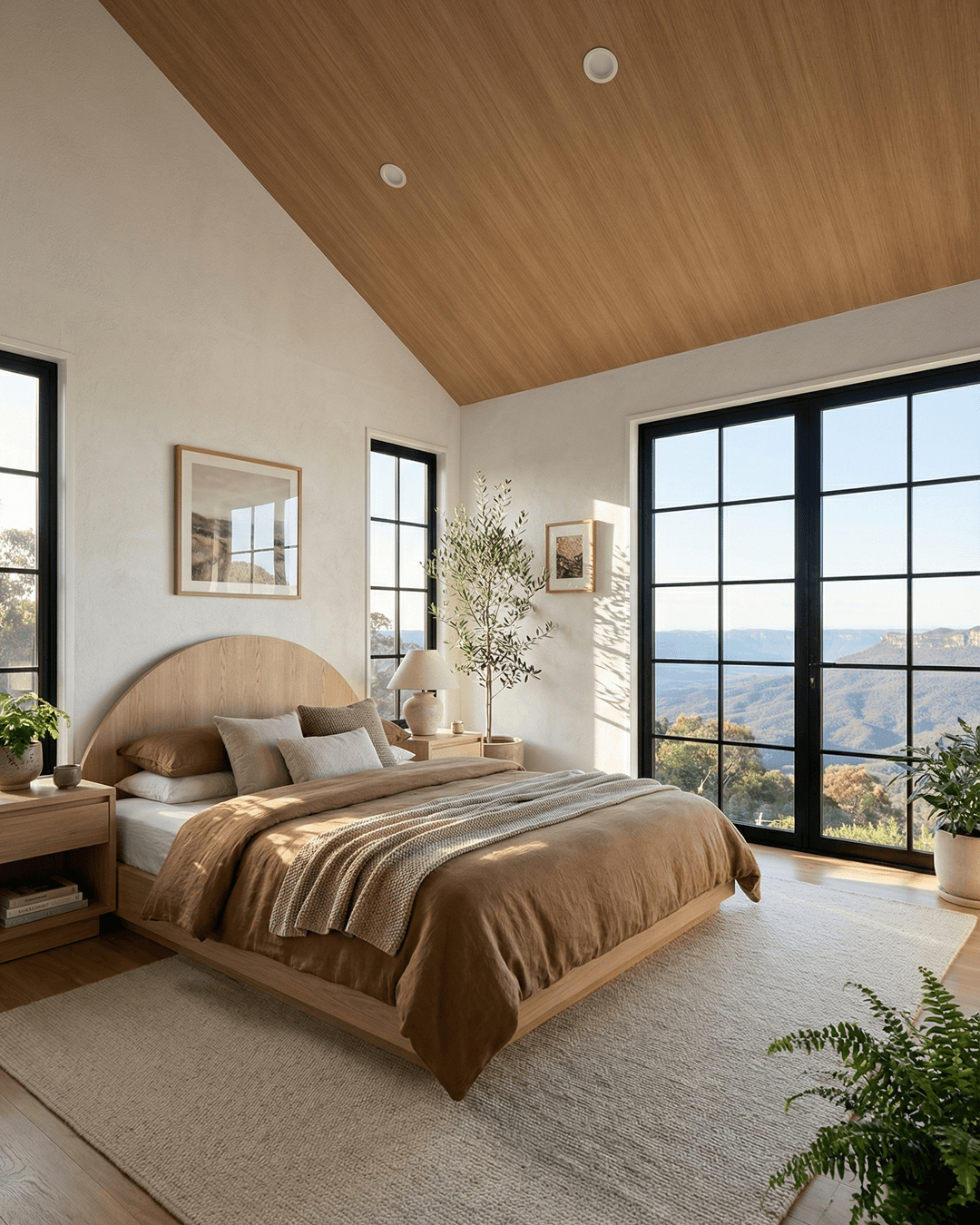
The bedroom is at the rear of the home, separated from the open plan by a wall that provides genuine acoustic and visual privacy. In most one bedroom cabin plans, this rear placement is the right call: it keeps sleeping separate without needing a second floor or a loft.
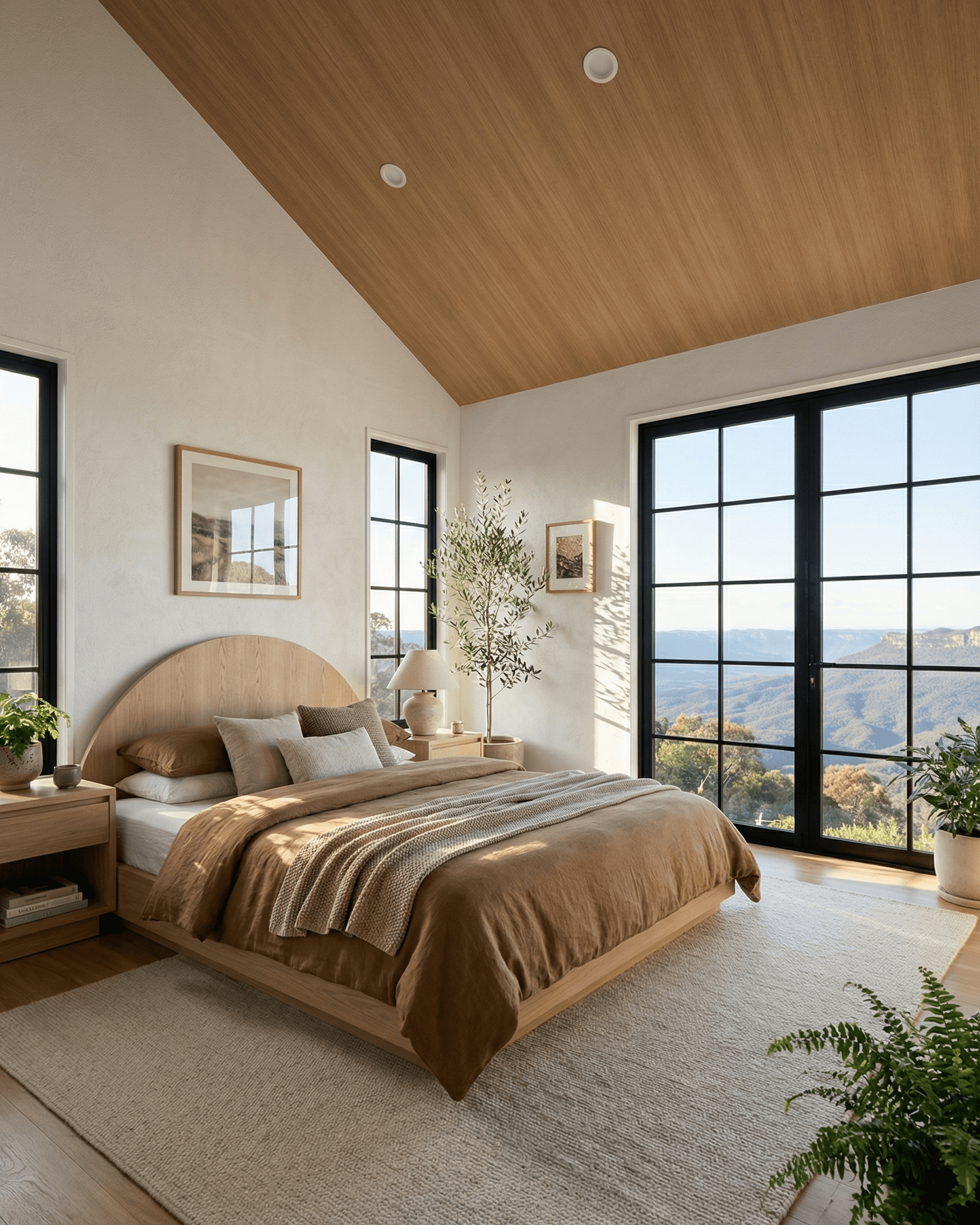
The timber ceiling continues into the bedroom, though at a lower pitch than the main living space. The warm oak lining creates a calm, wrapped quality that suits a sleeping space well. The floor is the same French oak as the rest of the home.
The bed is positioned against the interior wall with an arched timber headboard, a detail that is specific to the Fieldstone design and gives the bedroom a considered quality beyond basic functionality. Earth-tone bedding in terracotta and warm brown grounds the palette without competing with the timber surfaces.
The rear wall of the bedroom opens through French doors with the same dark-framed muntin detailing used throughout the home. These open the bedroom directly to the landscape and, on a well-sited property, create a waking view that is genuinely hard to replicate in a conventionally sized home. A second side window with the same muntin pattern adds another source of natural light.
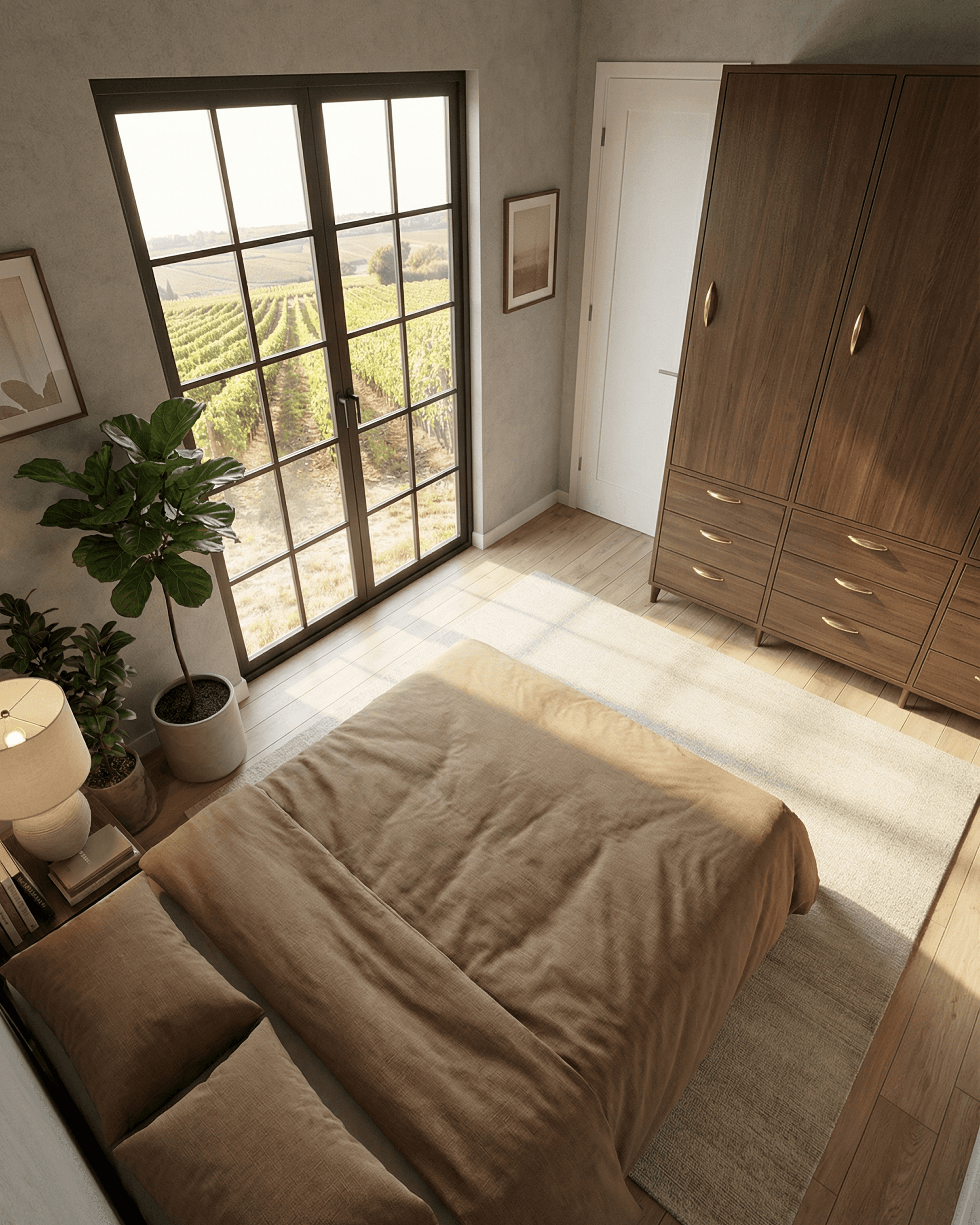
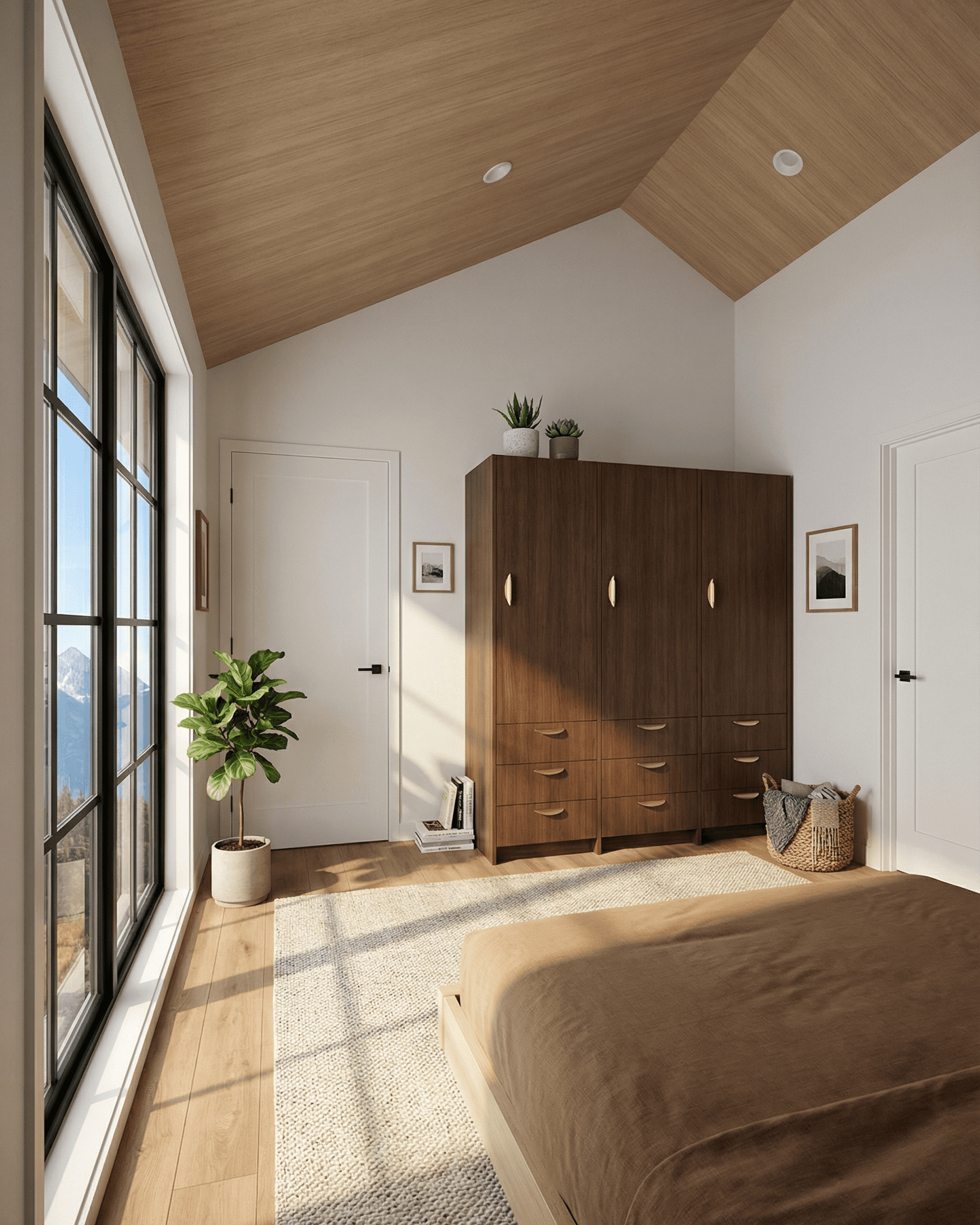
The bedroom includes full wardrobe storage, which is a meaningful inclusion in a compact home where built-in storage makes a real difference to day-to-day live-ability.
The Bathroom: A Skylight and a Spa-Like Finish
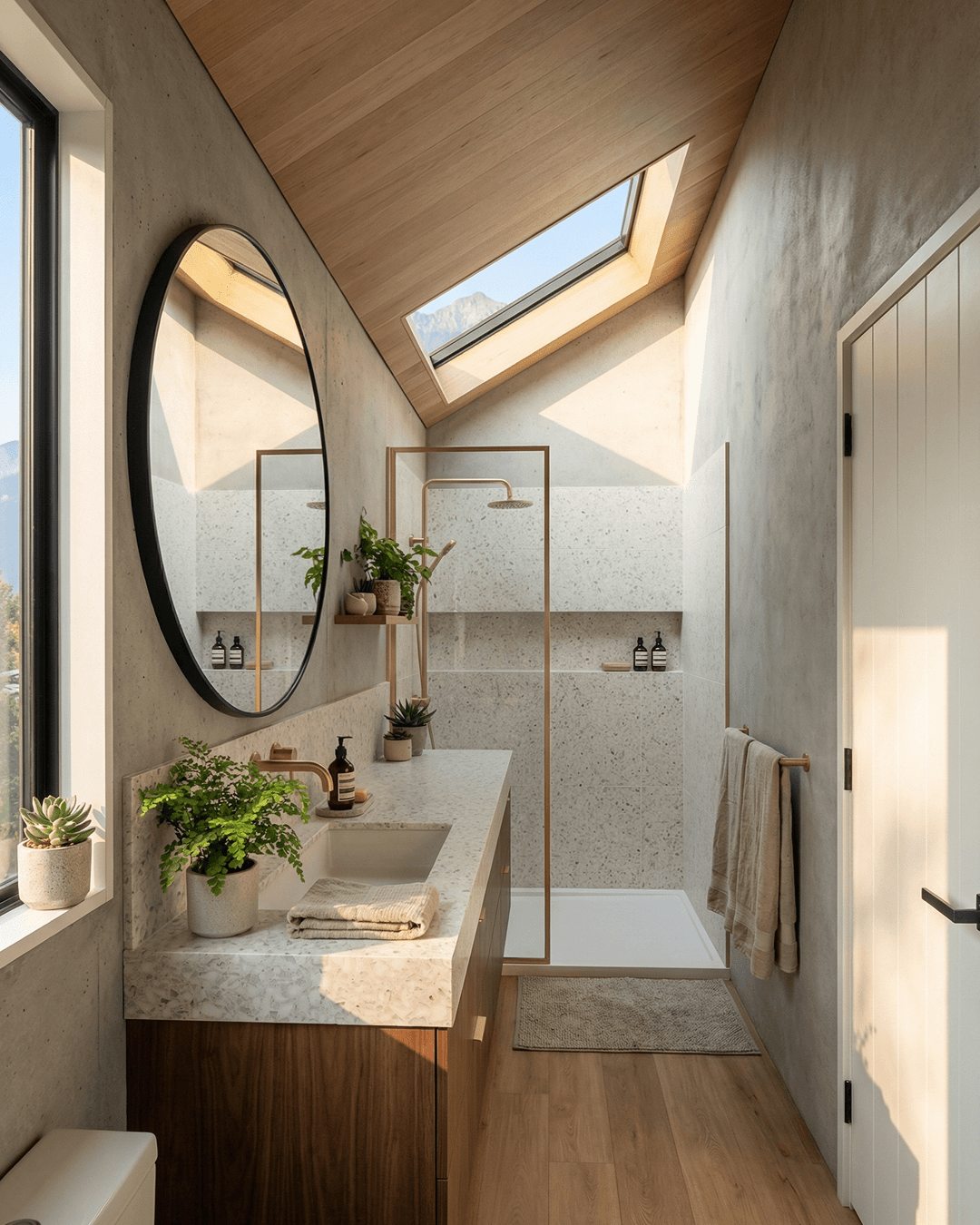
The bathroom follows the gable ceiling line, meaning the room has its own angled timber ceiling that mirrors the vaulted character of the rest of the home rather than dropping to a flat, boxed-in ceiling. A skylight is set directly into this angled ceiling, bringing in natural light and a view upward that makes the bathroom feel more generous than its footprint.
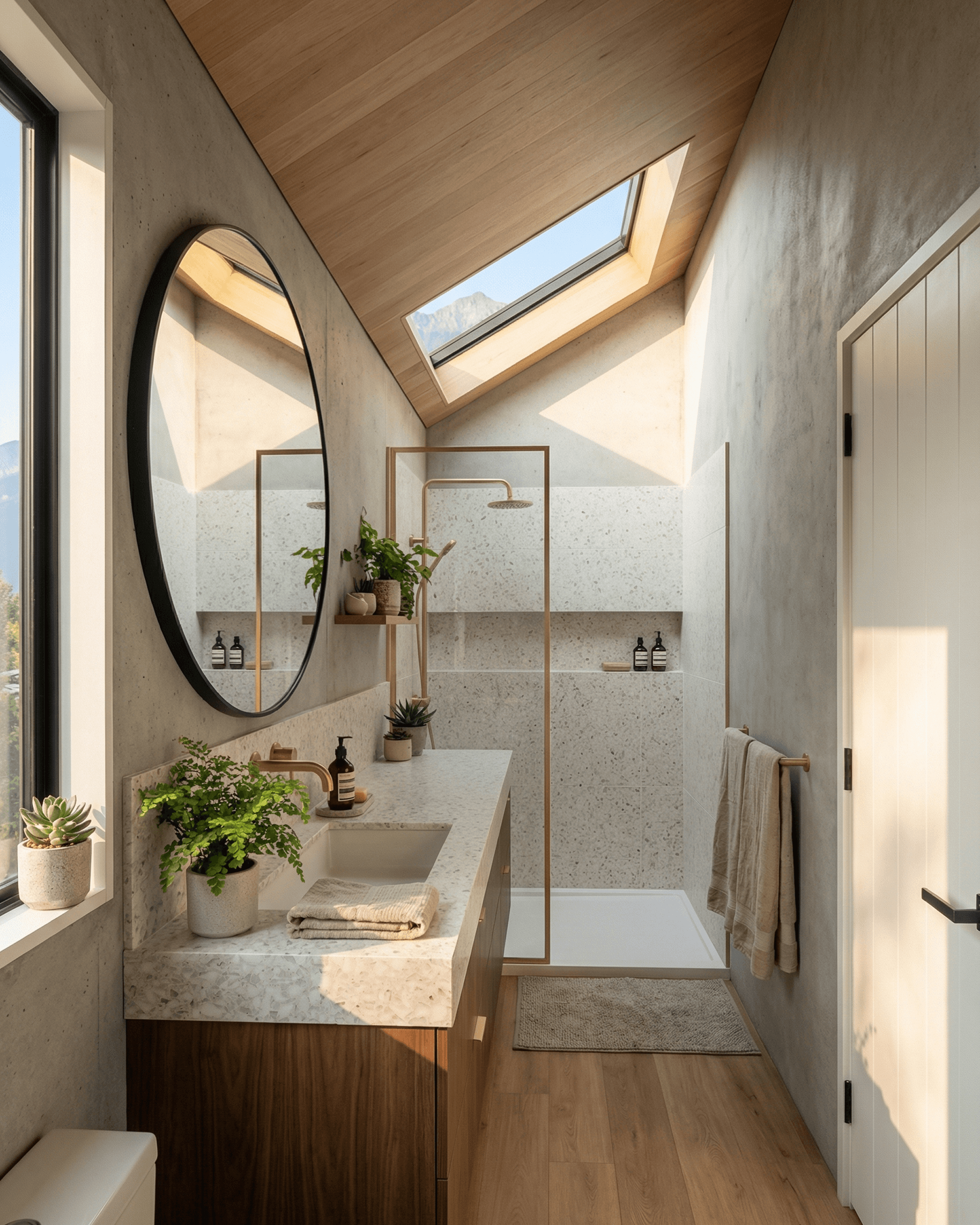
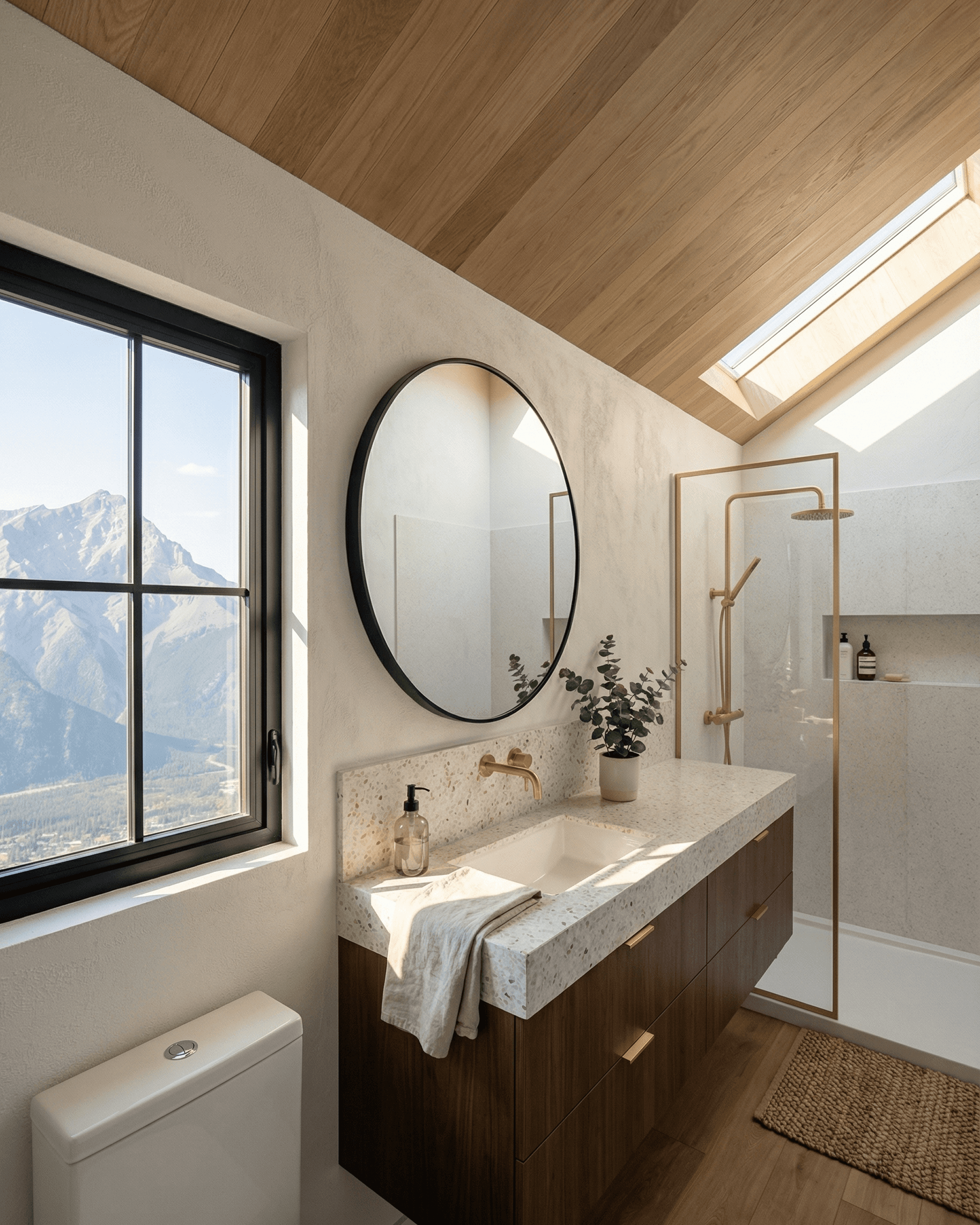
The finish quality in the bathroom is strong. Stone and concrete-look tile lines the walls. The walk-in shower has a brass frame with a rain head. A floating vanity with a timber/walnut-tone cabinet base and stone countertop holds an undermount sink with a brass wall-mounted faucet. A round black-framed mirror completes the palette.
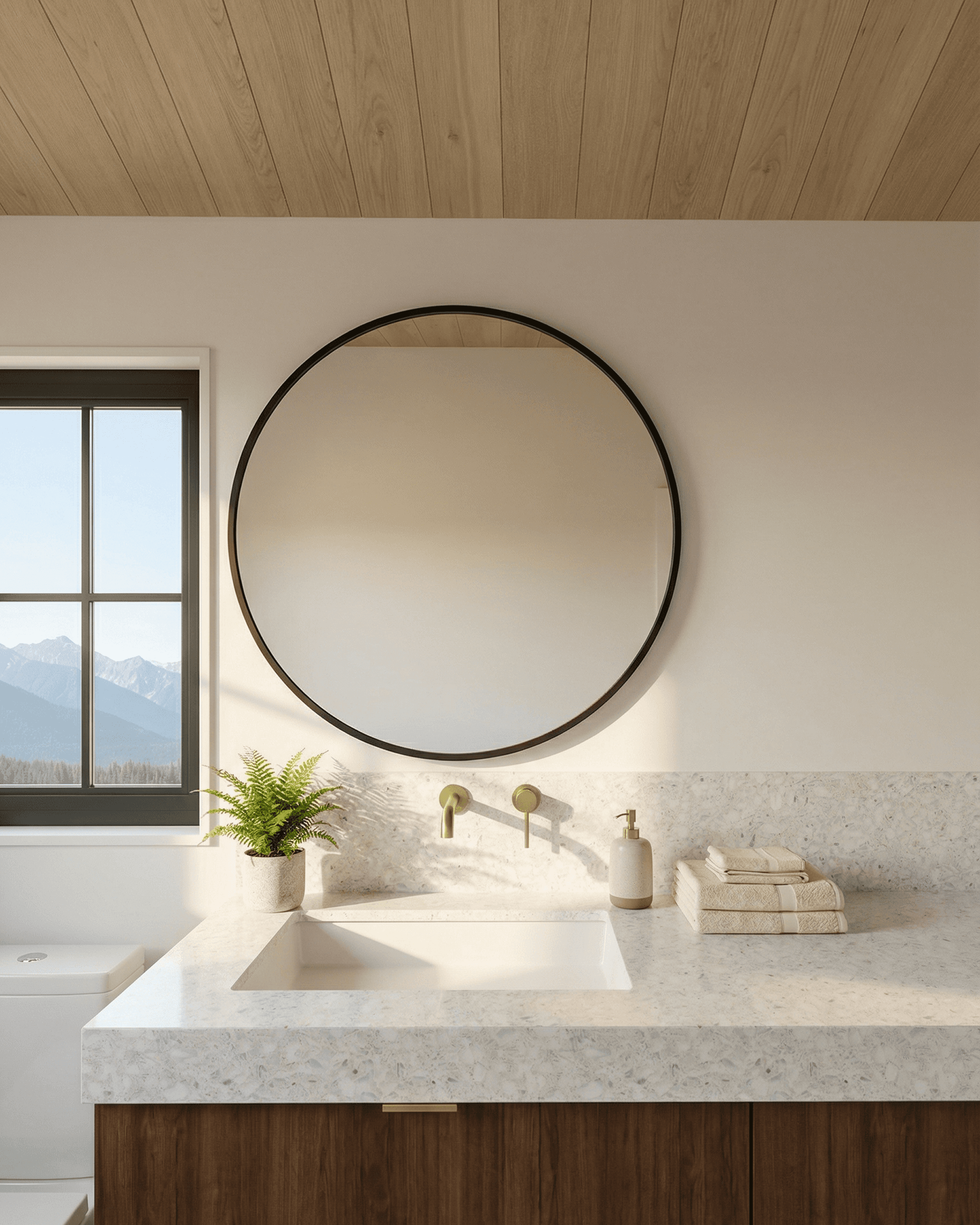
The brass, stone, and timber combination used in the bathroom is a direct continuation of the material language established in the kitchen. It gives the home a coherence across spaces that makes the interior feel considered rather than assembled from separate decisions.
The Fieldstone Cabin in Summary
The Fieldstone is a 1 bedroom cabin plan that shows what's possible when a compact footprint is treated with the same design intent as a full-sized home. A considered exterior, a high-end interior, and a floor plan where every square metre is working — it's a design that translates well across a range of sites and use cases, from alpine retreats to short-stay rentals.
How We Designed this Cabin Concept
Every part of this cabin plan concept, from the exterior details to the interior layout, was designed entirely within the Tiny Easy platform. No third-party tools, no hand-drawn floor plans, no outsourced renderings. From the first concept through to final handoff documents, the whole process lived in one place.
Design Creation
For builders, one of the biggest bottlenecks in turning interest into a real sales conversation is the time it takes to get a clear design in front of a client. Traditional 3D design tools can be slow to learn, and relying on a designer or draftsperson for every early concept can add cost and delay before the client has even had a chance to properly understand the home.
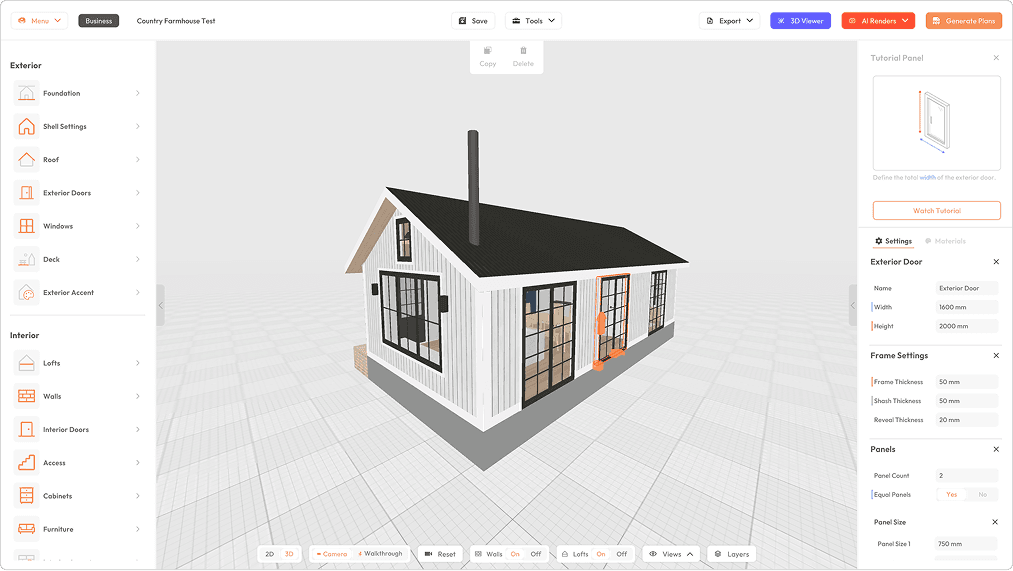
The 3D Designer is Tiny Easy’s design workspace for creating, managing, and tailoring tiny homes, cabins, granny flats, ADUs, and more within one connected system. Builders can use it to build out their core model range, save designs as reusable templates, test new ideas, explore layout options, and refine their designs over time.
Inside the Designer, the structure can be shaped using tools like Foundation, Shell, and Roof, before completing the model with doors, windows, walls, interior doors, cabinetry, furniture, fixtures, lighting, and finishes. This gives builders a practical way to create complete 3D concepts without needing to start from scratch or rely on complex modelling workflows.
Where this becomes especially valuable is in the sales process. Instead of designing a new cabin from a blank canvas for every enquiry, builders can pull the most relevant model from their existing range into a client project, tailor the layout, finishes, openings, and key details, then present a concept that feels specific to that client.
That speed changes the quality of the conversation. Clients are not left trying to imagine the home from 2D plans, rough sketches, or verbal explanations. They can see the design clearly, understand the layout, explore the options, and build confidence in the direction before moving further into pricing, proposal, or approval.
For builders, the result is a faster and more professional path from enquiry to client-ready cabin concept. The 3D Designer helps turn design into a sales tool, giving builders a repeatable way to respond quickly, communicate clearly, and move serious clients forward while interest is still warm.
Visualization
Once a design is complete, the next challenge is presenting it in a way that actually converts interest into commitment. Traditionally, that meant outsourcing renders to a freelancer — which adds cost, turnaround time, and rounds of back-and-forth — or investing in professional rendering software that requires its own lengthy setup before a single image is produced. For a small home builder running a lean operation, neither is a sustainable way to work.
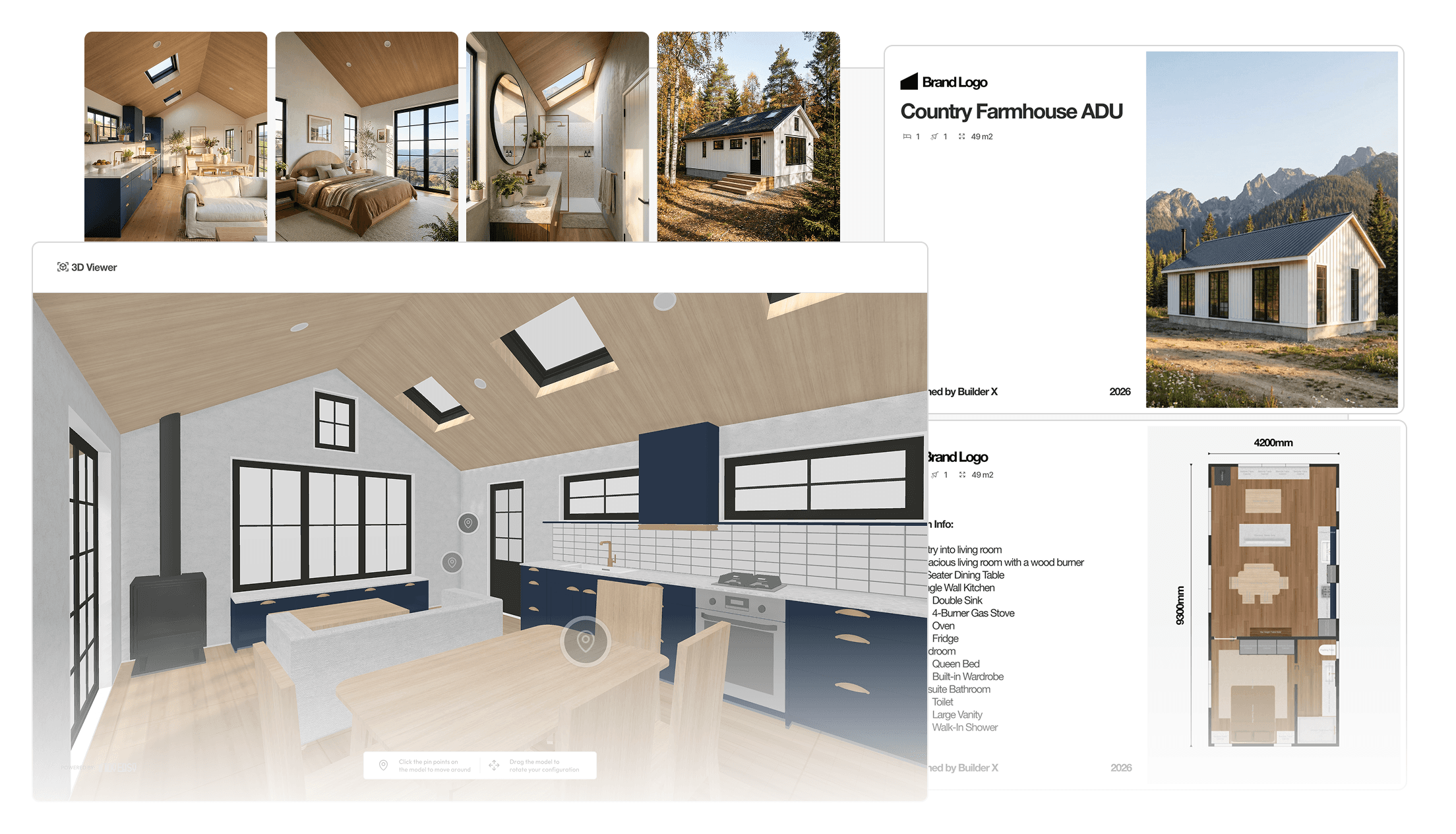
The AI Render Tool takes care of that. Once the design is finalised in the 3D Designer, renders are generated directly from within it. The only setup required is positioning the camera, choosing an environment, setting the time of day and season, and hitting render. The result is a photorealistic image of the home, produced in minutes rather than days — and at a fraction of the cost of conventional methods.
The 3D Viewer Tool adds another layer to the client experience, letting them explore the completed design in interactive 3D from any device. Sharing it is as simple as sending a link. Scale and spatial flow can be difficult to communicate on paper — paired with AI Renders, a 3D virtual tour gives clients the confidence to take the next step without hesitation.
Presentation
Once a design is ready, the next challenge is turning all the project information into a proposal that feels clear, professional, and easy for the client to understand. For many builders, this is one of the most tedious parts of the sales process. The design may already be done, the renders may be ready, and the pricing may be prepared, but pulling everything together into a polished client proposal often means jumping between Canva, PowerPoint, PDF exports, spreadsheets, and old proposal templates that are either too rigid or too difficult to edit.
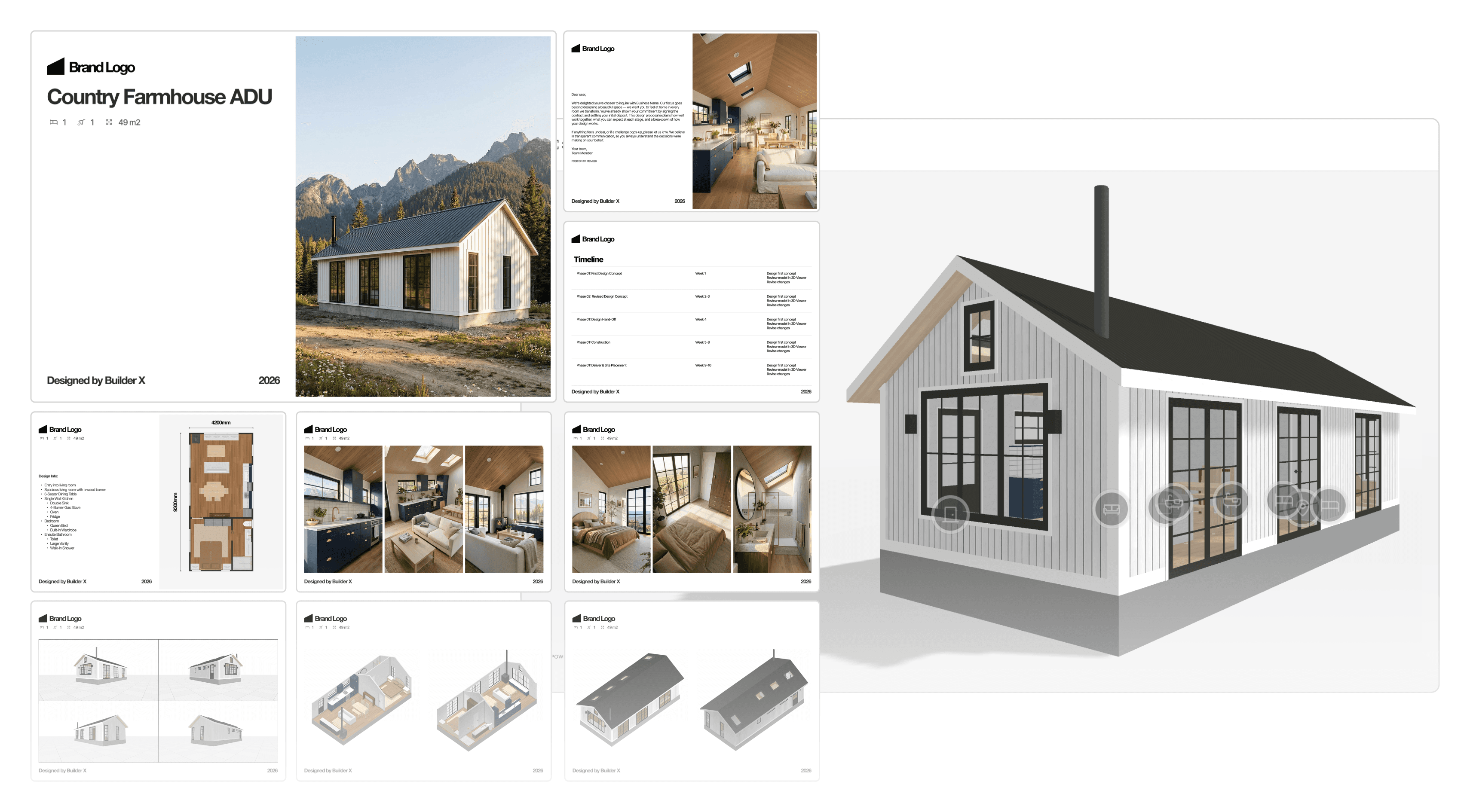
The Proposal Builder is Tiny Easy’s proposal creation tool for building professional, branded client proposals within one platform. It helps builders bring together the key parts of a project, including 3D Viewers, PDF plans, AI Renders, specifications, pricing, inclusions, available options, and next steps, into one clear presentation.
Instead of starting from a blank document every time, builders can begin with suggested proposal templates designed around the way small home projects are actually sold. These templates provide a practical page structure for presenting a customised design, with sections for introducing the project, showcasing the design, explaining the layout, outlining specifications, presenting pricing, and guiding the client toward the next step.
This gives builders a faster way to insert the right content in the right order without needing to design a full proposal from scratch. Pages can be adjusted, removed, duplicated, or added as needed, so the proposal can still be tailored to the client without becoming a complicated custom design task.
The value is not just that the proposal looks better. It helps the client understand the project faster. Instead of receiving disconnected files, flat plans, separate renders, and a pricing document, they get one polished proposal that brings the design story together. They can see the home, understand the layout, review the key details, and know exactly what happens next.
For builders, this creates a more repeatable and professional sales workflow. It reduces the time spent assembling proposals manually, keeps presentations more consistent across the team, and helps move clients toward sign-off, approval, or deposit with greater confidence.
Handoff
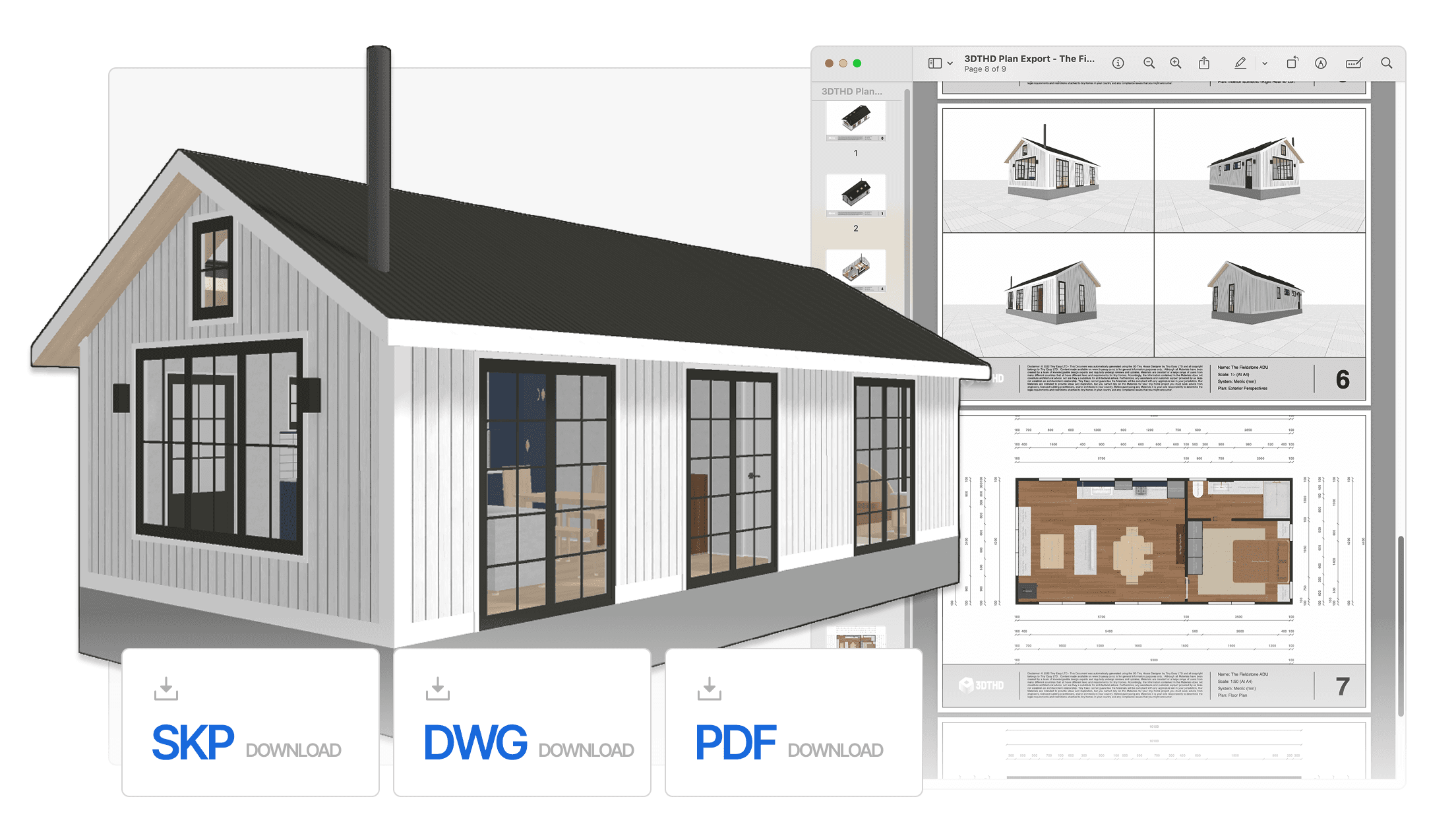
When the design is approved and it's time to move into documentation, the 3D Designer exports everything needed to take the project forward. PDF plans are generated directly from the model — accurate, professional documents that give a draftsperson or architect a clear picture of the design intent without any redrawing required.
Alongside the plans, an auto-populated material take-off spreadsheet exports directly from the design. Rather than manually costing a new model from scratch, the material list is already populated and ready to work from — saving hours in the estimation process and reducing the margin for error when putting a quote together.
For those who need to take the model further, the 3D Designer also exports a SketchUp file, allowing the design to be carried into more advanced workflows without having to rebuild from scratch.
For builders, this closes the loop on the entire process — from first sketch to professional handoff — without the design ever leaving the platform. It's a faster, cleaner way to work that reduces errors, saves cost, and keeps the project moving.
Ready to Design your Own?
This cabin design is proof that a small footprint doesn't mean compromising on quality — in the design, the experience, or the process behind it.
What made it possible wasn't a team of designers or an expensive production pipeline. It was a single platform, built specifically for the way small home builders actually work.
If you're a builder who wants to walk into your next client meeting with renders like these, proposals that are ready to go, and a process that runs end to end without the usual friction — book a call with us and let's talk about what you're building.


100+ Businesses use Tiny Easy in their Sales, Design & Proposal Workflow