Educational
Wondering what a granny flat is? Discover how these self-contained ADUs provide flexible housing solutions and why they are transforming residential properties.
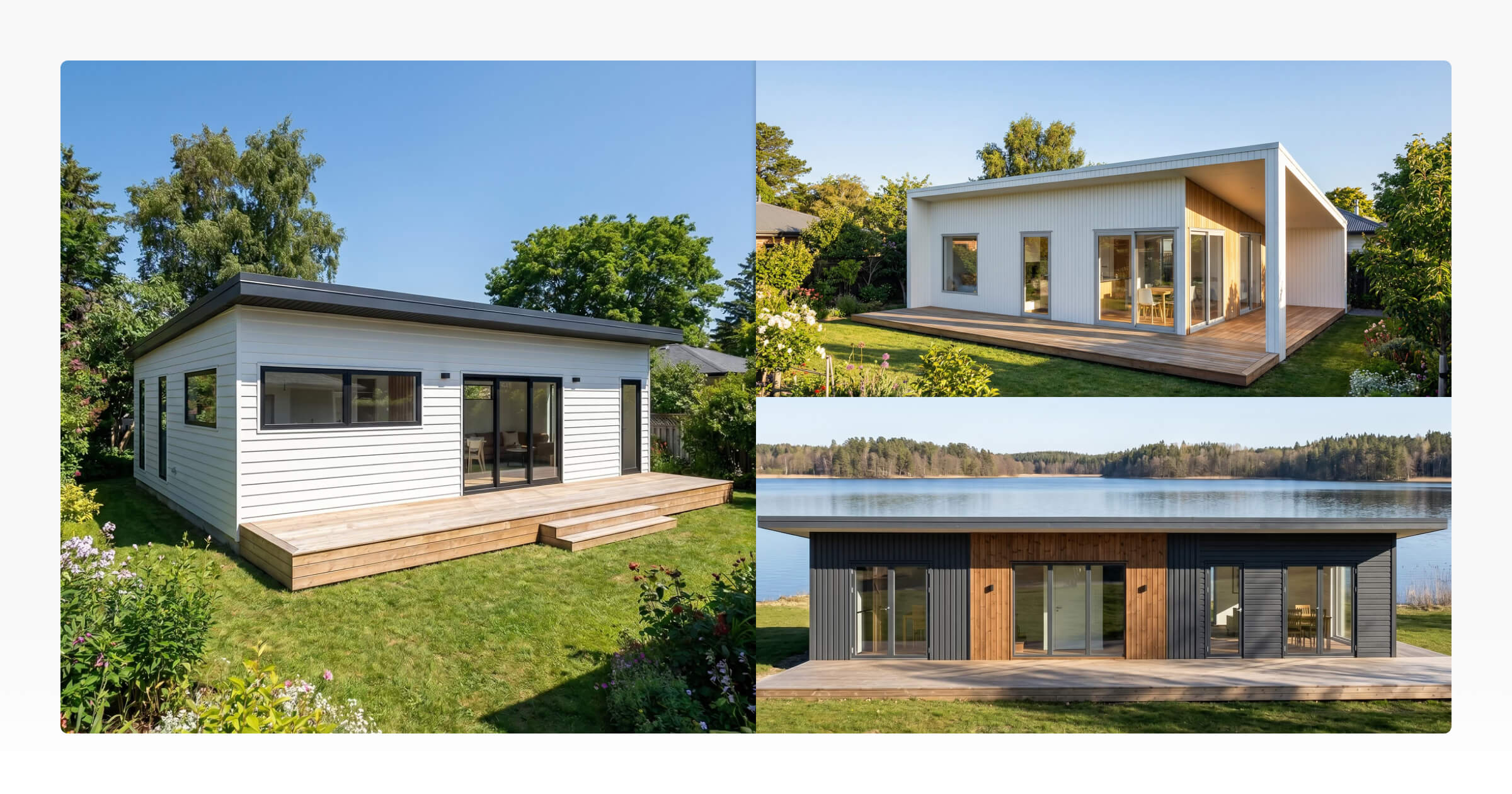
Granny flats have become one of the most talked-about housing solutions in America — and if you're a builder, that conversation is worth paying close attention to.
So, what are granny flats, exactly? At their core, they're self-contained secondary dwellings built on the same residential lot as a primary home. They have their own entrance, kitchen, bathroom, and living space — and they serve a growing list of purposes, from housing aging parents to generating rental income to creating a dedicated workspace separate from the main house.
In the United States, the official planning term is Accessory Dwelling Unit (ADU), but "granny flat" has stuck around for good reason. It's familiar, it's descriptive, and it captures something the bureaucratic label doesn't — the real-world context of how these spaces actually get used.
Region | Common terminology |
|---|---|
Australia | Granny flat, secondary dwelling |
New Zealand | Granny flat, minor dwelling, small stand-alone dwelling |
United States | Accessory Dwelling Unit (ADU), in-law unit, backyard cottage, casita |
Canada | Secondary suite, garden suite, laneway house, depending on region |
For builders, the timing couldn't be better. Demand is rising, zoning laws in many states are loosening, and homeowners are actively looking for builders who can guide them through the process clearly. This guide covers what granny flats are, the different types available, why buyers want them, and what it takes to sell and deliver them well.
What Are Granny Flats? Defining the Term and Why It Matters
A granny flat is a smaller, self-contained home located on the same lot as a primary residence. It typically includes its own kitchen, bathroom, living or sleeping area, and entrance, allowing someone to live independently while remaining close to the main household.
So, what is a granny flat in official planning terms? In the United States, the most commonly used term is an Accessory Dwelling Unit, or ADU. The American Planning Association defines an ADU as a smaller, independent residential dwelling unit located on the same lot as a stand-alone single-family home.
Homeowners may still use more familiar terms depending on the region, the intended occupant, or the type of structure, including:
Granny flat or in-law suite for a home intended for parents or relatives
Backyard cottage or carriage house for a detached dwelling
Garage apartment for a unit created within or above a garage
Secondary suite or accessory apartment for a self-contained additional dwelling
These terms describe slightly different contexts, but they generally point to the same idea: a separate, livable space on an existing residential property.
For builders, this matters because homeowners often start their search using everyday language typing "what is a granny flat" or "can I build one in my backyard", long before they encounter the ADU terminology used in planning, feasibility discussions, and permit requirements. A builder who can clearly explain both the lifestyle opportunity and the practical requirements is better positioned to guide that buyer toward a realistic project.
By the Numbers: The ADU Market Surge
Interest in granny flats and ADUs is not limited to one type of homeowner or one regional trend. National research and state-level planning data show that secondary dwellings have become a more significant part of the housing conversation in the United States.
A 2020 Freddie Mac analysis of 600 million MLS transactions identified 1.4 million distinct single-family properties with accessory dwellings across the United States. The same study found that, between 2009 and 2019, the number of properties mentioning an ADU in a listing for the first time grew by an average of 8.6% per year.
Freddie Mac also found that ADUs became increasingly visible in the sales market over that period. In 2000, 1.6% of active for-sale listings mentioned an ADU. By 2019, that share had risen to 6.8%. Homes sold with an ADU also increased from fewer than 9,000 sales in 2000 to nearly 70,000 in 2019.
California has become one of the clearest examples of this shift. The California Department of Housing and Community Development identifies ADUs as a major housing option and provides statewide guidance for homeowners, builders, and local authorities. California also tracks housing development activity, including ADUs, through its Annual Progress Report Dashboard.
It's also worth noting that buyers searching this space often use a range of terms depending on what they're picturing. Some are looking for a compact backyard dwelling. Others are asking what does studio flat mean in a residential context, typically a self-contained space where the kitchen, living area, and sleeping space share one open room, with a separate bathroom. Many granny flat designs follow exactly that layout, which is part of why the terms overlap in buyer conversations.
For granny flat builders, this growing interest creates a real opportunity. More homeowners are becoming aware of ADUs, but many still need help deciding which type of unit suits their property, understanding local feasibility requirements, comparing layouts, and visualizing what the completed home will actually feel like to live in.
The 4 Main Types of Granny Flats
Understanding what a granny flat is also means understanding the different ways it can be built. The American Planning Association groups ADUs into internal, attached, and detached forms. For homeowners and granny flat builders, these commonly appear as four practical project types—each suited to different sites, budgets, and household goals.
1. Detached Granny Flats
Detached granny flats are stand-alone homes built separately from the main residence, usually in the backyard of an existing property. If you've ever searched "granny flat, what is it" and pictured a small home sitting independently behind a main house, this is exactly that. A fully self-contained dwelling with its own entrance, kitchen, bathroom, and living space, built on the same lot as the primary home but completely separate from it.
In the United States, the most common answer to what is a granny flat called in America is an Accessory Dwelling Unit, or ADU, and the detached backyard version is often what people picture first when they hear that term. It's the configuration that shows up most clearly in state-level ADU legislation, and it's the type that tends to generate the most homeowner interest.
Detached units offer greater privacy for both households and are often well suited to builders offering a repeatable model range of small home designs.
For homeowners, a detached unit can work as accommodation for family members, a guest home, a long-term rental where permitted, or a flexible space that adapts over time.
2. Attached Granny Flats
Attached granny flats are connected to the primary home, commonly as a side addition, rear extension, or connected wing. They still provide an independent living arrangement but share part of the existing building structure.
In the United States, this configuration is one of the most recognized forms of what is commonly called an ADU, which is what a granny flat is called in America in official planning and zoning language. Homeowners may still use terms like "in-law suite" or "attached secondary suite," but the underlying concept is the same: a self-contained living space that shares a wall or roofline with the primary residence.
These units can suit homeowners who want to make use of available land while keeping the secondary dwelling closely connected to the main house — a common preference when the intended occupant is an aging parent or family member who benefits from proximity without sacrificing independence.
3. Interior Granny Flat Conversions
Interior conversions are one way to answer the question of what is a granny flat without adding a new structure to the property. Instead of building outward, the secondary dwelling is created within the existing footprint of the home — commonly in a basement, attic, or an underused section of the house that can be separated and made self-contained.
These projects can be a practical option on properties with limited outdoor space or where local zoning restricts new construction. However, they require careful assessment of access, natural light, ceiling heights, ventilation, fire separation, and applicable local building requirements. What looks like available square footage on paper doesn't always translate into a livable, code-compliant dwelling without meaningful work.
For builders, interior conversions often involve more complexity than they initially appear to, and setting clear expectations early helps buyers understand the full scope before the project moves forward.
4. Granny Flat Garage Conversions
Garage conversions adapt an existing garage into a self-contained dwelling, either within the existing structure or as a unit built above it. In many cases, the finished space functions similarly to what people mean when they ask what does studio flat mean — a compact, open-plan living arrangement where the kitchen, sleeping area, and living space share one main room, with a separate bathroom. That layout can work well in a converted garage, particularly where the footprint is limited but the ceiling height is usable.
Reusing an existing structure may reduce the amount of new building work required, but it doesn't remove the need for proper feasibility checks. Builders still need to assess the condition of the garage, insulation, services, access, fire separation, parking requirements, and local planning or building rules before a project scope can be confirmed.
Each configuration suits different sites, budgets, and household goals. Builders who explain these options clearly — including what the finished space will actually feel like to live in — can help homeowners move from a broad idea, such as "I want a granny flat," toward a realistic project type that suits their property and intended use.
Why Homeowners Want Granny Flats: Flexibility, Family and Future Use
Granny flats are appealing because they give homeowners more ways to use a property they already own. Rather than serving one narrow purpose, an ADU can support different stages of family life, housing need, and financial planning.
One of the most common motivations is multigenerational living. An older parent may want to remain close to family without moving into the main home, while adult children may need a more affordable stepping stone before buying a place of their own. A self-contained dwelling creates privacy and independence while keeping family nearby.
The American Association of Retired Persons (AARP) identifies ADUs as small homes on the same property as a primary residence and highlights their relevance for aging in place, caregiving, family flexibility, and additional housing options.
Rental income is another important motivation for some homeowners. Where local regulations allow it, a granny flat may be used as a long-term rental, helping a homeowner make better use of their land while creating another housing option within an established neighborhood. However, rental suitability and expected income depend on local rules, market demand, construction cost, and the final design.
Other buyers are looking for adaptable space: a guest suite today, a home office next year, or accommodation for family later in life. This flexibility is a key reason homeowners are exploring granny flats even when they don't yet have one fixed use in mind.
For granny flat builders, these different motivations matter. A buyer planning for an aging parent will ask different questions from a homeowner considering a rental unit or a flexible backyard studio. The sales process becomes easier when the builder can connect each buyer's goal to a clear layout, specification, budget pathway, and visual concept — helping buyers move from a general idea toward a project they feel confident about.
The Builder's Challenge: Why Granny Flat Sales Are Complex
Granny flat projects may be compact in size, but the buying decision is rarely simple — and understanding that complexity is part of what separates builders who close consistently from those who get stuck in long, drawn-out sales conversations.
When a homeowner starts searching "granny flat, what is it, and can I build one on my property," they're often just beginning a process that involves site feasibility, design decisions, local requirements, budget clarity, and family conversations — all before they're ready to commit. As a builder, you're not just answering a product question. You're guiding someone through a genuinely complex decision.
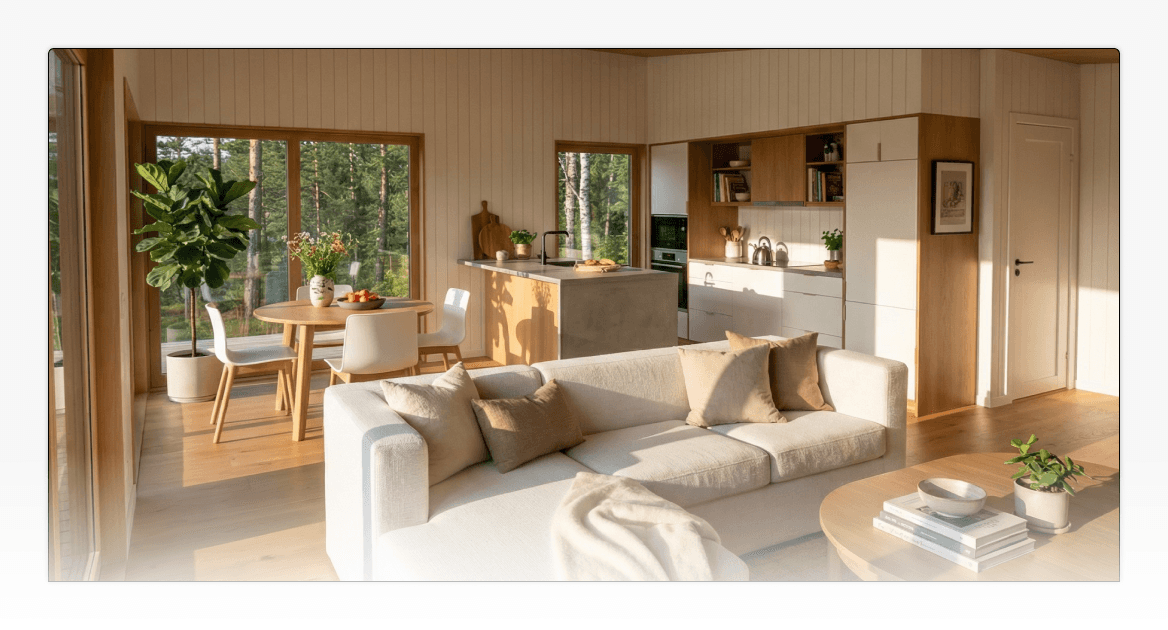
The first challenge is helping buyers understand compact space. A two-dimensional floor plan may show room measurements clearly, but many homeowners still struggle to judge how a kitchen will feel, whether a bedroom will accommodate the furniture they need, or how private the unit will feel in relation to the main home. Without strong visual communication, that uncertainty tends to slow things down.
The second challenge is managing design changes. A buyer may initially ask for a simple modification — a larger bathroom, a different kitchen layout, or additional storage. In a compact dwelling, those decisions can affect circulation, window placement, cabinetry, fixtures, and overall cost. Without a clear visual way to review options, sales conversations can quickly become slow and repetitive.
The third challenge is presenting pricing and scope clearly. Homeowners often want to compare base models, upgrade options, finishes, and site-specific considerations before they're ready to proceed. When that information is scattered across emails, revised drawings, and manually assembled quotes, it becomes harder for both the buyer and the builder to make confident decisions.
Finally, local ADU requirements vary by location. Setbacks, size limits, services, parking requirements, owner-occupancy rules, and approval pathways may differ between jurisdictions. The American Planning Association notes that ADU zoning provisions commonly address dimensional standards, parking, occupancy, and other local requirements.
For builders, the opportunity is to make this early journey clearer: explain the project type, qualify feasibility, show the design visually, present available options, and move suitable buyers toward a well-defined proposal.
How Tiny Easy Helps Granny Flat Builders Create a Clearer Sales Workflow
Understanding what a granny flat is — and what it's called in America — only solves the first part of the buyer journey. In the US, granny flats are officially referred to as Accessory Dwelling Units, or ADUs, but homeowners often start their search using familiar terms like "granny flat" or "in-law suite" before they've encountered any planning language at all. Builders who can bridge that gap clearly, and then guide buyers from early interest through to a confident decision, are in a much stronger position to close.
Tiny Easy is Visual Sales, Design & Proposal Software built for small home builders, including Granny Flat Builders and ADU builders. It supports a connected workflow from early buyer exploration through to tailored design concepts, visual presentation, and project handoff.
For builders with a repeatable granny flat model range, the 3D Configurator gives buyers a way to explore available models, layouts, materials, and upgrade options through a self-serve experience on the builder's website. Buyers arrive at the first conversation with a clearer sense of what they want, and builders get more useful context before that call even starts.
Once a homeowner is considering a specific project, the 3D Designer helps builders develop or tailor a design concept using their own preferred layouts, materials, and model range. Adjusting room arrangements, swapping finishes, or adapting a standard design to suit a buyer's goals becomes a much faster part of the sales conversation rather than a separate back-and-forth process.
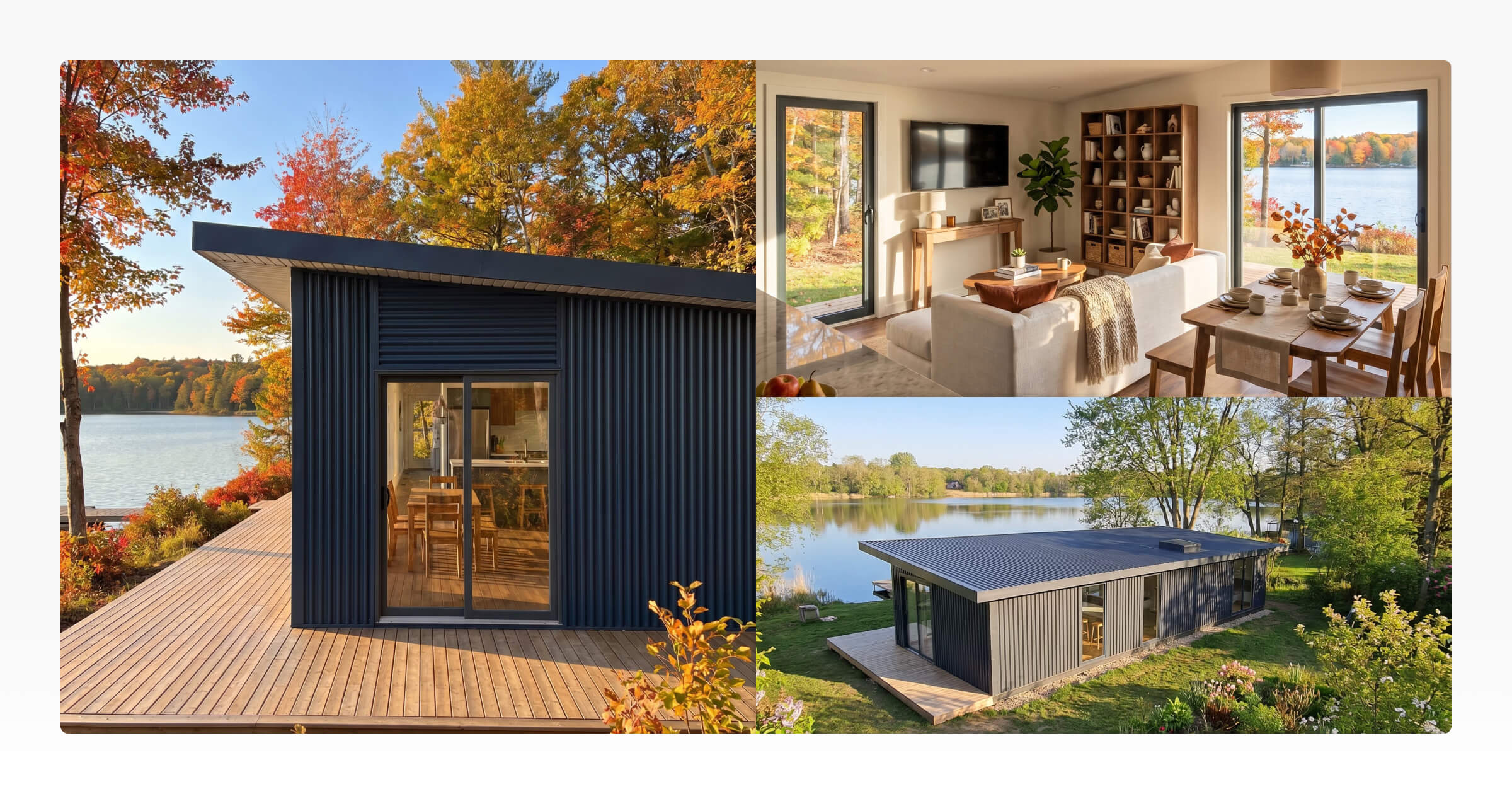
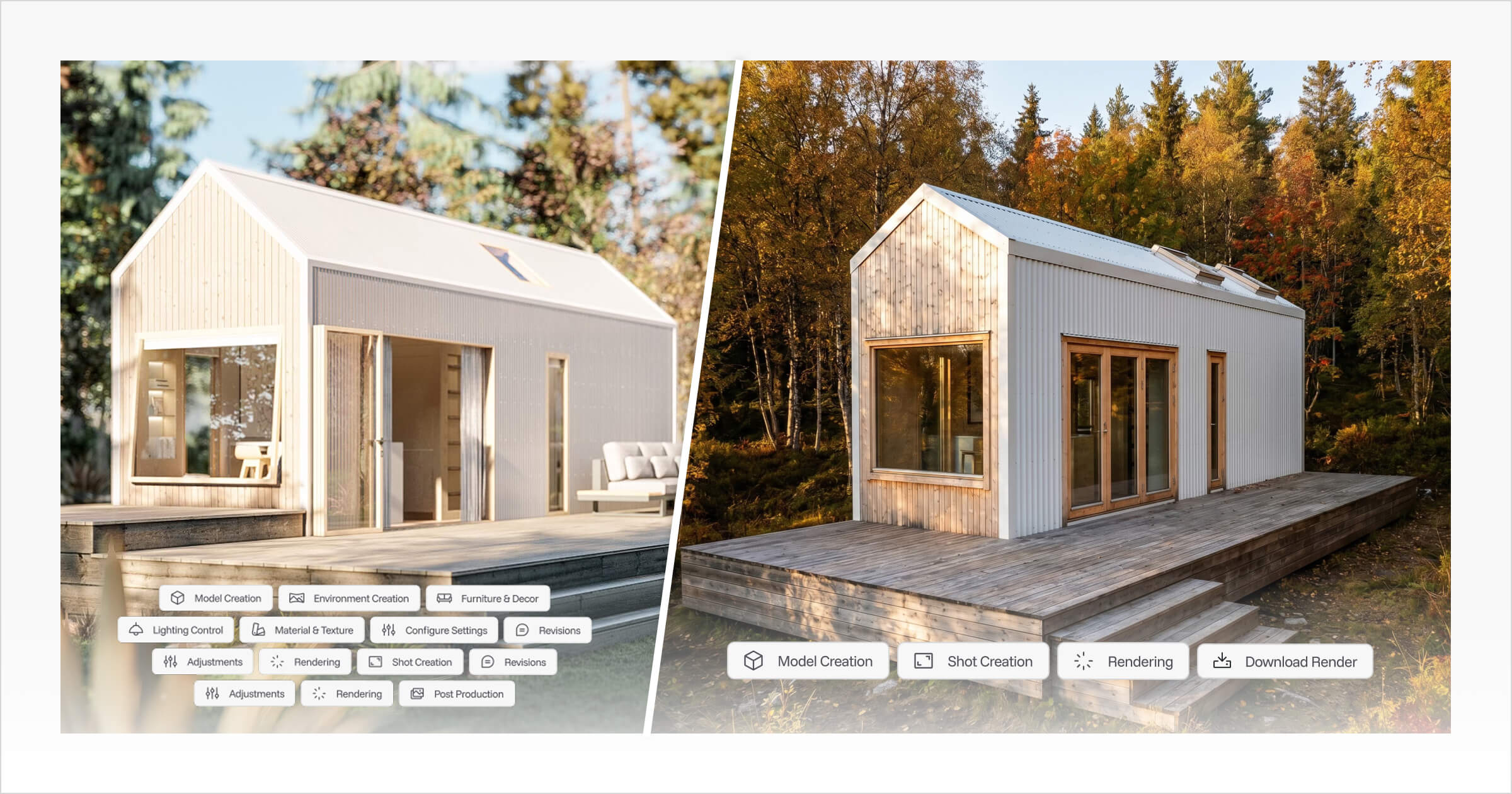
Visual communication matters especially for compact homes. Through realistic concept renders from the AI Render Tool, client-friendly PDF Sales Plans, and interactive 3D walkthroughs, builders can help homeowners understand how the granny flat will actually look and feel before committing to anything.
Those visual assets then feed directly into a clearer proposal conversation. The Proposal Builder brings together the proposed design, inclusions, indicative pricing, next steps, and project expectations into a professional, client-ready document — rather than something pieced together from scattered files and email threads.
For Granny Flat Builders managing multiple enquiries at once, this kind of connected design-to-proposal workflow creates real consistency. Buyers receive clearer information, design changes are easier to manage, and builders spend less time rebuilding sales material from scratch for every new project enquiry.
One Tiny Easy customer, Matt from Nordic & Spruce, described the impact of introducing the 3D Configurator to his sales process: "Since launching Tiny Easy's 3D Configurator, we've seen a surge in quality leads, allowing me to focus on closing deals and secure three months of work in just one month, with much less effort." You can read more about Tiny Easy's visual sales and proposal workflow on the Tiny Easy Website.
Key Takeaways for Granny Flat Builders
Granny flats—known officially as Accessory Dwelling Units or ADUs in the United States—have become one of the most discussed housing options for homeowners looking to make better use of their property. For builders, understanding what a granny flat is and how to guide clients through the delivery process is increasingly important. The opportunity for granny flat builders isn't just about offering a compact secondary dwelling; it's about creating a buying journey that helps homeowners move from a general idea toward a project they feel confident about. A strong sales process should help buyers: understand whether a detached, attached, converted, or garage-based ADU suits their site and goals; compare layouts, finishes, and upgrade options without becoming overwhelmed; visualize compact spaces clearly before committing to a design; and receive transparent information about scope, indicative pricing, feasibility, and next steps. Builders who provide this clarity are better positioned to turn early interest into qualified enquiries and, eventually, paid deposits. Tiny Easy supports this process by helping granny flat builders present, tailor, and visualize designs through a more connected sales, design, and proposal workflow—reducing back-and-forth and making it easier to guide buyers from the first conversation to commitment.
Conclusion: Helping Homeowners Move From Granny Flat Idea to Real Project
Whether a homeowner calls it a granny flat, backyard cottage, in-law suite, or ADU, the underlying need is usually the same: a flexible, self-contained space that makes better use of their property. And while the terminology varies — including questions like what does studio flat mean in the context of a compact, open-plan secondary dwelling — the buying journey tends to follow a similar path. Awareness, curiosity, feasibility questions, design decisions, and eventually, a builder they trust to bring it all together.
The American Planning Association recognizes ADUs as independent dwellings that can expand housing choices, support older family members living nearby, and make better use of existing residential land. National research from Freddie Mac also shows that properties with ADUs have become increasingly visible across the United States housing market.
For granny flat builders, this creates a clear business opportunity. Homeowners need more than a floor plan or a price estimate. They need help selecting the right project type, understanding their options, visualizing the completed home, and moving forward with confidence.
That's where a stronger visual sales workflow makes a real difference. With Tiny Easy, small home builders can present their model range, tailor design concepts, create compelling visuals, and organize clearer proposal conversations for buyers exploring granny flats and ADUs.
If you're looking for a better way to sell and present your granny flat designs, book a demo with Tiny Easy to explore how it could fit into your sales and design workflow



About the Author
Eujenne | Co-founder of Tiny Easy and has 8+ years of experience in the tiny house and small home industry.
She built her own tiny home on wheels with her partner and co-founder Laurin, and has designed several popular Tiny Easy concept homes, including the Scandi, Petite Maison, and 10x10 Tiny House on Wheels. At Tiny Easy, Eujenne works across UI/UX, product education, content marketing, and builder resources, helping small home businesses use 3D design and visual sales tools to improve their design, sales, and client communication workflows.