Cabin Design
Evergreen Cabin | Cabin Plans with Loft
About Evergreen Cabin
1
1
241 Sqft
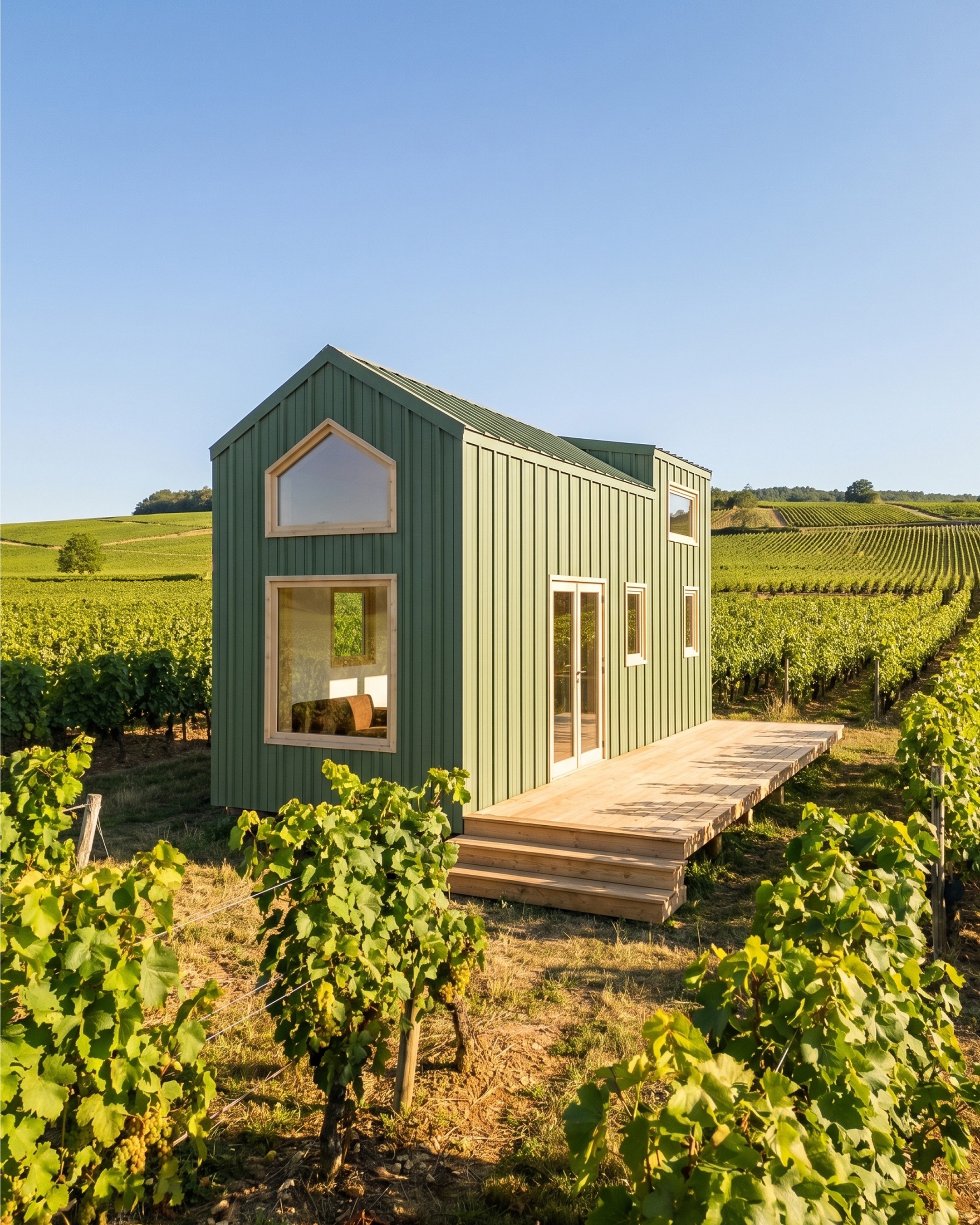
The Evergreen Cabin is a one-bedroom loft cabin plan designed around warmth, colour, and natural light. Sage green cladding, terracotta tile, oak ceilings, and a distinctive pentagonal gable window give it a clear visual identity without reaching for the usual neutral palette. The layout fits a full kitchen, open-plan living and dining, a walk-in shower bathroom, integrated laundry, and a proper loft bedroom for two, in a footprint that suits a vineyard, rural property, or scenic countryside setting.
Cabin Design Specifications
Dimensions
Imperial: 26.2ft x 9.1ft x 13.9ft
Metric: 8m x 2.8m x 4.25m
Layout
1 Bed Loft
1 Bath
Design Type
Cabin
Sleeps
Up to 2
2 Adults
Plans/Blueprints Available
Plans Exported With:
Export with instant generate plans tool & Take off tool in 3D Designer
Take an Interactive 3D Tour of Evergreen Cabin
Step inside this cabin design and explore every corner at your own pace with our interactive 3D Viewer.
Design Walkthrough
The Design Concept Overview
The Evergreen Cabin is a compact set of cabin plans with loft sleeping space built around a deliberate decision: to use colour as a through-line, not as an accent or a detail, but as the organising principle from exterior cladding to kitchen cabinetry to bathroom tiles to bedroom walls. It's a choice that gives the design a cohesive identity from the first exterior view through to the last interior corner.
The concept was built around the feeling of a retreat tucked into a vineyard or rural landscape. The renders place it in exactly that setting, surrounded by vine rows, open sky, and golden afternoon light. The sage green cladding settles into the landscape rather than competing with it. The warm oak inside responds to the timber of the deck and the frames of the windows. The terracotta tile in the bathroom and kitchen echoes the earth underfoot.
For the right buyer, this is the kind of cabin that photographs well and feels genuinely worth spending time in. It suits couples looking for a countryside retreat, short-stay operators building a premium rental offering, or lifestyle buyers who want a small home with a clear design identity, not just a box with a bed.
Exterior Design
The exterior of the Evergreen Cabin reads as a single, confident gesture. Sage green vertical metal cladding wraps the full form of the cabin, and the standing seam roof carries the same colour. Walls and roof read as one continuous surface rather than two separate elements, which is part of what gives the cabin such a strong presence in an open landscape.
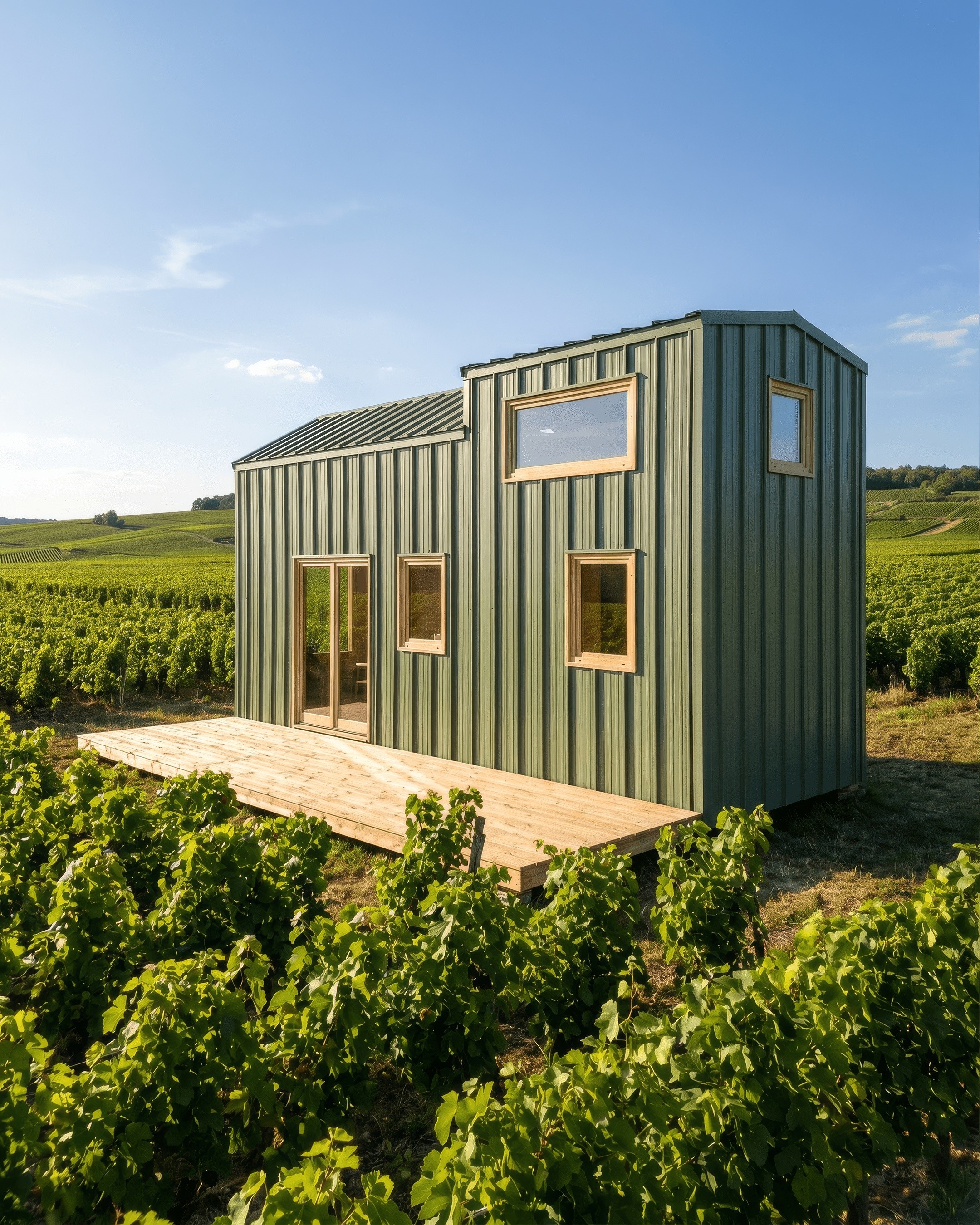
The double-gable roofline is the defining structural decision in these cabin floor plans with loft. It isn't just an aesthetic choice. Two distinct gabled peaks define the two ends: the living room gable at the left end, and the taller loft gable at the right. The different heights create visual rhythm and make the form feel more architectural than a standard rectangular cabin.
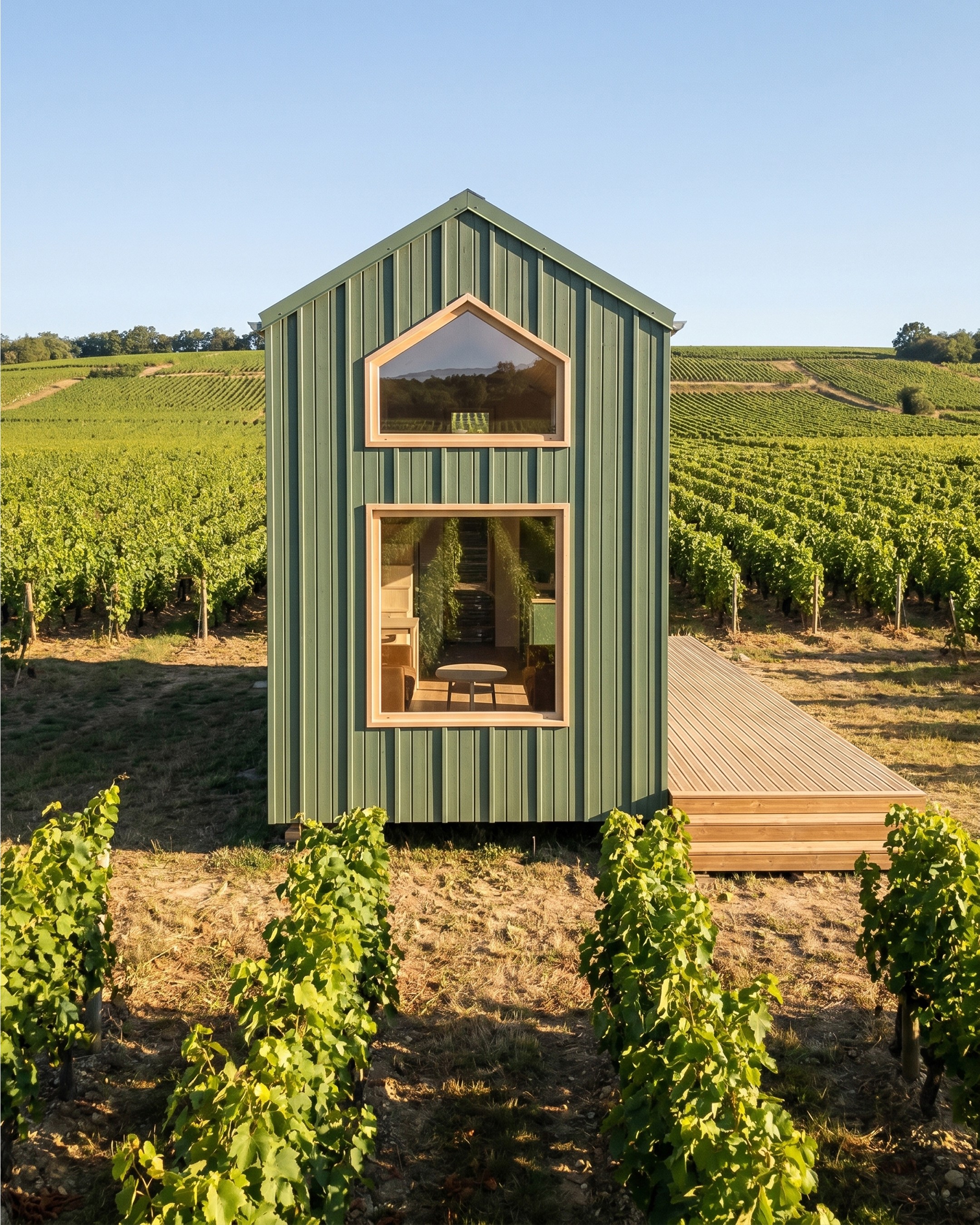
The most distinctive exterior feature is the window composition on the living room gable end. A pentagonal arch-shaped window sits above a large rectangular picture window, and the two stack vertically to fill the gable face. Timber framing around both windows, and across all the windows on the cabin, adds warmth to what could otherwise be a cold metal exterior.
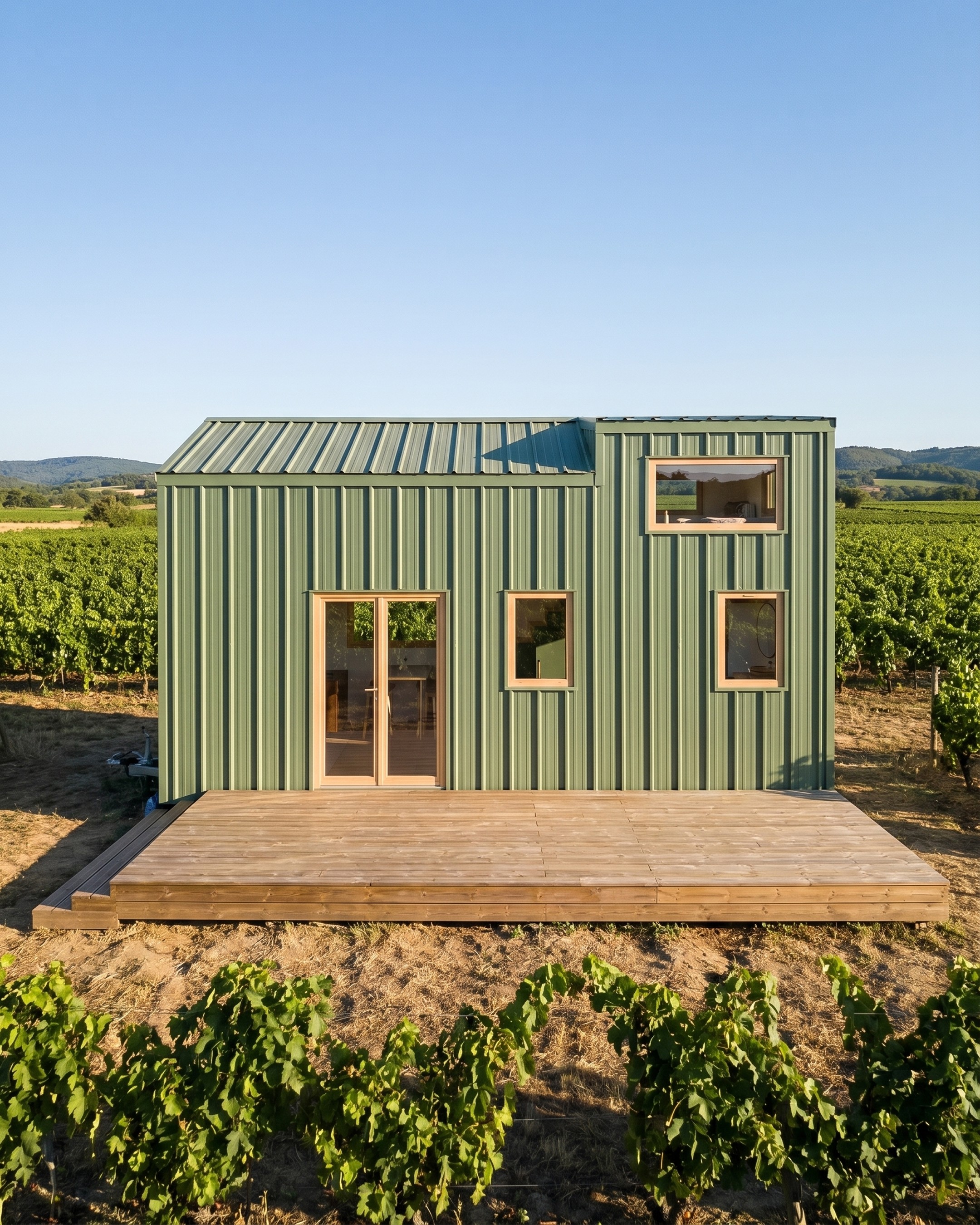
The front of the cabin faces the deck. Timber-framed double doors open the living room to the outside, and the deck extends wide and flat from the front face with timber steps to the ground. For a vineyard or rural site, that deck functions as an outdoor room, a place to sit in the evening with the view in front of you and the cabin behind.
Kitchen and Dining
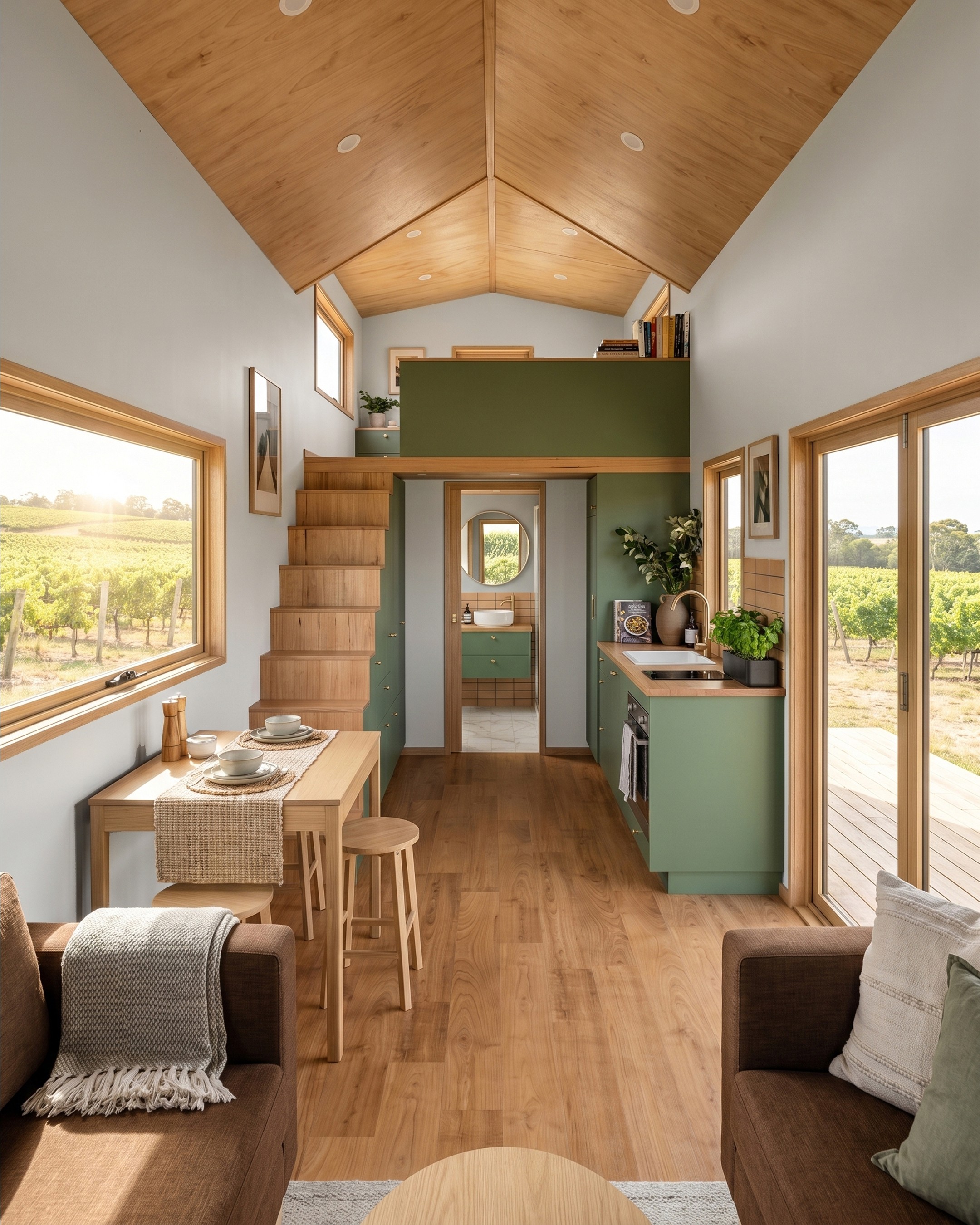
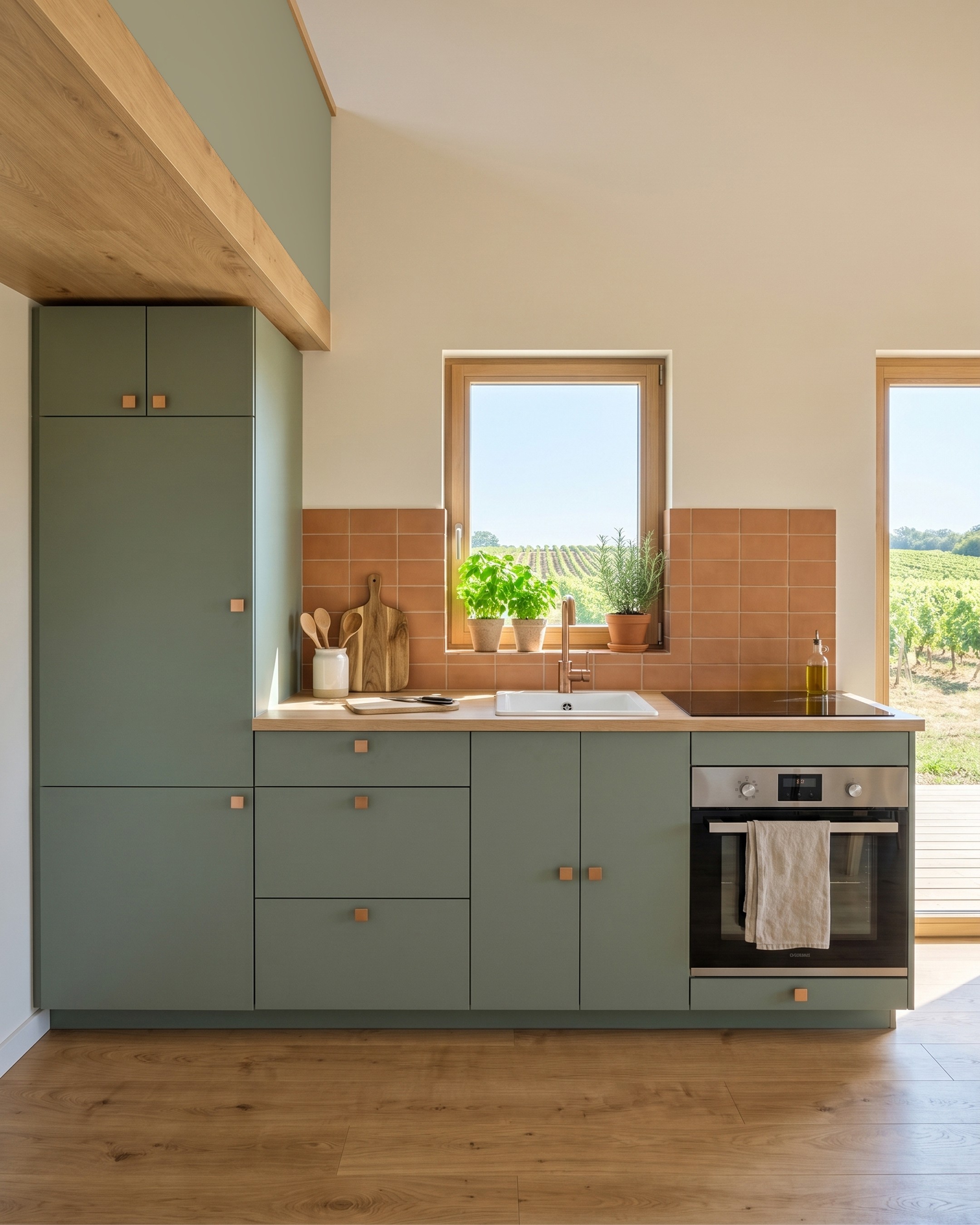
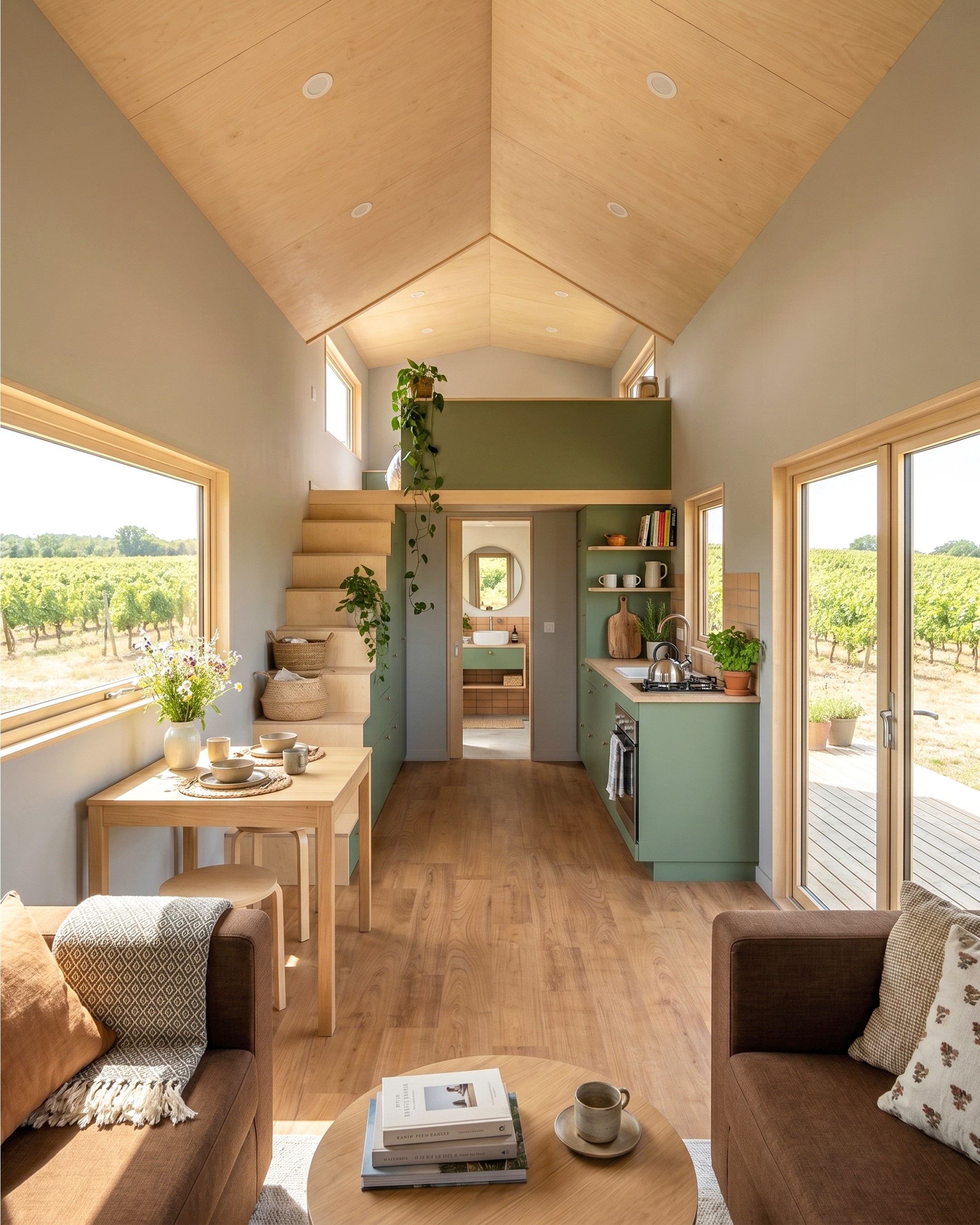
The kitchen in these cabin plans with loft runs along one wall and makes full use of its height. A full-length sage green cabinetry column at one end handles storage and appliance housing. Lower cabinets run the rest of the bench length below a warm oak countertop.
The kitchen palette brings together:
Sage green flat-front cabinetry with warm brass hardware throughout
Oak butcher-block countertop running the full bench length
Terracotta square tile backsplash across the full width behind the counter
Full-height pantry unit integrated at one end for storage and appliances
Timber-framed window above the sink framing a direct vineyard view
The cabinet colour doesn't change from room to room. It's the same sage green in the kitchen, the bathroom, and the stair storage, which keeps the interior feeling cohesive rather than assembled from separate decisions.
The dining area sits adjacent to the kitchen, beside a long horizontal landscape window that runs the full length of the zone. An oak dining table with round natural stools positions two people in front of that window. It's a simple arrangement that works because of the window, not despite the compact footprint.
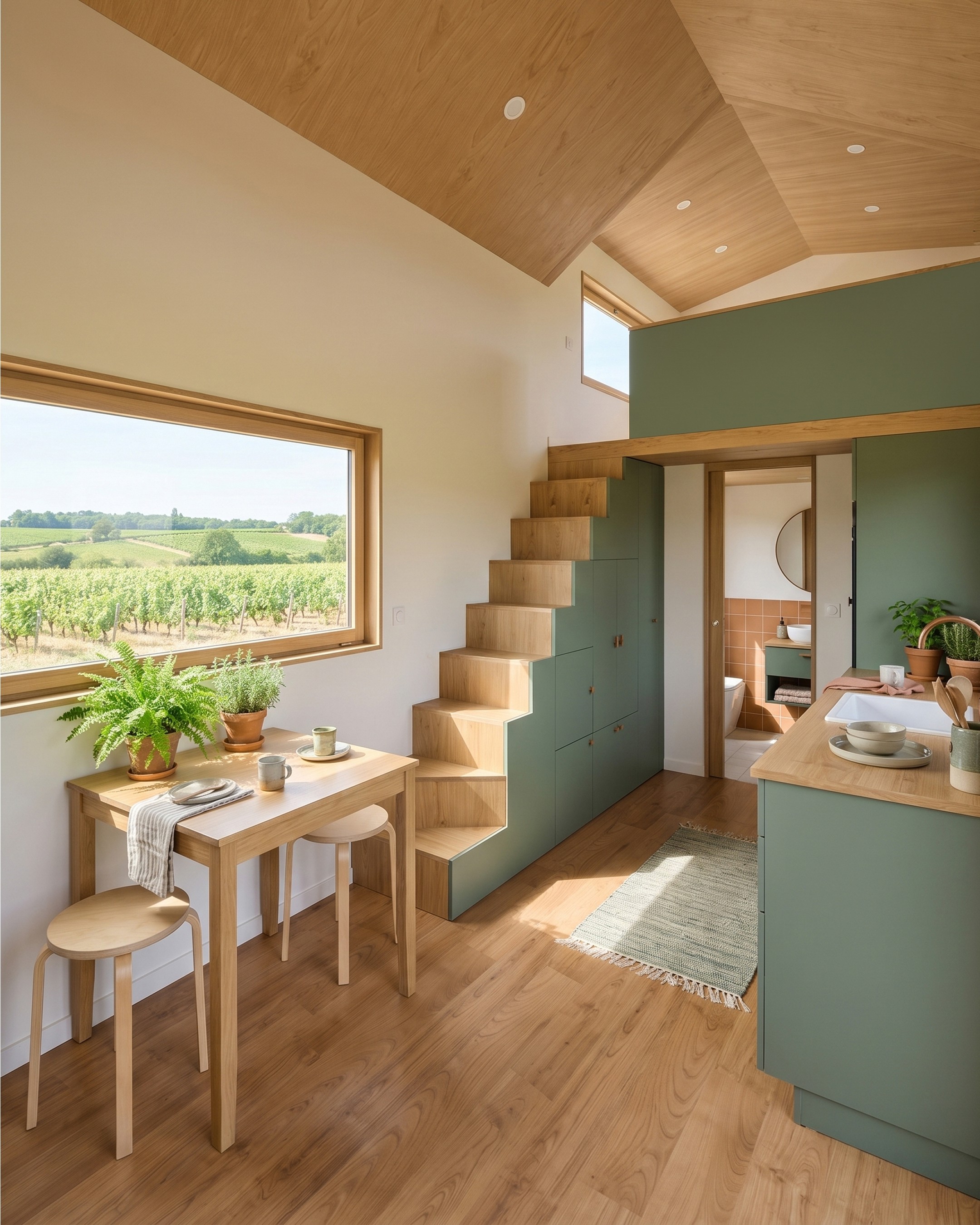
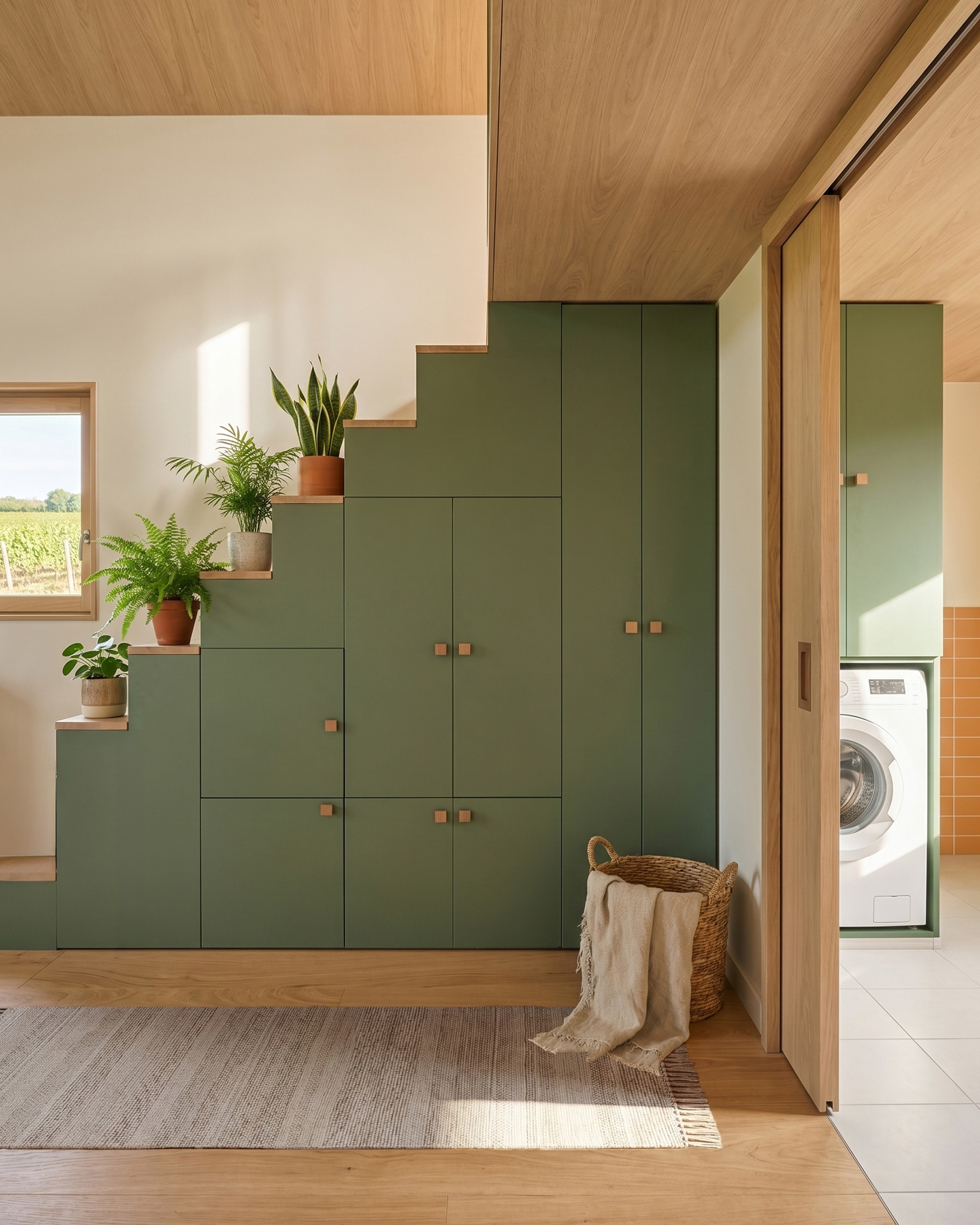
Behind the dining zone, the staircase leads up to the loft bedroom. The underside of the stairs isn't wasted space. Full-height green cabinetry fills the entire stair footprint from floor to ceiling, with multiple cupboard doors providing an organised storage system that reads as an architectural element rather than a practical afterthought.
An adjacent laundry closet sits next to the staircase. A separate sliding door conceals the washing machine and keeps the laundry out of sight. It's a compact but considered arrangement that keeps the living area clean without hiding the laundry at the expense of another useful space.
Living Room
The living room anchors the left end of the cabin and benefits from the full volume of the living room gable. The ceiling pitches up at this end of the home, and that height, combined with the window composition on the gable wall, makes the space feel considerably larger than the footprint suggests.
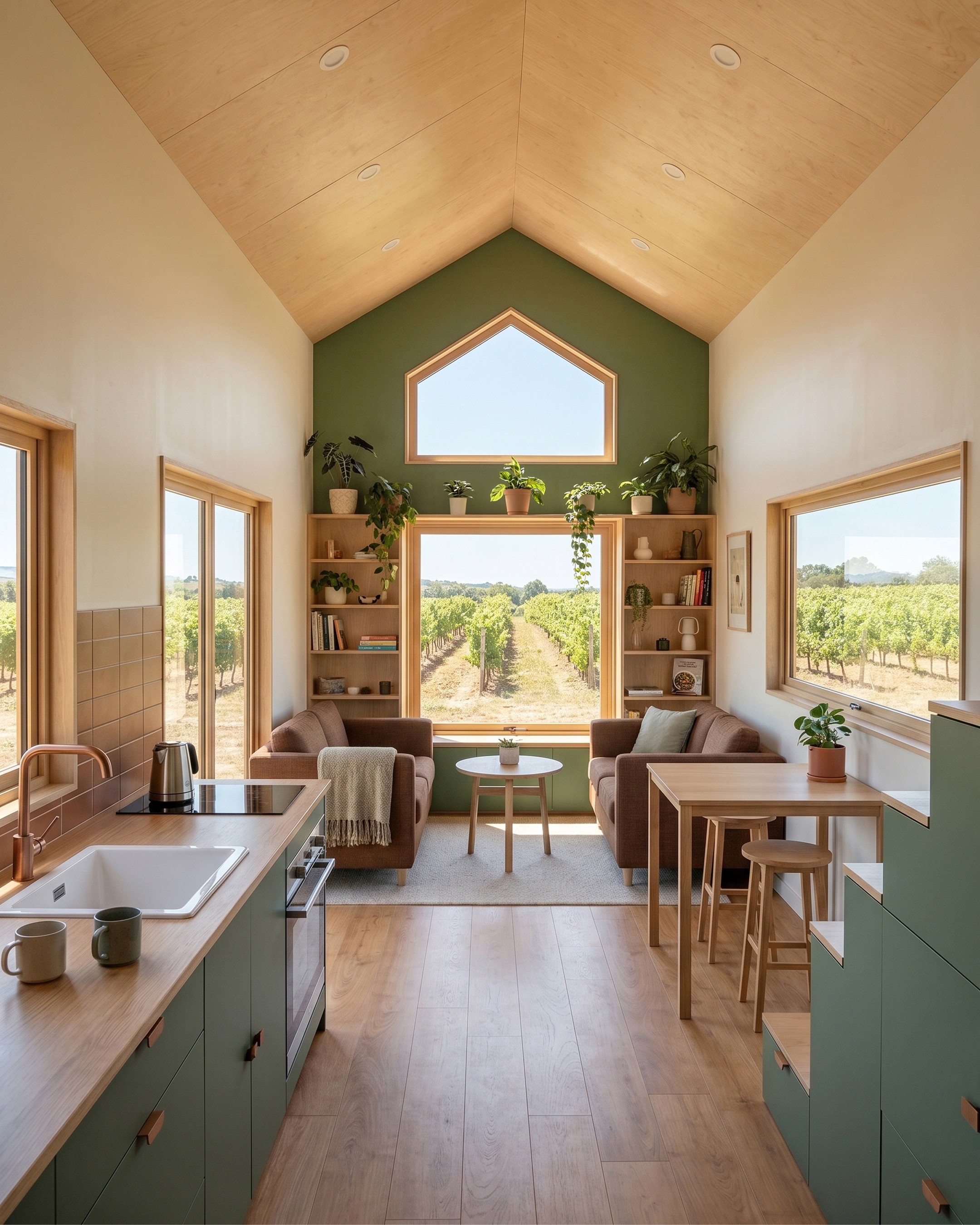
The gable wall is painted sage green, matching the exterior cladding. The pentagonal arch window and rectangular window below sit within it. Built-in oak shelving units flank the windows on both sides, running from the floor upward. The shelves add storage and character without requiring the space to accommodate freestanding furniture.
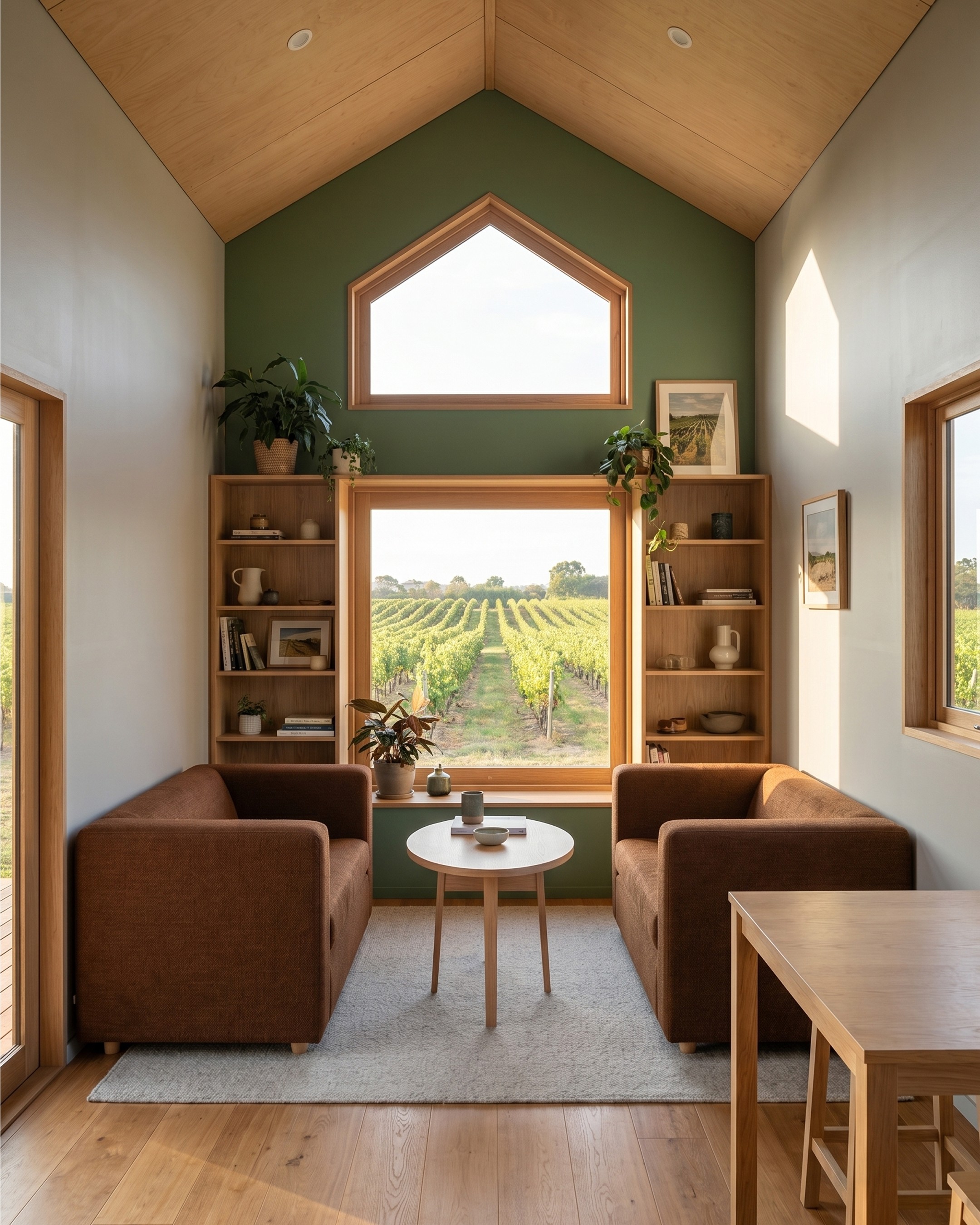
Two deep brown sofas sit facing each other across a small circular coffee table. The seating arrangement is comfortable for two people and naturally orients toward the window and the vineyard view beyond. Large sliding glass doors on the front wall open the living room directly to the deck, so when the weather allows, the indoor and outdoor spaces connect without interruption.
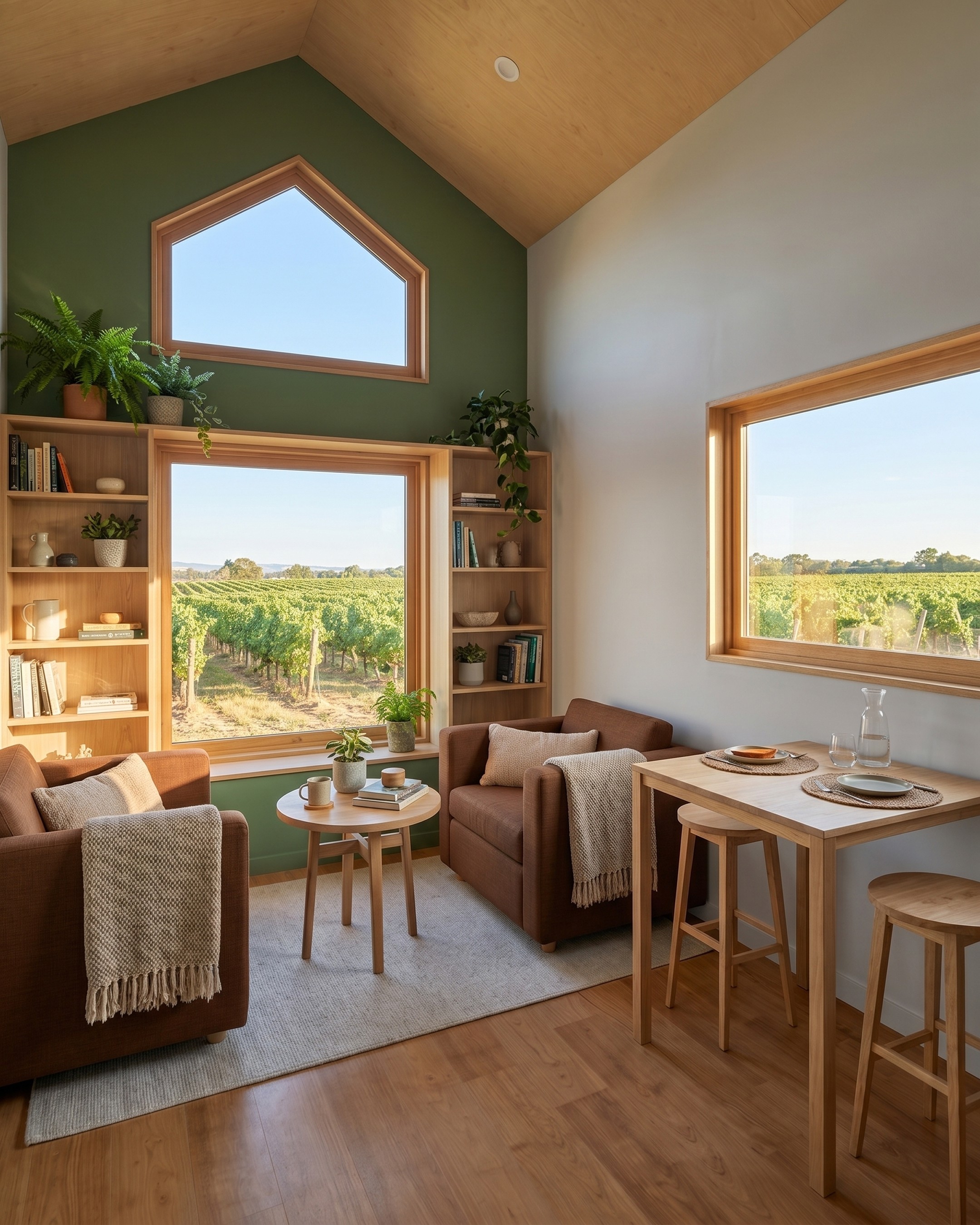
It's a room that works because of the light. The gable window draws light in from one end, the side windows bring it in from both sides, and the door to the deck opens the space up further. In compact cabin plans with loft, that management of light is one of the most important things a good design can do. This one doesn't take it for granted.
Loft Bedroom
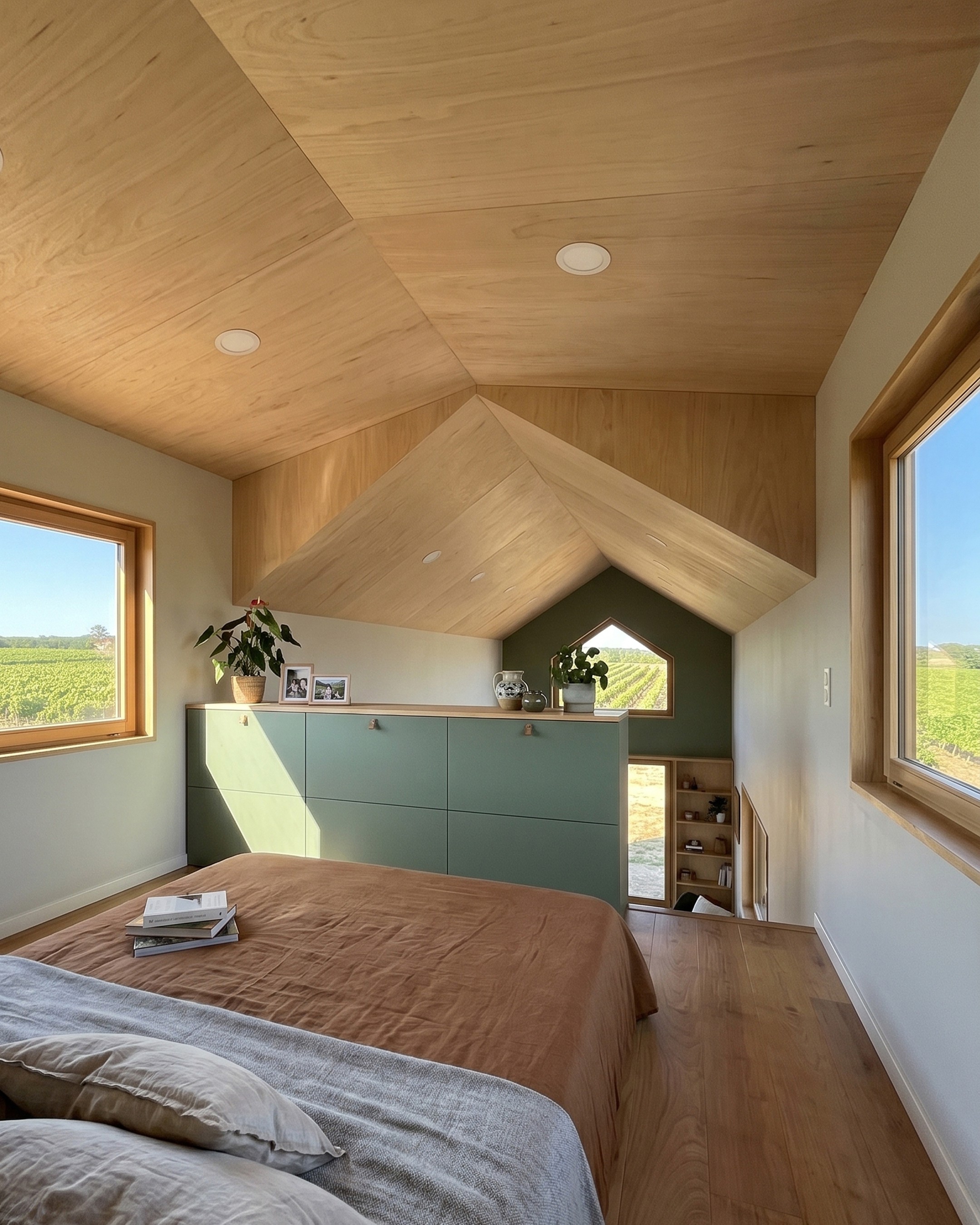
The loft bedroom sits above the rear of the ground floor, accessed by the open oak staircase. The taller gable at this end of the cabin gives the loft generous ceiling height. It's a proper bedroom, not a sleeping platform. The space reads as a full room, which makes a real difference to how it feels to live in.
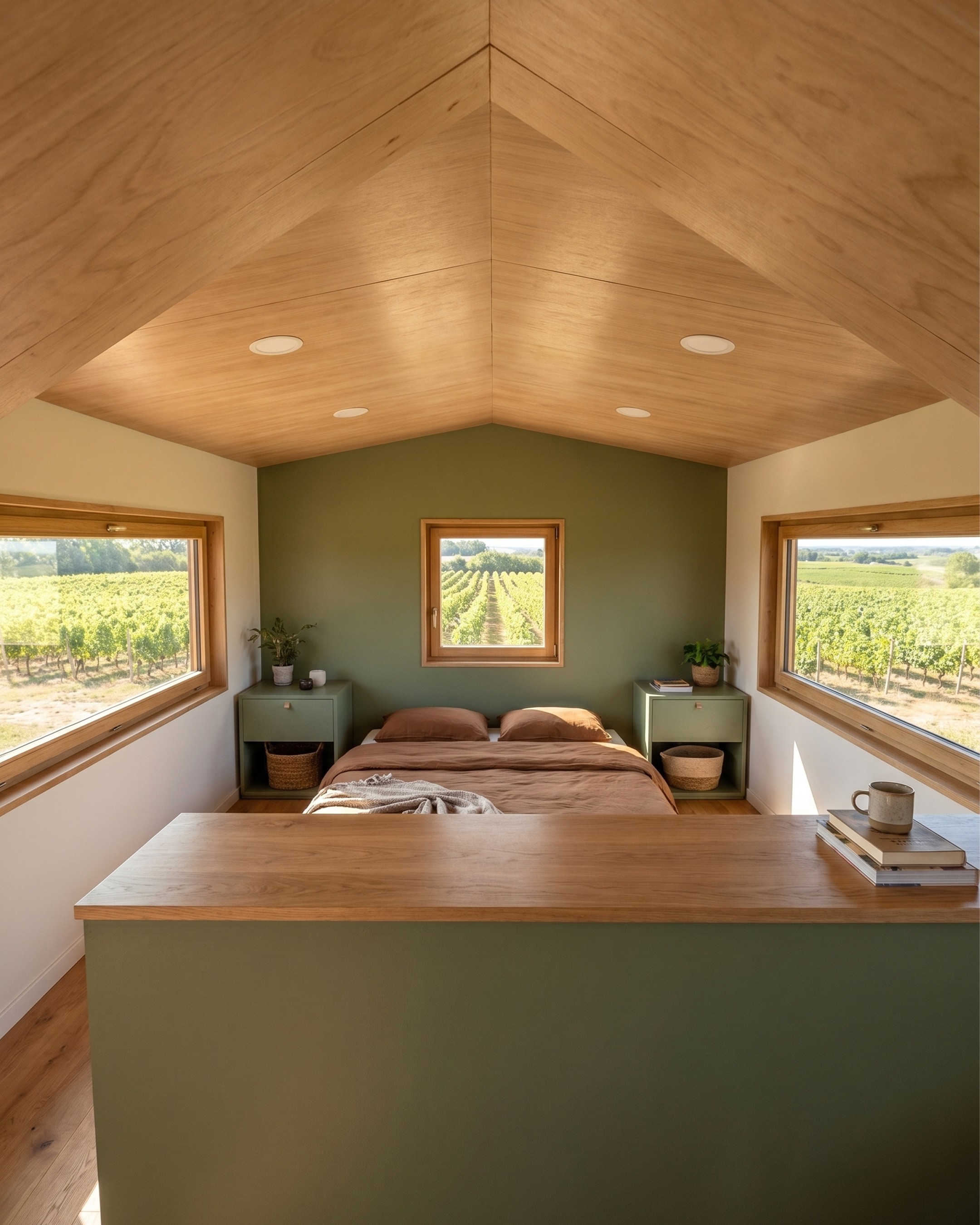
What the loft delivers in these cabin plans with loft:
Full gable ceiling height lined in warm oak timber throughout
Green accent wall behind the bed, matching the living room palette
Three windows for natural light: one centred on the gable wall, two on the sides
Vineyard views from the bed through the centred timber-framed window
Green floating bedside tables matching the cabinetry throughout the home
Warm brown linen and natural timber flooring consistent with the ground floor
For a short-stay or holiday cabin, the loft layout provides separation from the living area below without requiring a full second storey. For full-time compact living, the ceiling height and natural light make it a viable year-round bedroom rather than a seasonal option.
Bathroom
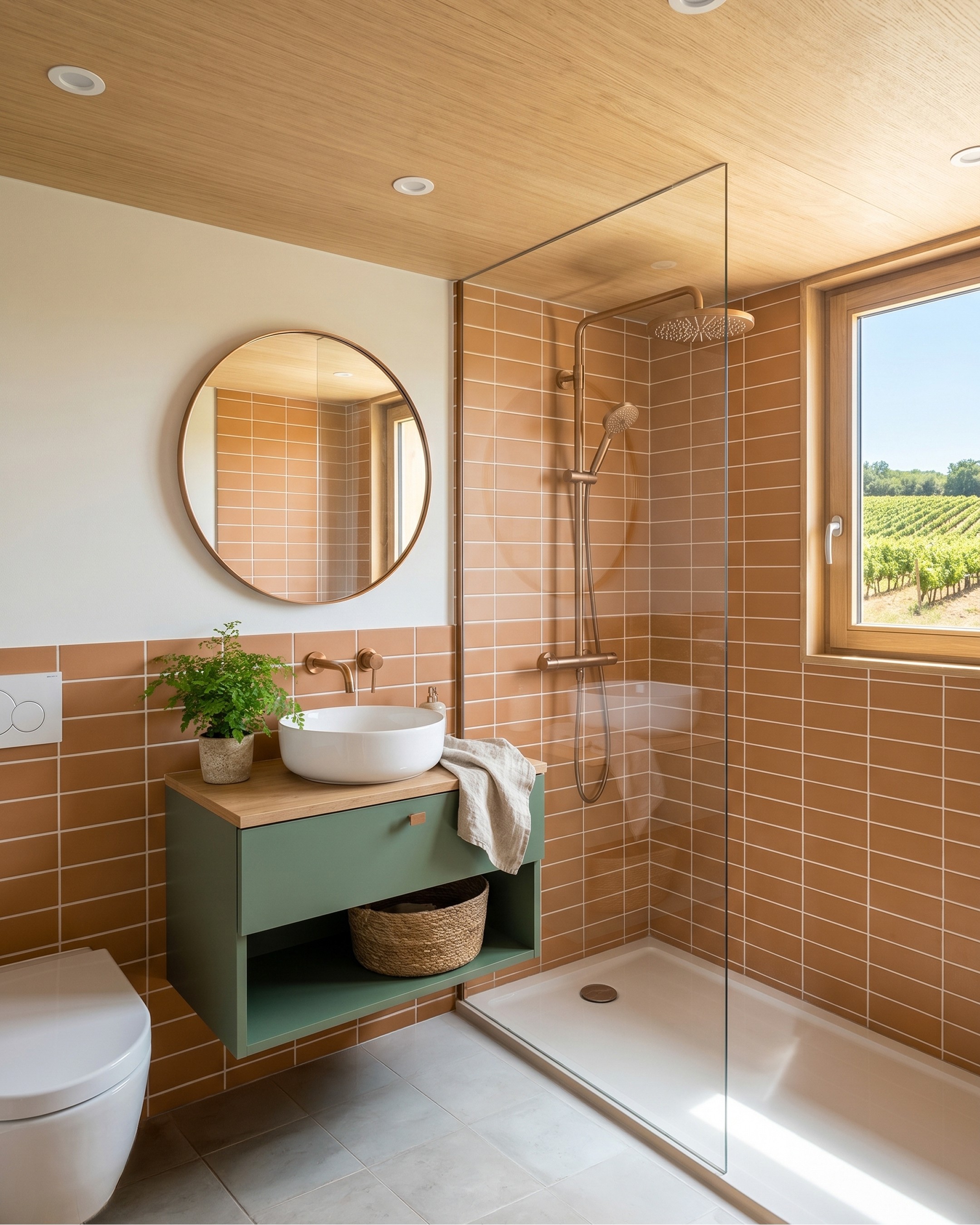
The bathroom in this cabin floor plan with loft carries the same colour story as the rest of the home, and it does so with the most material commitment of any space in the design. Terracotta square tiles cover the walls in full. Not just the shower area, not just a feature wall, but the full bathroom perimeter. It's a warm, earthy choice that gives the bathroom a boutique quality that works well for short-stay accommodation.
The walk-in shower occupies one side of the bathroom, enclosed by a frameless glass panel. An overhead rain showerhead sits above, and a small timber-framed window within the shower zone frames a vineyard view. The view from inside the shower is one of the quieter details of this design.
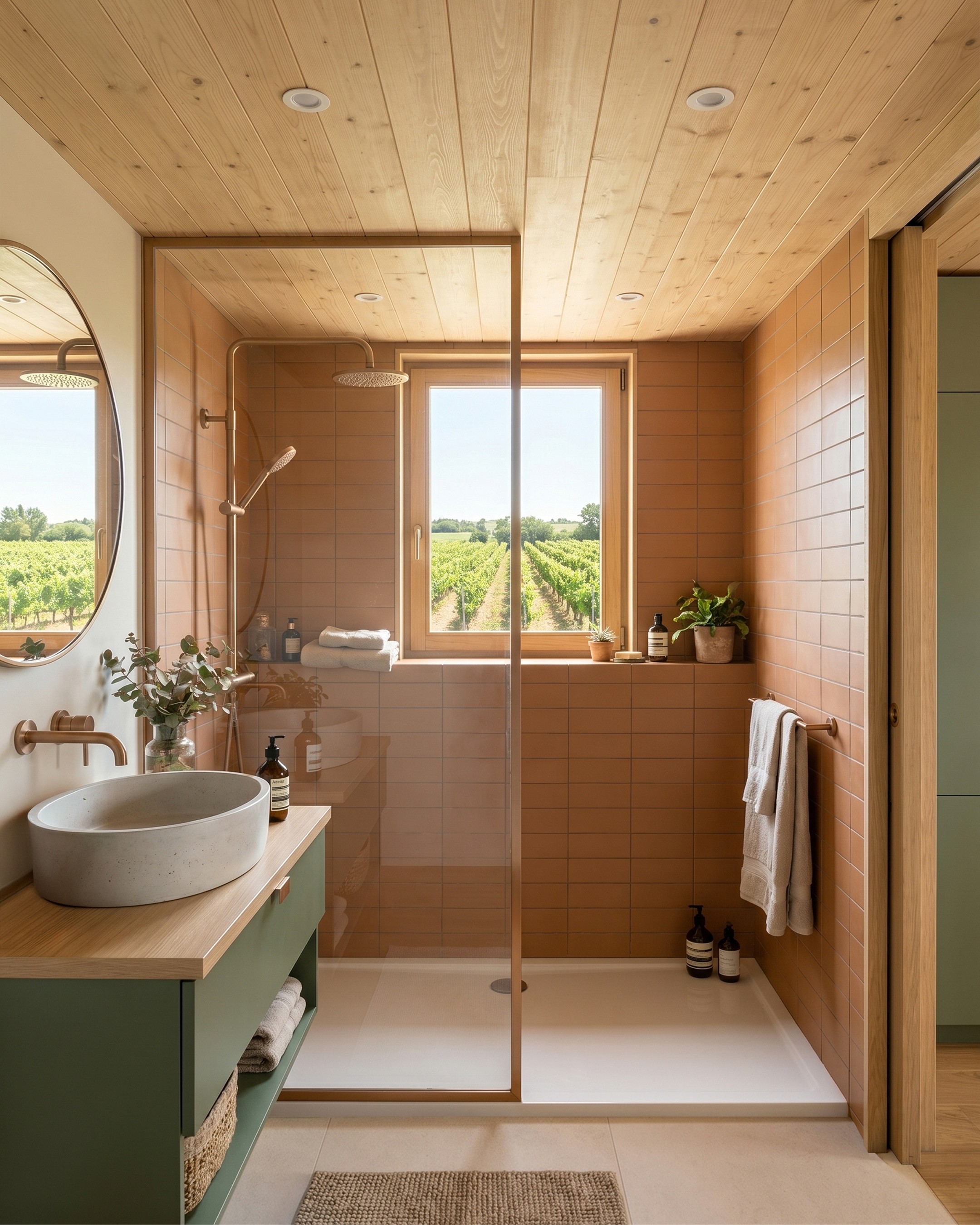
The vanity sits on the opposite wall. A round vessel sink in white ceramic sits on top of a timber shelf, with sage green cabinetry below for storage. A circular mirror hangs above, and bronze tapware throughout the bathroom connects the fittings back to the warm brass hardware used elsewhere. It's a detail that doesn't draw attention to itself, but you'd notice if it weren't there.
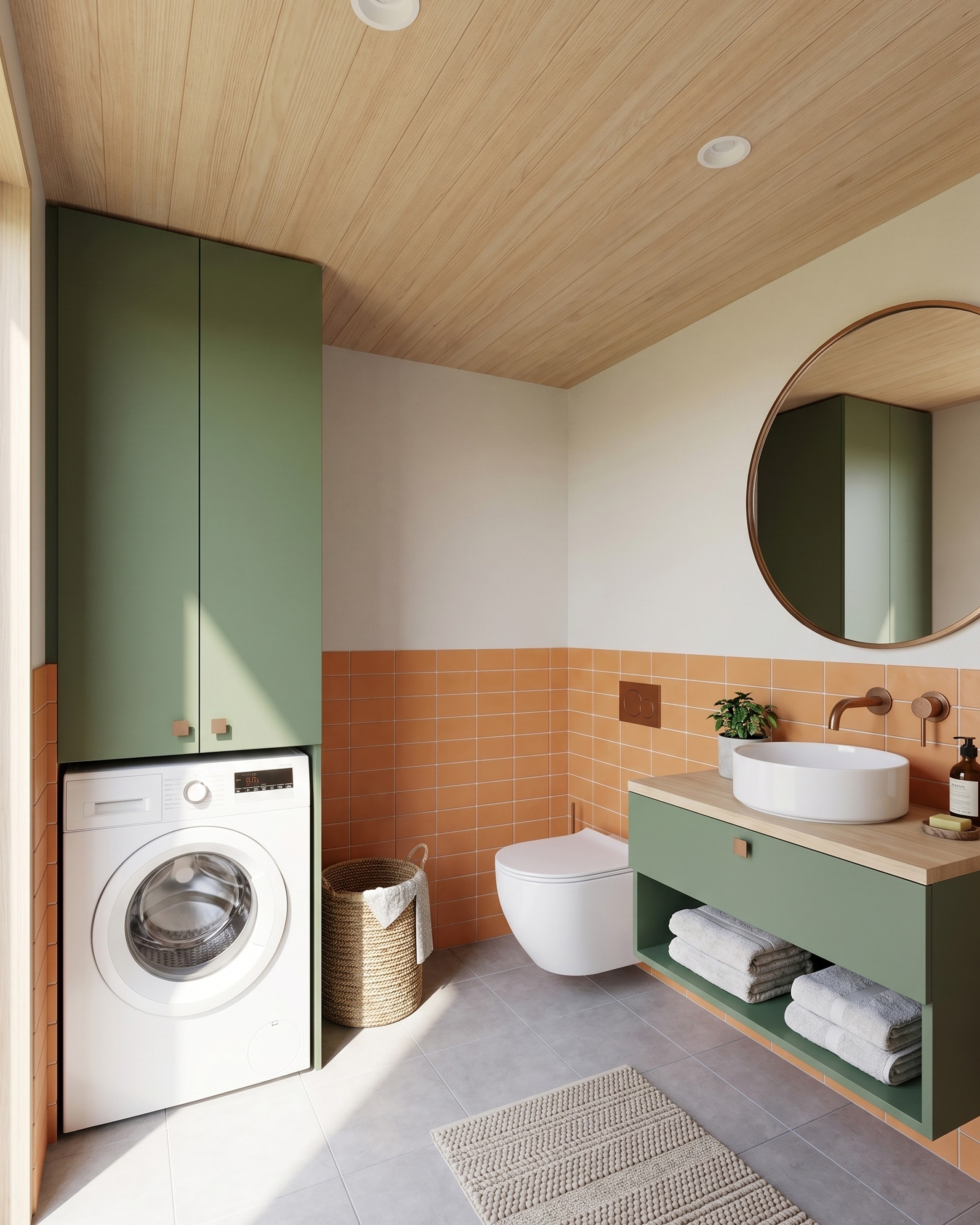
The oak timber ceiling continues into the bathroom, which keeps the space from feeling disconnected. Combined with the warm terracotta walls and bronze hardware, the bathroom reads as part of the same design rather than a utility room bolted on at the end.
Evergreen Cabin in Summary
The Evergreen Cabin holds together because it made clear decisions and followed them through. The sage green runs from the exterior cladding to the kitchen cabinetry to the bathroom vanity to the stair storage to the bedroom walls. The oak timber lines the ceiling, the floors, the window frames, and the countertop. The terracotta tile ties the kitchen and bathroom together. None of it's accidental, and that consistency is what makes the design feel considered rather than assembled.
As cabin plans with loft go, this one handles the vertical space well. The double-gable roofline gives both ends of the cabin, the living room and the loft bedroom, proper ceiling height and strong natural light. That's not a given in compact loft designs. The ground floor layout fits a full kitchen, dining, living, bathroom, and laundry in an open-plan arrangement that feels practical without feeling tight.
If you're a builder looking to add a design like the Evergreen Cabin to your model range, book a demo with the Tiny Easy team to see how you can design, visualise, and present cabin concepts like this to your clients.
How We Designed this Cabin Concept
Every part of this cabin plan concept, from the exterior details to the interior layout, was designed entirely within the Tiny Easy platform. No third-party tools, no hand-drawn floor plans, no outsourced renderings. From the first concept through to final handoff documents, the whole process lived in one place.
Design Creation
For builders, one of the biggest bottlenecks in turning interest into a real sales conversation is the time it takes to get a clear design in front of a client. Traditional 3D design tools can be slow to learn, and relying on a designer or draftsperson for every early concept can add cost and delay before the client has even had a chance to properly understand the home.
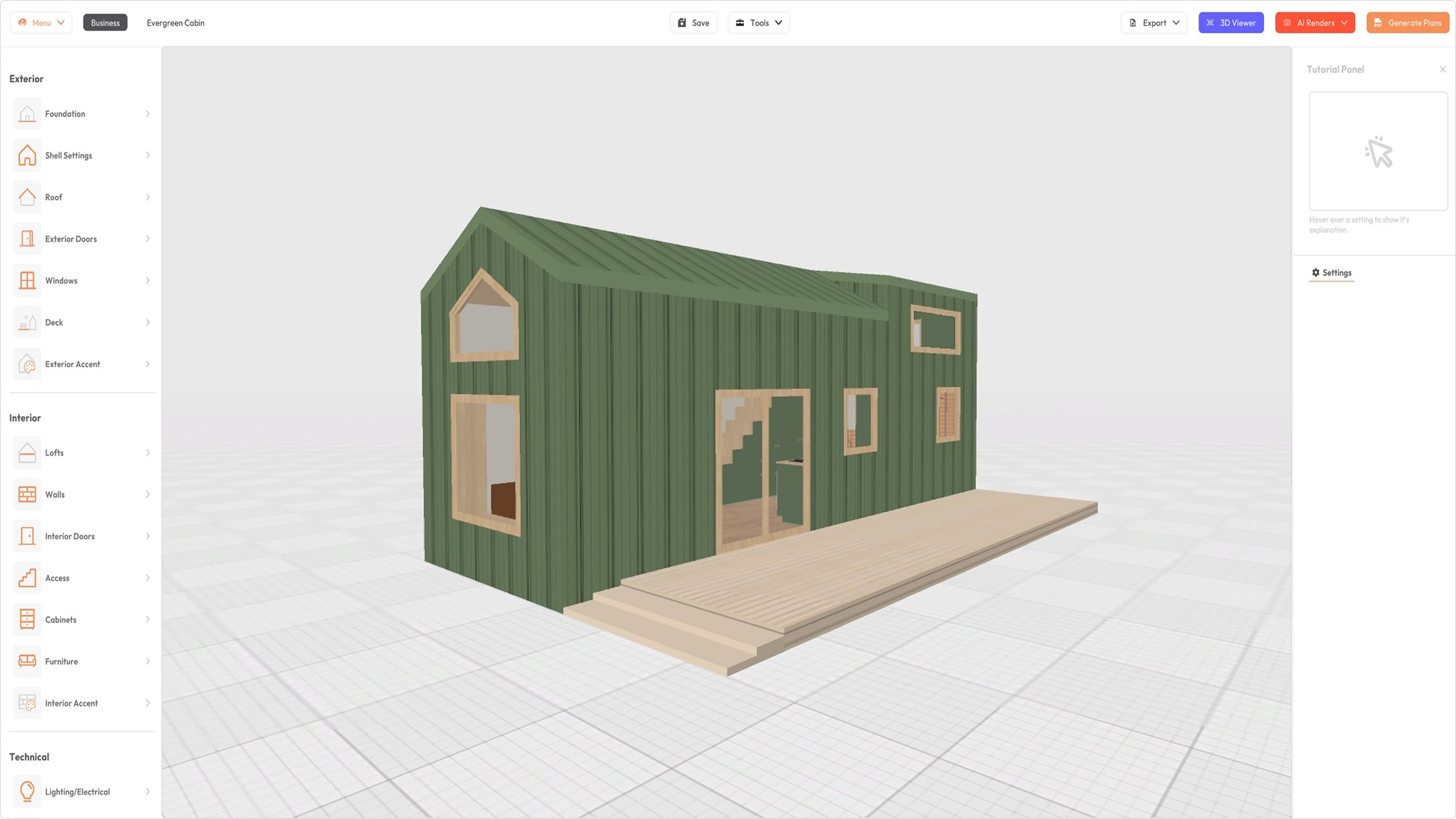
The 3D Designer is Tiny Easy’s design workspace for creating, managing, and tailoring tiny homes, cabins, granny flats, ADUs, and more within one connected system. Builders can use it to build out their core model range, save designs as reusable templates, test new ideas, explore layout options, and refine their designs over time.
Inside the Designer, the structure can be shaped using tools like Foundation, Shell, and Roof, before completing the model with doors, windows, walls, interior doors, cabinetry, furniture, fixtures, lighting, and finishes. This gives builders a practical way to create complete 3D concepts without needing to start from scratch or rely on complex modelling workflows.
Where this becomes especially valuable is in the sales process. Instead of designing a new cabin from a blank canvas for every enquiry, builders can pull the most relevant model from their existing range into a client project, tailor the layout, finishes, openings, and key details, then present a concept that feels specific to that client.
That speed changes the quality of the conversation. Clients are not left trying to imagine the home from 2D plans, rough sketches, or verbal explanations. They can see the design clearly, understand the layout, explore the options, and build confidence in the direction before moving further into pricing, proposal, or approval.
For builders, the result is a faster and more professional path from enquiry to client-ready cabin concept. The 3D Designer helps turn design into a sales tool, giving builders a repeatable way to respond quickly, communicate clearly, and move serious clients forward while interest is still warm.
Visualization
Once a design is complete, the next challenge is presenting it in a way that actually converts interest into commitment. Traditionally, that meant outsourcing renders to a freelancer — which adds cost, turnaround time, and rounds of back-and-forth — or investing in professional rendering software that requires its own lengthy setup before a single image is produced. For a small home builder running a lean operation, neither is a sustainable way to work.
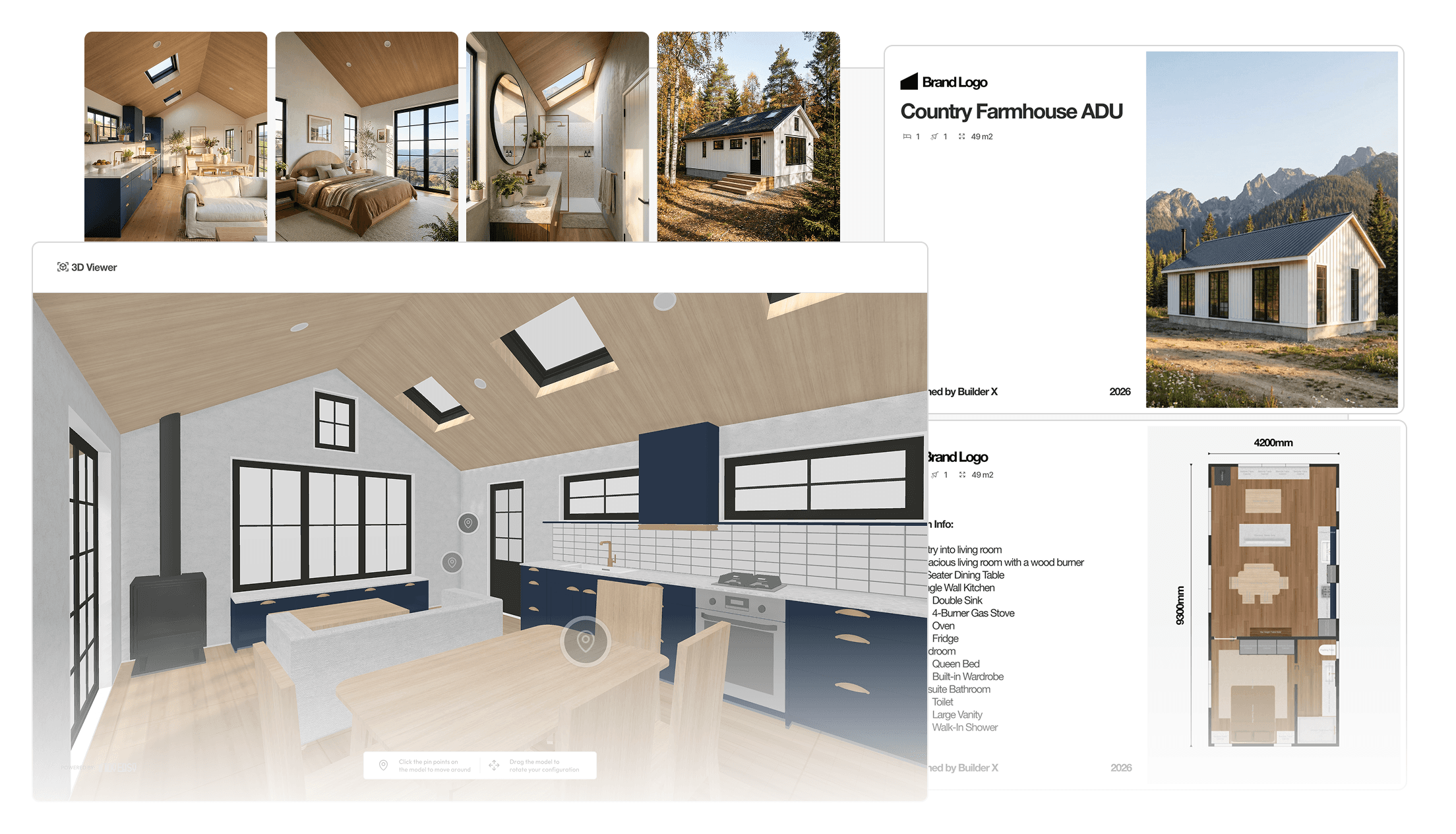
The AI Render Tool takes care of that. Once the design is finalised in the 3D Designer, renders are generated directly from within it. The only setup required is positioning the camera, choosing an environment, setting the time of day and season, and hitting render. The result is a photorealistic image of the home, produced in minutes rather than days — and at a fraction of the cost of conventional methods.
The 3D Viewer Tool adds another layer to the client experience, letting them explore the completed design in interactive 3D from any device. Sharing it is as simple as sending a link. Scale and spatial flow can be difficult to communicate on paper — paired with AI Renders, a 3D virtual tour gives clients the confidence to take the next step without hesitation.
Presentation
Once a design is ready, the next challenge is turning all the project information into a proposal that feels clear, professional, and easy for the client to understand. For many builders, this is one of the most tedious parts of the sales process. The design may already be done, the renders may be ready, and the pricing may be prepared, but pulling everything together into a polished client proposal often means jumping between Canva, PowerPoint, PDF exports, spreadsheets, and old proposal templates that are either too rigid or too difficult to edit.
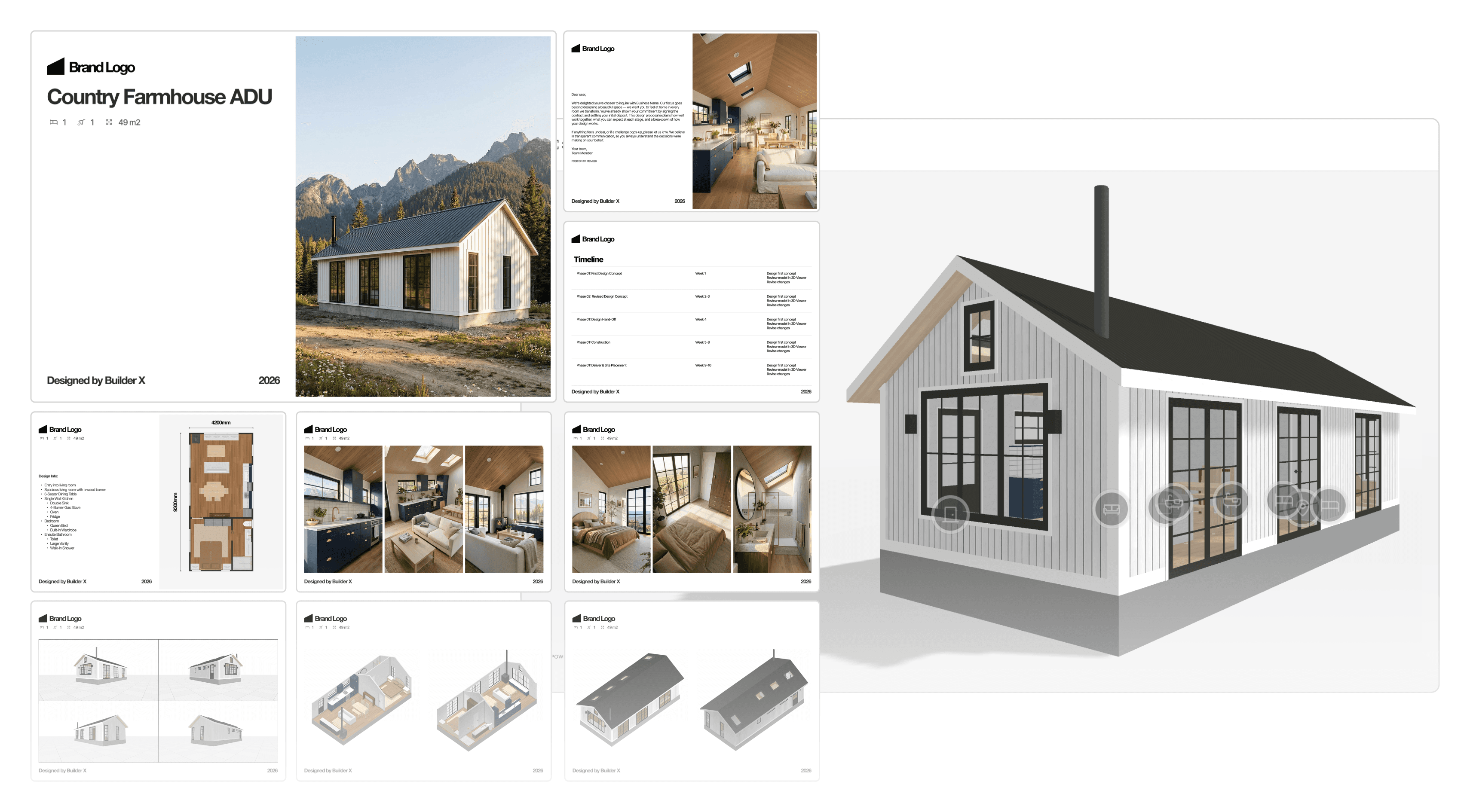
The Proposal Builder is Tiny Easy’s proposal creation tool for building professional, branded client proposals within one platform. It helps builders bring together the key parts of a project, including 3D Viewers, PDF plans, AI Renders, specifications, pricing, inclusions, available options, and next steps, into one clear presentation.
Instead of starting from a blank document every time, builders can begin with suggested proposal templates designed around the way small home projects are actually sold. These templates provide a practical page structure for presenting a customised design, with sections for introducing the project, showcasing the design, explaining the layout, outlining specifications, presenting pricing, and guiding the client toward the next step.
This gives builders a faster way to insert the right content in the right order without needing to design a full proposal from scratch. Pages can be adjusted, removed, duplicated, or added as needed, so the proposal can still be tailored to the client without becoming a complicated custom design task.
The value is not just that the proposal looks better. It helps the client understand the project faster. Instead of receiving disconnected files, flat plans, separate renders, and a pricing document, they get one polished proposal that brings the design story together. They can see the home, understand the layout, review the key details, and know exactly what happens next.
For builders, this creates a more repeatable and professional sales workflow. It reduces the time spent assembling proposals manually, keeps presentations more consistent across the team, and helps move clients toward sign-off, approval, or deposit with greater confidence.
Handoff
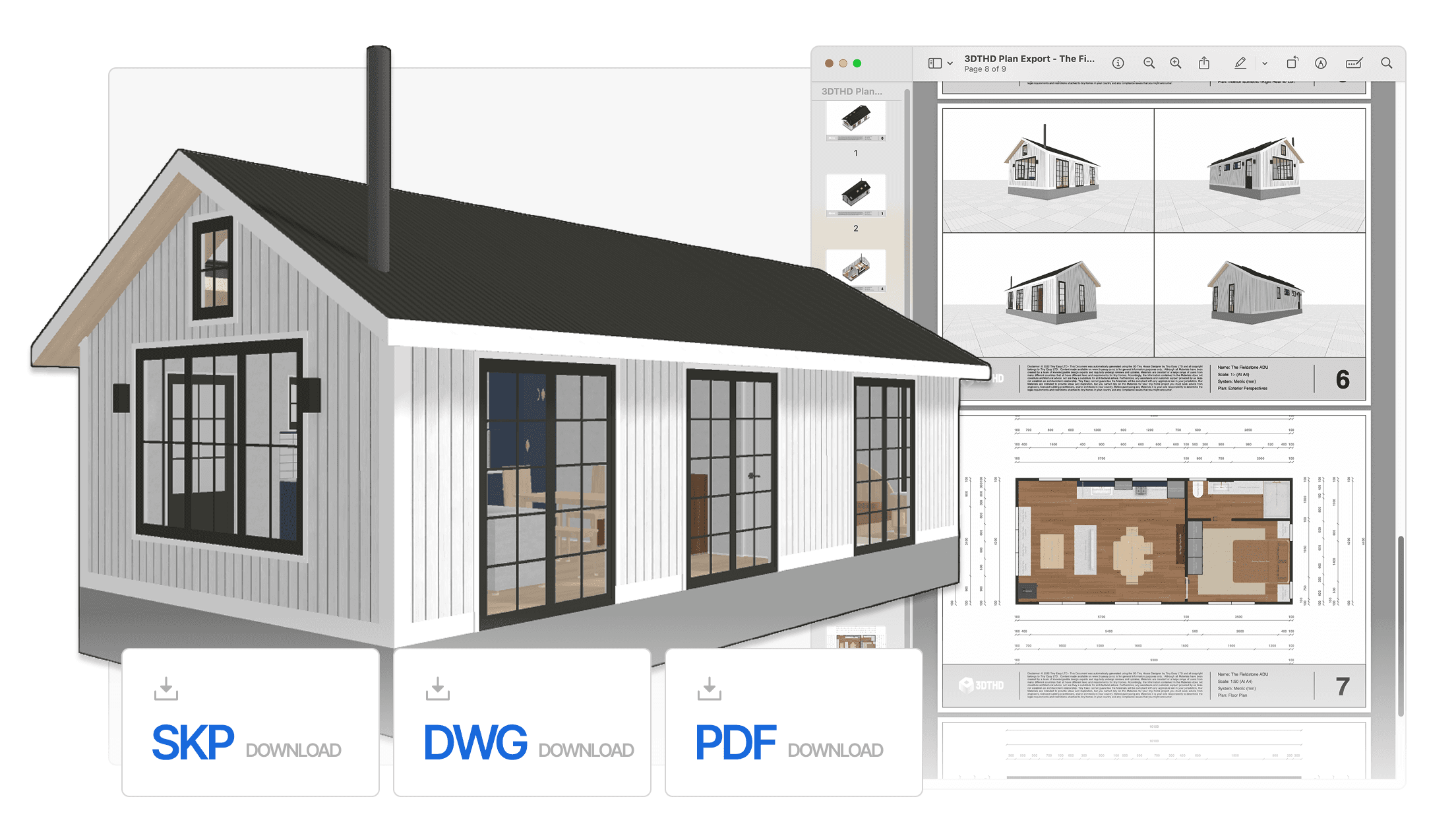
When the design is approved and it's time to move into documentation, the 3D Designer exports everything needed to take the project forward. PDF plans are generated directly from the model — accurate, professional documents that give a draftsperson or architect a clear picture of the design intent without any redrawing required.
Alongside the plans, an auto-populated material take-off spreadsheet exports directly from the design. Rather than manually costing a new model from scratch, the material list is already populated and ready to work from — saving hours in the estimation process and reducing the margin for error when putting a quote together.
For those who need to take the model further, the 3D Designer also exports a SketchUp file, allowing the design to be carried into more advanced workflows without having to rebuild from scratch.
For builders, this closes the loop on the entire process — from first sketch to professional handoff — without the design ever leaving the platform. It's a faster, cleaner way to work that reduces errors, saves cost, and keeps the project moving.
Ready to Design your Own?
This cabin design is proof that a small footprint doesn't mean compromising on quality — in the design, the experience, or the process behind it.
What made it possible wasn't a team of designers or an expensive production pipeline. It was a single platform, built specifically for the way small home builders actually work.
If you're a builder who wants to walk into your next client meeting with renders like these, proposals that are ready to go, and a process that runs end to end without the usual friction — book a call with us and let's talk about what you're building.


100+ Businesses use Tiny Easy in their Sales, Design & Proposal Workflow